Overview
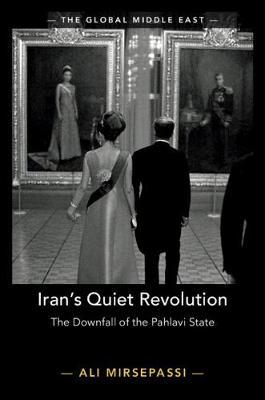
Offering a new perspective on Iran's politics and culture in the 1960s and 1970s, Ali Mirsepassi challenges the prevailing view of pre-Revolution Iran, documenting how the cultural elites of the Pahlavi State promoted a series of striking 'Gharbzadegi' or 'Westoxification' discourses. Intended as ideological alternatives to modern and Western-inspired cultural attitudes, these influenced Persian identity politics, and projected Iranian modernity as a 'mistaken modernity' despite the regime's own ferocious modernisation programme. Focusing on the cultural transformations which defined the period, Mirsepassi sheds new light on the Pahlavi State as an ideological gambler, inadvertently empowering its fundamentalist enemies and spreading a 'quiet revolution' through secular and religious civil society. Proposing a new theoretical framework for understanding the anti-modern discourses of Ahmad Fardid, Jalal Al-e Ahmad, and Ali Shari'ati, Iran's Quiet Revolution is a radical re-interpretation of twentieth century Iranian political history which makes sense of these events within the creative, yet tragic Iranian nation-making experience.
Full Product Details
Author: Ali Mirsepassi (New York University)
Publisher: Cambridge University Press
Imprint: Cambridge University Press
Dimensions:
Width: 15.20cm
, Height: 1.50cm
, Length: 22.80cm
Weight: 0.360kg
ISBN: 9781108725323
ISBN 10: 1108725325
Pages: 250
Publication Date: 29 August 2019
Audience:
College/higher education
,
Professional and scholarly
,
Tertiary & Higher Education
,
Professional & Vocational
Format: Paperback
Publisher's Status: Active
Availability: Available To Order

We have confirmation that this item is in stock with the supplier. It will be ordered in for you and dispatched immediately.
Reviews
'Mirsepassi interprets the Pahlavi monarchy's collapse during the 1979 revolution as resulting from internal tensions, which originated among Iranian cultural and political elites seeking a merger of Persian and Shi'a traditions while rejecting a vision of corrupt materialistic Westernization to achieve a purified spiritualism ... Recommended.' D. A. Meier, Choice
Author Information
Ali Mirsepassi is the Albert Gallatin Research Excellence Professor of Middle Eastern and Islamic studies at Gallatin and in the Department of Middle Eastern and Islamic Studies in the Faculty of Arts and Science at New York University where he is also the director of the Iranian Studies Initiative. He is the author of numerous books including Islam, Democracy, and Cosmopolitanism (Cambridge, 2014), Transnationalism in Iranian Political Thought: The Life and Times of Ahmad Fardid (Cambridge, 2017), Iran's Troubled Modernity: Debating Ahmad Fardid's Legacy (Cambridge, 2018) and co-editor of The Global Middle East series, with Arshin Adib-Moghaddam.