Overview
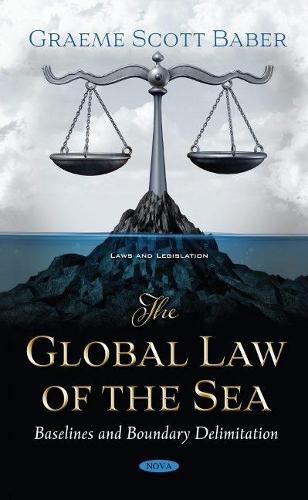
Some years ago, while a Senior Lecturer-in-Law at BPP University, one of my Master of Laws' students asked if he could write a dissertation in Maritime Law. He wanted to do a survey of the rules of both Admiralty Law and the Law of the Sea. The department contained no specialist in either of these fields, and I taught neither. As he could not be dissuaded from this plan, I had to undertake a rapid, informal, self-directed learning programme in the subjects in order to gain sufficient professional skill to be able to supervise, and, later, assess the dissertation. His project was surprisingly good -- and I had my first contact with rules concerning territorial seas, contiguous zones, exclusive economic zones, continental shelves and high seas. My interest in these topics grew and, eventually, flourished in the project of this monograph. The book covers the laws in the United Nations Convention on the Law of the Sea 1982 that concern baselines and boundary delimitation, together with cases which relate to these topics. There is also a major input to the monograph from procedural matters pertaining to the International Court of Justice, the International Tribunal for the Law of the Sea and arbitration under Annex VII to the Convention, with an example case provided for each of these mechanisms. As States Parties to the Convention may make a Declaration under its Article 287 for the settlement of their disputes by one or more of these methods -- together with special arbitration under Annex VIII to the Convention for four issues specified therein -- this Article, together with the methods and the remainder of Part XV of the Convention, are core material for a systematic review of the Law of the Sea. In instances in which it is possible, comparisons are made between: (i) the United Nations Convention on the Law of the Sea and its predecessors, i.e., the Geneva Conventions from 1958, and (ii) the rules of the International Court of Justice and those of the International Tribunal for the Law of the Sea. In essence, the Convention builds upon its precursory instruments, which tend to be simpler than the former, and the procedural rules for the International Tribunal for the Law of the Sea are similar or identical to those of the International Court of Justice, other than a few provisions that are new or materially modified from the terms of the Court, but with the necessary changes from the latter being made. The cases at this level are fewer than in black-letter subjects of the law, but tend to be complex and, for the legal scholar, very interesting. This is especially true of the South China Sea Arbitration, which was a judgment of pioneering brilliance from an Annex VII arbitral tribunal composed of one academic and four experienced judges, to which a substantial literature has-in the short period since this case's resolution -- been devoted. The very best of luck with your reading!
Full Product Details
Author: Graeme Baber
Publisher: Nova Science Publishers Inc
Imprint: Nova Science Publishers Inc
Weight: 0.560kg
ISBN: 9781536173604
ISBN 10: 1536173606
Pages: 317
Publication Date: 12 May 2020
Audience:
College/higher education
,
Postgraduate, Research & Scholarly
Format: Hardback
Publisher's Status: Active
Availability: Available To Order

We have confirmation that this item is in stock with the supplier. It will be ordered in for you and dispatched immediately.
Author Information
Graeme Baber is an independent legal researcher, specializing in international, European and United Kingdom financial law. He has published more than 30 articles, comments, briefings and updates over these areas, many as a regular contributor to The Company Lawyer journal. He has published 2 monographs with Cambridge Scholars Publishing, entitled The Impact of Legislation and Regulation on the Freedom of Movement of Capital in Estonia, Poland and Latvia and The Free Movement of Capital and Financial Services: An Exposition?, and is currently writing a series of essays with that publisher. He is an experienced teacher of university students, his pride of place being an LL.M module entitled International Business Law, which he wrote and taught from 2010 to2015 at BPP University and as the sole tutor from September 2011. Graeme's other interests comprise musical performance on organ and pianoforte especially the works of Johann Sebastian Bach and Joseph Haydn. He is also a composer of both sacred and secular pieces, and a keen scenic and garden photographer.