Overview
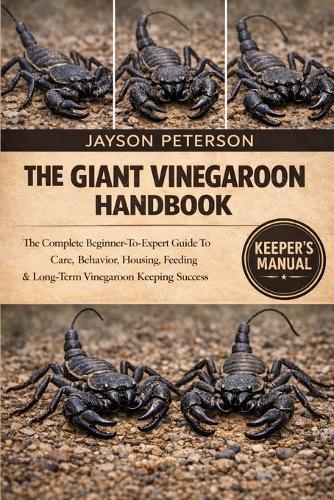
Introduction to Giant Vinegaroons Giant vinegaroons are among the most misunderstood and fascinating invertebrates in the exotic pet world. Their dramatic appearance, unusual defensive capabilities, and ancient evolutionary lineage make them both captivating and mysterious to anyone encountering them for the first time. These animals, often confused with scorpions or spiders, occupy a distinctive and scientifically important niche that sets them apart from nearly every other creature kept in captivity. Their combination of prehistoric presence, gentle temperament, and highly specialized biology creates a unique appeal for enthusiasts who seek pets that are both intriguing and naturally complex. This introduction explores the essential foundations every reader must understand before diving deeper into their care, behavior, habitat requirements, and overall biology. Giant vinegaroons belong to the order Thelyphonida, a group of arachnids that diverged early in evolutionary history. Although commonly referred to as ""whip scorpions,"" they are not true scorpions. Instead, they occupy a separate taxonomic branch that shares traits with spiders, scorpions, and other arachnids but retains its own unmistakable anatomical characteristics. Their bodies are elongated and armored, their pedipalps strong and claw-like, and their tail-called a flagellum-long, thin, and flexible, functioning entirely differently from the stinger of a true scorpion. These physical traits, developed over millions of years, give vinegaroons an unmistakable silhouette that evokes images of prehistoric times. Despite their intimidating appearance, giant vinegaroons are gentle and non-aggressive. Unlike scorpions, they do not possess venom, and unlike spiders, they rely on physical strength and chemical defenses rather than injecting toxins. Their most famous defense mechanism-and the origin of their common name-is the ability to spray a concentrated form of acetic acid. To most people, this chemical smells like strong vinegar, and it serves as an effective repellant against predators in the wild. However, this spray is not harmful to humans when encountered as an accidental mist; its purpose is primarily to warn and deter rather than injure. Understanding this harmlessness is essential, as it breaks down the often-stated misconception that vinegaroons are dangerous, venomous, or harmful to keep. In their natural habitats, giant vinegaroons are secretive animals that prefer darkness, moisture, and security. They inhabit regions ranging from the southern United States and Mexico to parts of Central and South America. Their geographic distribution is shaped by environmental conditions rather than strict climatic barriers. Throughout their range, they are commonly found in humid forest floors, burrowed under leaf litter, or concealed beneath logs, rocks, and soil layers. Their preference for environments with stable moisture levels has shaped both their anatomy and behavior. For example, their long whip-like tail serves as a sensory extension that helps them navigate narrow spaces, and their muscular pedipalps allow them to excavate and maintain burrows. These adaptations are essential for survival in the wild and highly informative for understanding their needs in captivity.
Full Product Details
Author: Jayson Peterson
Publisher: Independently Published
Imprint: Independently Published
Dimensions:
Width: 15.20cm
, Height: 0.80cm
, Length: 22.90cm
Weight: 0.209kg
ISBN: 9798249466046
Pages: 150
Publication Date: 23 February 2026
Audience:
General/trade
,
General
Format: Paperback
Publisher's Status: Active
Availability: Available To Order

We have confirmation that this item is in stock with the supplier. It will be ordered in for you and dispatched immediately.