Overview
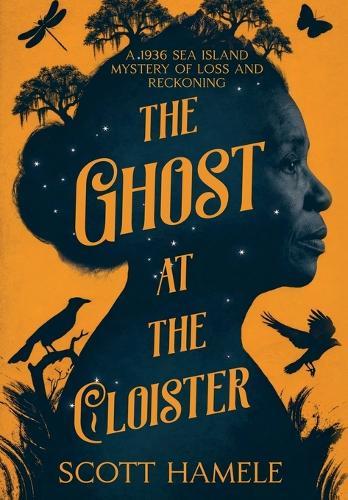
Set between 1906 and 1937 along the Georgia coast, this historical mystery unfolds at a refined seaside resort built over land with a quieter, unsettled past. In 1936, a magazine writer arrives seeking distance from personal and professional failure. What she finds instead is a place that feels composed on the surface yet subtly resistant beneath it. Guests move easily through its courtyards and corridors, but one patch of ground near the marsh seems to hold its own memory, drawing attention without explanation. Her curiosity leads her into conversation with a hotel employee whose connection to that ground runs deeper than he is willing to share at first. Through him, and through her own instinct for gaps and omissions, she begins to uncover the outline of a family that once lived where the resort now stands. Decades earlier, in 1906, that family believed they had secured a small piece of land through hard-earned savings and determination. Their claim was fragile from the beginning, but it allowed them to build a life measured in work, routine, and quiet dignity. As the writer follows threads through courthouse records, church memory, and local testimony, she discovers how easily a life can be erased without spectacle. The story that emerges is not one of dramatic conspiracy, but of something more difficult to confront: a wrong carried out through ordinary channels, preserved by silence and time. The narrative moves between past and present, tracing the family's rise into stability and the slow unraveling that followed when their claim was invalidated. Loss does not arrive as a single moment, but as a sequence of decisions, omissions, and pressures that reshape everything that came before. In the present, the writer must decide what it means to tell such a story and whether truth can exist without causing further harm. Throughout, the supernatural remains restrained and grounded. The presence tied to the land does not threaten or demand, but persists. It is less a force than a condition, rooted in place and memory. As the investigation deepens, the boundary between research and responsibility narrows, and the act of recording the past becomes the only form of justice still available. By 1937, the story reaches its quiet conclusion. Nothing is restored, and no grand resolution corrects what was lost. Instead, the focus rests on recognition. A name is preserved. A history is spoken plainly. The land remains unchanged, but no longer entirely silent.
Full Product Details
Author: Scott Hamele ,
Scott Hamele
Publisher: Schuyler & Sons Publishing
Imprint: Schuyler & Sons Publishing
Dimensions:
Width: 15.20cm
, Height: 2.50cm
, Length: 22.90cm
Weight: 0.789kg
ISBN: 9798349279300
Pages: 468
Publication Date: 14 April 2026
Audience:
General/trade
,
General
Format: Hardback
Publisher's Status: Active
Availability: Available To Order

We have confirmation that this item is in stock with the supplier. It will be ordered in for you and dispatched immediately.
Author Information
SCOTT HAMELE was born and raised in Kansas and has called the Kansas City area home since 1991. Married for more than thirty years, he treasures time with his two daughters and two grandchildren. Scott studied engineering at the University of Kansas, where he began writing articles and newsletters for university clubs. He was first published in an ASME engineering publication in 1992 and went on to author dozens of published articles in the commercial construction sector. In the 2000s, Hamele turned his research instincts toward historical fiction, developing more than a dozen story concepts, many of which have matured into his recent publishing journey. His work spans a wide range of genres, including historical fiction, near-future thrillers, historical mysteries, narrative biographies, and feel-good short stories. A prolific storyteller, Scott has more than three dozen works to his credit. https: //linktree.com/scotthamele SCOTT HAMELE was born and raised in Kansas and has called the Kansas City area home since 1991. Married for more than thirty years, he treasures time with his two daughters and two grandchildren. Scott studied engineering at the University of Kansas, where he began writing articles and newsletters for university clubs. He was first published in an ASME engineering publication in 1992 and went on to author dozens of published articles in the commercial construction sector. In the 2000s, Hamele turned his research instincts toward historical fiction, developing more than a dozen story concepts, many of which have matured into his recent publishing journey. His work spans a wide range of genres, including historical fiction, near-future thrillers, historical mysteries, narrative biographies, and feel-good short stories. A prolific storyteller, Scott has more than three dozen works to his credit. https: //linktree.com/scotthamele