|
|
|||
|
||||
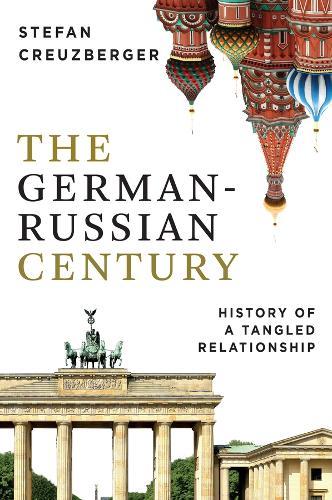
OverviewGermany and Russia: two countries whose turbulent and interlocking histories have profoundly shaped the world in which we live today. The long twentieth century was in many ways a German-Russian century. In 1917, imperial Germany became the birthplace of Russia's October Revolution, whose ideological radicalism shook the established order of states. With Hitler's seizure of power and the outbreak of World War II, Germany and Russia were thrust into violent conflict with one another. Defeating Hitler led Stalin's Red Army into the heart of Europe and Germany became the training ground for the Cold War, where two highly armed military blocs confronted one another for four decades. It was only with the collapse of the USSR that Germany was able to re-unify. Sustained efforts were made in the aftermath of the Cold War to normalize relations between Germany and Russia, but the renewed tensions precipitated by Russia's invasion of Ukraine show how fragile this relationship remains. In The German-Russian Century the distinguished historian Stefan Creuzberger tells the remarkable story of this crucial relationship between two states and two peoples. He lays out the large ideological contexts of fascism and communism and patiently traces the efforts that each state made to confront and balance the power of the other, from the tense years leading up to the Second World War through the Cold War to the present day. He shows how each side often saw the other in terms of itself – how Stalin perceived Hitler as a fellow imperialist while Gerhard Schroeder was drawn to Putin as a modernizer and reformer seemingly similar to himself. Engagingly written and magisterial in its grasp of high-stake issues as well as historical detail, this book will appeal to anyone interested in the historical forces that have shaped the modern world. Full Product DetailsAuthor: Stefan Creuzberger , Elizabeth JanikPublisher: John Wiley and Sons Ltd Imprint: Polity Press ISBN: 9781509565719ISBN 10: 150956571 Pages: 584 Publication Date: 27 March 2026 Audience: General/trade , General Format: Hardback Publisher's Status: Forthcoming Availability: Awaiting stock Table of ContentsI. INTRODUCTION: EXCAVATING THE PAST II. REVOLUTION AND TRANSFORMATIONAL CHANGE Prerevolutionary Lifeworlds Tactical Respite: The Road to the October Revolution and Peace of Brest-Litovsk (1917/18) “Arise, Ye Workers”: Hopes for World Revolution Caesuras in an Age of Radicalism: The Nazi Seizure of Power and the Dictators’ Pact Building Socialism in a Divided Germany, 1945–49 Diplomatic Transformations? Adenauer’s Visit to the Soviet Union and Brandt’s Moscow Treaty Losing the GDR: The Kremlin and Reunification III. TERROR AND VIOLENCE Clash of the Empires: August 1914 and the “Forgotten War” in Eastern Europe From a Global Conflagration to Civil War: Fertile Soil for Radicalization The Power of Ideologies? Totalitarian Encounters “Friendship Sealed by Blood”: Terror and Political Cooperation Battlefield of the Dictators: The Ideological War of Annihilation Victors and Vanquished: Flight, Expulsion, and Stalinist Terror in the SBZ/GDR Flashbacks: Memory Culture and Totalitarian Violence IV. DISTANCING AND RAPPROCHEMENT Ambivalent Times: German-Russian Encounters in the Rapallo Era Totalitarian Dictatorships: Stalin’s Overtures to Hitler and the Proxy War in Spain Unnatural Alliance: From the Hitler-Stalin Pact to Operation Barbarossa Coerced Cooperation: Reparations and Dismantling after Germany’s Defeat Trilateral Relations in the Cold War: Political Crises and Rapprochement, Economic Diplomats and Cultural Bridge Builders Gorbachev’s Perestroika: A Fraying Brotherhood and Easier Relations with Bonn From Ostpolitik to Frostpolitik: Partnership and Confrontation in the Post-Soviet Era Zeitenwende? Putin’s War in Ukraine and the Germans V. THE GERMAN-RUSSIAN CENTURY: SUMMARY AND OUTLOOK FOR THE FUTURE Acknowledgments Abbreviations Bibliography List of Illustrations Notes Index I. INTRODUCTION: EXCAVATING THE PAST II. REVOLUTION AND TRANSFORMATIONAL CHANGE Prerevolutionary Lifeworlds Tactical Respite: The Road to the October Revolution and Peace of Brest-Litovsk (1917/18) “Arise, Ye Workers”: Hopes for World Revolution Caesuras in an Age of Radicalism: The Nazi Seizure of Power and the Dictators’ Pact Building Socialism in a Divided Germany, 1945–49 Diplomatic Transformations? Adenauer’s Visit to the Soviet Union and Brandt’s Moscow Treaty Losing the GDR: The Kremlin and Reunification III. TERROR AND VIOLENCE Clash of the Empires: August 1914 and the “Forgotten War” in Eastern Europe From a Global Conflagration to Civil War: Fertile Soil for Radicalization The Power of Ideologies? Totalitarian Encounters “Friendship Sealed by Blood”: Terror and Political Cooperation Battlefield of the Dictators: The Ideological War of Annihilation Victors and Vanquished: Flight, Expulsion, and Stalinist Terror in the SBZ/GDR Flashbacks: Memory Culture and Totalitarian Violence IV. DISTANCING AND RAPPROCHEMENT Ambivalent Times: German-Russian Encounters in the Rapallo Era Totalitarian Dictatorships: Stalin’s Overtures to Hitler and the Proxy War in Spain Unnatural Alliance: From the Hitler-Stalin Pact to Operation Barbarossa Coerced Cooperation: Reparations and Dismantling after Germany’s Defeat Trilateral Relations in the Cold War: Political Crises and Rapprochement, Economic Diplomats and Cultural Bridge Builders Gorbachev’s Perestroika: A Fraying Brotherhood and Easier Relations with Bonn From Ostpolitik to Frostpolitik: Partnership and Confrontation in the Post-Soviet Era Zeitenwende? Putin’s War in Ukraine and the Germans V. THE GERMAN-RUSSIAN CENTURY: SUMMARY AND OUTLOOK FOR THE FUTURE Acknowledgments Abbreviations Bibliography List of Illustrations Notes IndexReviews""The entanglements between Russian and German history over the past century are legion and consequential. There were two World Wars, the Cold War, mutual occupations, forced deportations, atrocities on both sides, intercultural relations, the mix of populations, economic dependencies — the list of connections could go on and on. Crisply written, comprehensively researched, and engagingly presented, Creuzberger's new book is particularly relevant and important today, as we reflect on Germany's critical role in the playing out of the war in Ukraine."" Norman M. Naimark, Stanford University ""In this panoramic journey across a century of the German-Russian encounter, Stefan Creuzberger offers vivid and meticulously documented insights into Europe's most consequential relationship. An indispensable work for anyone interested in the history of the twentieth century or Russia's relations with the outside world today."" Benjamin Nathans, author of the Pulitzer Prize-winning book To the Success of Our Hopeless Cause: The Many Lives of the Soviet Dissident Movement ""Creuzberger'' book will be celebrated as a major work on global history and will have a lasting impact. It is a page-turner that will be indispensable at universities and think tanks as well as private bookshelves, and it will be eagerly read by people seeking to make sense of the world in which we live. Creuzberger is a trustworthy guide to some of the most controversial historiographical terrain we know of."" John Connelly, University of California, Berkeley Author InformationStefan Creuzberger is Professor of Modern History at the University of Rostock, Germany. Tab Content 6Author Website:Countries AvailableAll regions |
||||