Overview
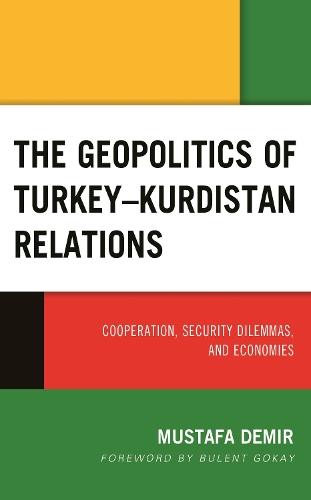
The main objective of this book is to understand the extent and the motives behind the shift in Turkey’s foreign policy towards the Kurdistan Regional Government (hereafter the KRG) from an alternative globalist perspective, and to do so it examines a ten-year period of Turkey’s foreign policy on the KRG, from 2003 to 2013. Despite the shadows casting by its history, Turkey has developed relations with the Kurdish government to the level of a strategic partnership within the last decade, following the 2003 invasion of Iraq. The book identifies and analyses the factors that determine Turkey’s foreign policy towards the KRG by providing a historical account of Turkey’s approach towards a Kurdish polity, illuminating the extent of the shift in Turkey’s foreign policy by looking at some dislocatory moves, and identifying and analyzing regional and global motives behind the Turkey–KRG rapprochement that led Turkey to abandon its traditional policy temporally towards the Kurdish Region of Iraq within the period this work is focused on. The book brings the global dimension to the discussion and suggests that developments at the global level play a significant role in shaping the regional and internal contexts in which the partnership between Turkey and the KRG was established. And in conclusion it argues that Turkish foreign policy towards the KRG shifted between 2007 and 2013 due to the intersection of regional and global fault lines and competition between global power blocks, the United States, Russia and China over energy resources and strategic trade and transit energy routes.
Full Product Details
Author: Mustafa Demir ,
Bulent Gokay
Publisher: Bloomsbury Publishing Plc
Imprint: Lexington Books
Dimensions:
Width: 16.00cm
, Height: 1.80cm
, Length: 23.10cm
Weight: 0.399kg
ISBN: 9781498571630
ISBN 10: 1498571638
Pages: 146
Publication Date: 09 April 2019
Audience:
Professional and scholarly
,
Professional & Vocational
Format: Hardback
Publisher's Status: Active
Availability: Manufactured on demand

We will order this item for you from a manufactured on demand supplier.
Reviews
This book offers a well-researched account and analysis of Turkey's evolving relationship with the Kurdistan Regional Government of Iraq in the period 2003-2013. It examines the drivers behind Turkish policy, considers Ankara's shift towards 'desecuritising' its approach, explores areas of common ground between Ankara and Erbil, and focuses on the all-important energy relationship between them. It does not simply locate the relationship in a purely bilateral or regional context, but also endeavors to explain it through a more globalist perspective. This book helps fill the gap left by the relative scarcity of literature on this under-studied but important relationship. -- William Park, King's College Employing a globalist perspective on the Kurdish problem, this book offers a different approach: The extent and the motives behind the shift in Turkey's foreign policy toward the Kurdistan Regional Government (KRG) in Iraq. in order to analyze key turning points in Turkey's changing relations with the KRG, the book successfully frames the Kurdish question at a regional level going beyond the traditional methods of framing it within the domestic circumstances of various countries in the Middle East. -- Gokhan Bacik, Palacky University Many people do not quite understand Turkey's evolving relationship with the Kurdistan Region of Iraq. Instead, they rely on now outdated cognitive maps of the issue. Dr. Demir's book offers an engaging and very important corrective to such views. Although Turkey's relationship with Iraqi Kurdistan still suffers from old mindsets in some ways, the huge energy reserves in the area, Turkey and Europe's insatiable appetite for non-Russian energy sources, and other factors have created unlikely partners in the region. Dr. Demir offers readers a fine overview of how, including an analysis of why this relationship may endure or how it may perish. -- David Romano, Missouri State University
This book offers a well-researched account and analysis of Turkey's evolving relationship with the Kurdistan Regional Government of Iraq in the period 2003-2013. It examines the drivers behind Turkish policy, considers Ankara's shift towards `desecuritising' its approach, explores areas of common ground between Ankara and Erbil, and focuses on the all-important energy relationship between them. It does not simply locate the relationship in a purely bilateral or regional context, but also endeavors to explain it through a more globalist perspective. This book helps fill the gap left by the relative scarcity of literature on this under-studied but important relationship. -- William Park, King's College Employing a globalist perspective on the Kurdish problem, this book offers a different approach: The extent and the motives behind the shift in Turkey's foreign policy toward the Kurdistan Regional Government (KRG) in Iraq. in order to analyze key turning points in Turkey's changing relations with the KRG, the book successfully frames the Kurdish question at a regional level going beyond the traditional methods of framing it within the domestic circumstances of various countries in the Middle East. -- Gokhan Bacik, Palacky University
This book offers a well-researched account and analysis of Turkey's evolving relationship with the Kurdistan Regional Government of Iraq in the period 2003-2013. It examines the drivers behind Turkish policy, considers Ankara's shift towards `desecuritising' its approach, explores areas of common ground between Ankara and Erbil, and focuses on the all-important energy relationship between them. It does not simply locate the relationship in a purely bilateral or regional context, but also endeavors to explain it through a more globalist perspective. This book helps fill the gap left by the relative scarcity of literature on this under-studied but important relationship. -- William Park, King's College Employing a globalist perspective on the Kurdish problem, this book offers a different approach: The extent and the motives behind the shift in Turkey's foreign policy toward the Kurdistan Regional Government (KRG) in Iraq. in order to analyze key turning points in Turkey's changing relations with the KRG, the book successfully frames the Kurdish question at a regional level going beyond the traditional methods of framing it within the domestic circumstances of various countries in the Middle East. -- Gokhan Bacik, Palacky University Many people do not quite understand Turkey's evolving relationship with the Kurdistan Region of Iraq. Instead, they rely on now outdated cognitive maps of the issue. Dr. Demir's book offers an engaging and very important corrective to such views. Although Turkey's relationship with Iraqi Kurdistan still suffers from old mindsets in some ways, the huge energy reserves in the area, Turkey and Europe's insatiable appetite for non-Russian energy sources, and other factors have created unlikely partners in the region. Dr. Demir offers readers a fine overview of how, including an analysis of why this relationship may endure or how it may perish. -- David Romano, Missouri State University
Author Information
Mustafa Demir is associate lecturer of international relations at Staffordshire University.