Overview
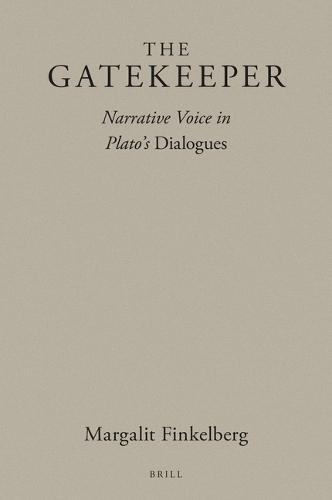
In The Gatekeeper: Narrative Voice in Plato’s Dialogues Margalit Finkelberg offers the first narratological analysis of all of Plato’s transmitted dialogues. The book explores the dialogues as works of literary fiction, giving special emphasis to such topics as narrative levels, focalization, narrative frame, and metalepsis. The main conclusion of the book is that in Plato the plurality of the speakers’ opinions is not accompanied by a plurality of points of view. Only one perspective is available, that of the narrator. Contrary to the widespread view, Plato’s dialogues cannot be considered multivocal, or “dialogic” in Bakhtin’s sense. By skillful use of narrative voice, Plato unobtrusively regulates the readers’ reception and response. The narrator is the dialogue’s gatekeeper, a filter whose main function is to control how the dialogue is received by the reader by sustaining a certain perspective of it.
Full Product Details
Author: Margalit Finkelberg
Publisher: Brill
Imprint: Brill
Volume: 2
Dimensions:
Width: 15.50cm
, Height: 1.70cm
, Length: 23.50cm
Weight: 0.455kg
ISBN: 9789004390010
ISBN 10: 9004390014
Pages: 200
Publication Date: 08 November 2018
Audience:
Professional and scholarly
,
Professional & Vocational
Format: Hardback
Publisher's Status: Active
Availability: Manufactured on demand

We will order this item for you from a manufactured on demand supplier.
Reviews
Margalit Finkelberg's book offers a useful contribution to the literary analysis of Platonic dialogue, in applying the technical methods of narratology to the construction of individual dialogues. [...] Plato scholars will find it a useful resource, confirming some suspicions about Plato's art and demanding a more careful reading of the dialogues as works of fiction. [...] Finkelberg leaves readers in no doubt of Plato's narrative control and the limited access he provides readers to his fictional world. But she leaves readers to draw their own conclusions about the philosophical and political consequences of that narrative control. - Carol Atack, Newnham College, Bryn Mawr Classical Review 2019.12.34.
Margalit Finkelberg's book offers a useful contribution to the literary analysis of Platonic dialogue, in applying the technical methods of narratology to the construction of individual dialogues. [...] Plato scholars will find it a useful resource, confirming some suspicions about Plato's art and demanding a more careful reading of the dialogues as works of fiction. - Carol Atack, Newnham College, Bryn Mawr Classical Review 2019.12.34.
Author Information
Margalit Finkelberg, Ph.D. (1985), Hebrew University, is Professor of Classics (Emerita) at Tel Aviv University. She has published monographs and numerous articles on ancient Greek subjects, including The Birth of Literary Fiction in Ancient Greece (Clarendon Press: Oxford 1998) and Greeks and Pre-Greeks: Aegean Prehistory and Greek Heroic Tradition (Cambridge University Press: Cambridge 2005).