Overview
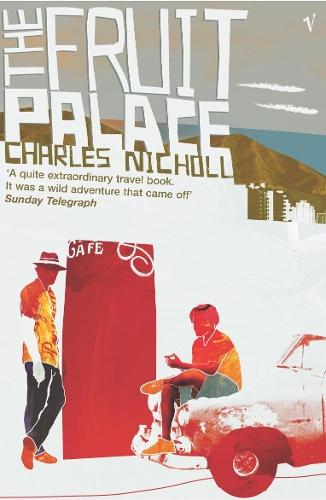
'A quite extraordinary travel book. It was a wild adventure that came off' Sunday Telegraph Charles Nicholl is on a quest for 'The Great Cocaine Story'. The time is the early eighties and the place - Colombia. The Fruit Palace is a little whitewashed cafe that legally dispenses tropical fruit juices, has another purpose as the meeting place for a variety of black market activities and the place where Nicholl unwittingly begins his quest. Nicholl relates his story with irrepressible energy and vividness as he careens from shantytowns and waterfront barrios to steamy jungle villages and slaughterhouses. He survives fever, earthquake, and discovery by a dealer who threatens to 'check his oil' with a knife. And he emerges with a triumphant piece of travel writing which is also a comic extravaganza.
Full Product Details
Author: Charles Nicholl
Publisher: Vintage Publishing
Imprint: Vintage
Edition: New edition
Dimensions:
Width: 12.90cm
, Height: 2.00cm
, Length: 19.80cm
Weight: 0.234kg
ISBN: 9780099274049
ISBN 10: 0099274043
Pages: 336
Publication Date: 07 May 1998
Audience:
General/trade
,
General
Format: Paperback
Publisher's Status: Active
Availability: Manufactured on demand

We will order this item for you from a manufactured on demand supplier.
Reviews
Evokes that vague, sleepy enchantment which comes from dreaming of 'somewhere else'... There are echoes of Chandler, of Burroughs, of Baudelaire and even of Eliot Sunday Times Mr Nicholl proves himself an addictive storyteller-A delicious addition to the library of the Briton out of his depth abroad Daily Telegraph One of the most absorbing travel books I have read... No book I know gives a more perceptive glimpse of the life of the urban poor who are the majority of South Americans. A brilliant book, informative, well-written and fun to read New York Times Book Review A considerable delight - funny, acute and remarkably evocative Time Out Irresistible. His story is so good that at times it reads like an unusually well-written thriller, then suddenly it turns into lyrical, highly-descriptive travel writing Irish Times
Evokes that vague, sleepy enchantment which comes from dreaming of 'somewhere else'... There are echoes of Chandler, of Burroughs, of Baudelaire and even of Eliot * Sunday Times * Mr Nicholl proves himself an addictive storyteller-A delicious addition to the library of the Briton out of his depth abroad * Daily Telegraph * One of the most absorbing travel books I have read... No book I know gives a more perceptive glimpse of the life of the urban poor who are the majority of South Americans. A brilliant book, informative, well-written and fun to read * New York Times Book Review * A considerable delight - funny, acute and remarkably evocative * Time Out * Irresistible.. His story is so good that at times it reads like an unusually well-written thriller, then suddenly it turns into lyrical, highly-descriptive travel writing * Irish Times *
In the early 1970's, Nicholl finds himself in the hot, seedy port city of Santa Marta on the Caribbean coast of Colombia. Renting a hammock for 10 pesos a night and downing the jugos made from the exotic local fruits, Nicholl is not above sampling the assortment of drugs that makes its way into South America's premier drug-smuggling capital. Twelve years later, back in England, Nicholl's publisher decides he's just the man to write the inside story on Colombia's cocaine trade - now a subject of worldwide interest. Nicholl knows the language, the country, the drug, and enough shady characters to give him a foothold in beginning his investigations. After touching down in Bogota, Nicholl tracks down an old acquaintance, an ex-journalist whom he finds holed up in a slum of the city - a large chunk of his leg having been carved out by drug dealers. Among other things, they wanted to permanently quash his interest in their operations and, more specifically, in a new supply of cocaine finding its way onto the Bogota market - the mysterious Snow White. Nicholl picks up the torch from his friend and shortly finds himself taking risks that far exceed his courage - and The Fruit Palace is off and running. As the cast of characters broadens, we meet the mules, the women who transport hundreds of pounds of drugs under the noses of US Customs officials; the cooks, who reduce the coca leaves into the sparkling white powder; the dealers; the users; the smugglers; and even the businessmen who earn millions off their illicit trade. But through it all, Nicholl never loses sight of the fact that his primary character is Colombia herself. Nicholl circles the country searching out, and occasionally running from, his story. And with him we travel down the muddy rivers of the Choco, climb into pristine mountain villages, swim in the clear waters of the Caribbean and frolic amidst the corruption and seamy glitter of the big cities. Nicholl is a very good writer, and he brings to life the people and places of this troubled country. The book is travel writing at its best, and Nicholl's investigations into the drug trade (although at times stretching the credulity of the reader) lend the book a comedy and tension that give it the taste and pleasure of fiction. (Kirkus Reviews)
This is a new edition of a book dating from the early 1970s, but it has stood the test of time: while the cocaine scene in Colombia may have changed, the excitement and fascination conjured up by Nicholl's string of first-hand accounts of his travels in South America have lost none of their flavour. Nicholl is 23, a self-proclaimed 'goggle eyed', calculating but charming American drug dealer. The book is packed full of idiosyncratic characters, from the 'half-crazed Scottish newspaper man Augustus McGregor' to the best drug-runner in the business 'who had walked cocaine through the US customs 43 times and never got caught'. Nicholl aims to emulate Beckett in presenting a bit of 'bottled climate' in his captivating account. The best dreams are those you wish would carry on forever, and this book is one which will keep any armchair traveller transfixed. (Kirkus UK)
Author Information
Charles Nicholl has written two travel books, The Fruit Palace and Borderlines; a study of Elizabethan alchemy, The Chemical Theatre, and a biography of the pamphleteer Thomas Nashe, A Cup of News. He has also written a reconstruction of Sir Walter Ralegh's search for El Dorado, The Creature in the Map, and Somebody Else, which won the 1998 Hawthornden Prize. His work has appeared in Granta, Rolling Stone and the Independent.