Overview
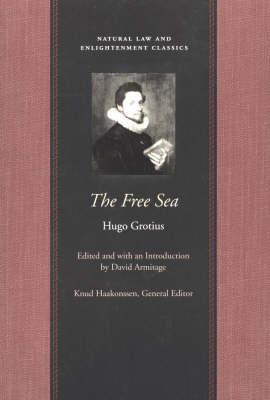
The freedom of the seas -- meaning both the oceans of the world and coastal waters -- has been among the most contentious issues in international law for the past four hundred years. The most influential argument in favour of freedom of navigation, trade, and fishing was that put forth by the Dutch theorist Hugo Grotius in his 1609 Mare Liberum'. The Free Sea' was originally published in order to buttress Dutch claims of access to the lucrative markets of the East Indies. It had been composed as the twelfth chapter of a larger work, De Jure Praedae' (On the Law of Prize and Booty'), which Grotius had written to defend the Dutch East India Company's capture in 1603 of a rich Portuguese merchant ship in the Straits of Singapore. This new edition publishes the only translation of Grotius's masterpiece undertaken in his own lifetime -- a work left in manuscript by the English historian and promoter of overseas exploration Richard Hakluyt (1552-1616). This volume also contains William Welwod's critque of Grotius (reprinted for the first time since the seventeenth century) and Grotius's reply to Welwod. Taken together, these documents provide an indispensable introduction to modern ideas of sovereignty and property as they emerged from the early-modern tradition of natural law.
Full Product Details
Author: Hugo Grotius ,
David Armitage
Publisher: Liberty Fund Inc
Imprint: Liberty Fund Inc
Dimensions:
Width: 23.00cm
, Height: 1.80cm
, Length: 15.50cm
Weight: 0.466kg
ISBN: 9780865974302
ISBN 10: 0865974306
Pages: 145
Publication Date: 12 March 2004
Audience:
Professional and scholarly
,
Professional & Vocational
Format: Hardback
Publisher's Status: Out of Stock Indefinitely
Availability: Awaiting stock

Reviews
Dutch jurist and well known humanist scholar Grotius (1583-1645) published Mare Liberum in 1609 arguing that no nation can own the sea. The context was debates between the United Provinces and the Spanish monarchy from which the Dutch had just broken away, and the Dutch right to commercial penetration in Southeast Asia. Here is its translation from Latin by English geographer Hakluyt (1552-1616), critique by William Welwood (fl. 1578-1622), and Grotius' reply. It is edited by David Armitage (history, Columbia U.) Reference & Research Book News August 2004
Dutch jurist and well known humanist scholar Grotius (1583-1645) published Mare Liberum in 1609 arguing that no nation can own the sea. The context was debates between the United Provinces and the Spanish monarchy from which the Dutch had just broken away, and the Dutch right to commercial penetration in Southeast Asia. Here is its translation from Latin by English geographer Hakluyt (1552-1616), critique by William Welwood (fl. 1578-1622), and Grotius' reply. It is edited by David Armitage (history, Columbia U.)Reference & Research Book NewsAugust 2004
Author Information
Hugo Grotius (1583-1645) was a great humanistic polymath, lawyer and legal theorist, diplomat and political philosopher, ecumenical activist and theologian.