Overview
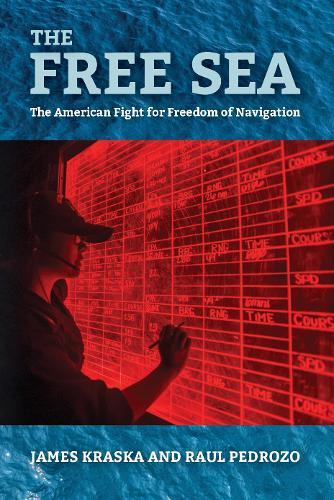
The Free Sea offers a unique, single-volume analysis of incidents in American history that affected U.S. freedom of navigation at sea. The book spans more than 200 years, beginning in the Colonial era with the Quasi-War with France in 1798 and extending to contemporary Freedom of Navigation operations in the South China Sea. Through wars and numerous crises with North Korea, North Vietnam, Cambodia, Iran, Russia and China, freedom of navigation has been a persistent challenge for the United States, a nation reliant on open seas for economic prosperity, military security and global order. This volume focuses on the struggle to retain freedom of the seas. Challenges to U.S. warships and maritime commerce have pushed, and continue to challenge, the United States to vindicate its rights through diplomatic, legal, and military means, underscoring the need for the strategic resolve in the global maritime commons.
Full Product Details
Author: James Kraska ,
Raul A Pedrozo, USN (Ret.)
Publisher: Naval Institute Press
Imprint: Naval Institute Press
Dimensions:
Width: 15.20cm
, Height: 2.50cm
, Length: 22.80cm
Weight: 0.789kg
ISBN: 9781682471166
ISBN 10: 1682471160
Pages: 416
Publication Date: 02 August 2018
Audience:
Professional and scholarly
,
Professional & Vocational
Format: Hardback
Publisher's Status: Active
Availability: Temporarily unavailable

The supplier advises that this item is temporarily unavailable. It will be ordered for you and placed on backorder. Once it does come back in stock, we will ship it out to you.
Reviews
This sophisticated yet approachable book chronicles the 200-year fight for freedom of navigation by the U.S. Navy. From the Quasi-War with France and Barbary Wars to the 'Tanker War' in the Persian Gulf and China's dangerous gambit in the South China Sea, this story shows how the perilous failure to stand up for legal rights of navigation tragically leads to war. A unique and sobering analysis of international law, sea power, and strategic security. --Admiral James Stavridis, USN, (Ret.), Dean Fletcher School of Law and Diplomacy
The Free Sea provides an exceptionally valuable account of challenges to U.S. freedom of navigation from the late 19th century to the present day. Using case studies, Kraska and Pedrozo detail how the U.S. responded to these challenges and provide compelling analysis to demonstrate the importance of unimpeded use of the oceans to U.S. economic prosperity and security. The Free Sea will likely be an enduring textbook for students of maritime law and will also appeal to general readers with interest in maritime history. - Bonnie S. Glaser, Director, China Power Project, Center for Strategic and International Studies Fundamentally, the United States is a maritime nation. We depend on freedom of the seas for our vital economy, our way of life. A keen understanding of freedom of navigation throughout the world's waters is challenging but essential. Kraska and Pedrozo do a masterful job capturing the essential strategic elements of maritime operations. Theirs is an important contribution to this critical discussion. - Admiral Timothy J. Keating, USN (Ret.) The Free Sea depicts a more realistic and accurate image of the United States as an assertive-but-equal, and sometimes vulnerable, maritime player.... The book is a well-researched, well-argued, and well-written book. Kraska and Pedrozo are to be commended for their effort. - The Strategy Bridge
In their superb and elegantly written book, The Free Sea, James Kraska and Raul Pedrozo argue that protecting freedom of navigation is an international good and that failing to do so cracks today's international system. They are right. Freedom of navigation at sea is essential to global commerce, the U.S.'s ability to project power, and communicate with allies around the world. China, Russia, and Iran are challenging the principle today. The Free Sea explains why it must be defended. The book should be read by everyone who wants the U.S. to remain a great power. --Seth Cropser, Director, Hudson Institute Center for American Seapower Fundamentally, the United States is a maritime nation. We depend on freedom of the seas for our vital economy, our way of life. A keen understanding of freedom of navigation throughout the world's waters is challenging but essential. Kraska and Pedrozo do a masterful job capturing the essential strategic elements of maritime operations. Theirs is an important contribution to this critical discussion. --Admiral Timothy J. Keating, USN (Ret.) The Free Sea provides an exceptionally valuable account of challenges to U.S. freedom of navigation from the late 19th century to the present day. Using case studies, Kraska and Pedrozo detail how the U.S. responded to these challenges and provide compelling analysis to demonstrate the importance of unimpeded use of the oceans to U.S. economic prosperity and security. The Free Sea will likely be an enduring textbook for students of maritime law and will also appeal to general readers with interest in maritime history. --Bonnie S. Glaser, Director, China Power Project, Center for Strategic and International Studies This sophisticated yet approachable book chronicles the 200-year fight for freedom of navigation by the U.S. Navy. From the Quasi-War with France and Barbary Wars to the 'Tanker War' in the Persian Gulf and China's dangerous gambit in the South China Sea, this story shows how the perilous failure to stand up for legal rights of navigation tragically leads to war. A unique and sobering analysis of international law, sea power, and strategic security. --Admiral James Stavridis, USN, (Ret.), Dean Fletcher School of Law and Diplomacy
Author Information
James Kraska is department chairman and Howard S. Levie Chair in the Stockton Center for the Study of International Law at the U.S. Naval War College. He has taught at Harvard Law School and Duke University, and retired as a commander in the U.S. Navy, where he was oceans law and policy adviser on the Joint Staff. Raul Pedrozo is a visiting fellow in the Stockton Center for the Study of International Law at the U.S. Naval War College, where he was professor of international law. He retired as a captain in the U.S. Navy, where he was the top legal adviser to Navy Special Warfare Command and U.S. Pacific Command.