Overview
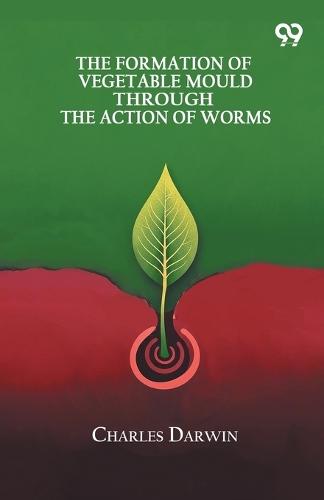
The formation of vegetable mould through the action of worms examines the critical role of earthworms in transforming soil and creating fertile top layers essential for plant growth. The opening establishes the importance of studying these seemingly humble creatures, emphasizing how their behaviors influence broader ecological systems and agricultural productivity. Observations detail how worms feed, burrow, and produce castings, highlighting the instinctual actions that contribute to soil aeration and nutrient enrichment. Early sections present controlled experiments demonstrating the cumulative impact of these processes over time, showing how small, repetitive activities can lead to significant environmental change. The narrative underscores the interconnectedness of living organisms and their habitats, revealing how understanding minute natural processes provides insight into ecosystem dynamics. By focusing on detailed observation and scientific analysis, the work illustrates that even simple creatures play a foundational role in maintaining soil health, shaping landscapes, and supporting life, offering a careful and methodical study of natural contribution to fertility and ecological balance.
Full Product Details
Author: Charles Darwin
Publisher: Double 9 Books
Imprint: Double 9 Books
Dimensions:
Width: 14.00cm
, Height: 0.80cm
, Length: 21.60cm
Weight: 0.163kg
ISBN: 9789375553526
ISBN 10: 9375553523
Pages: 134
Publication Date: 01 November 2025
Audience:
General/trade
,
General
Format: Paperback
Publisher's Status: Active
Availability: Available To Order

We have confirmation that this item is in stock with the supplier. It will be ordered in for you and dispatched immediately.
Author Information
Charles Robert Darwin was an English naturalist, geologist, and biologist whose work transformed the scientific understanding of life and its development. Born on February 12, 1809, in The Mount House in Shrewsbury, he became widely recognized for proposing that all species share a common ancestor, a concept that reshaped biology and established the groundwork for modern evolutionary science. His ideas influenced major thinkers including Sigmund Freud, Francis Darwin, and Richard Dawkins, demonstrating the enduring reach of his theories beyond natural history. Throughout his life he received significant honors such as the Wollaston Medal, the Copley Medal, the Royal Medal, and recognition as a Fellow of the Royal Society. Darwin studied at Christs College Cambridge between 1828 and 1831, a period that strengthened his interest in scientific inquiry and observation. He later raised a family, including his son Francis Darwin, who contributed to scientific scholarship as well. Darwin died on April 19, 1882, at Down House in Downe, leaving behind a legacy that continues to define biological research and the broader understanding of life's interconnectedness.