Overview
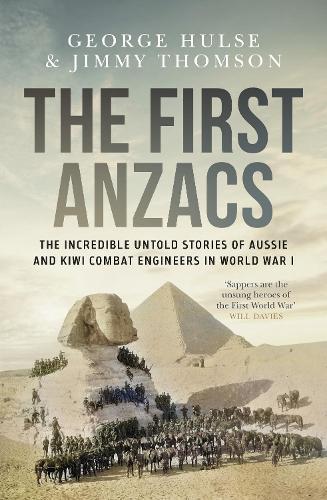
They were airbrushed out of history. Official historian Charles Bean claimed the first Australian ashore at the Gallipoli landing on 25 April 1915 was an infantry officer. But Bean wasn't there, and a bunch of Australian and New Zealand army engineers were. Even today, the army is reluctant to accept that sappers were among the very first ANZACs ashore. This is the untold story of World War I Australian and New Zealand sappers-combat engineers-with extracts from their diaries. They were always in the vanguard, clearing defences, and building bridges, roads and walkways, usually under fire, for the troops who followed. At Gallipoli, strafed by machine guns and targeted by snipers, they dug trenches and tunnels to advance on the Turkish defences. On the Western Front, they burrowed under the German lines to plant massive explosives. In Egypt they demolished a Turkish railway in a day. From Gallipoli to the sands of the Middle East, to the blood-soaked battlefields of France and Belgium, engineers put down their tools to also fight as combat soldiers at every major battle and campaign, often with heroic feats of astonishing courage. Three sappers stole a giant field gun from under German noses at Amiens. Sappers were classic larrikins, indefatigably practical men who don't take kindly to bureaucracy. Typically under-appreciated, two were cheated of their well-earned VCs by a British general after they, working alone, tricked a German platoon into surrendering. 'Sappers are the unsung heroes of the First World War and this book helps bring them back into the limelight where they belong.' Will Davies, Beneath Hill 60 'From the shores of Gallipoli to the tunnels beneath Hill 60, this is the extraordinary saga of the Australian army engineer of World War One, the story of those who make and break, everywhere.' Phillip Bradley, author of Inferno 'It has taken 111 years for true stories to appear in a book adequately honouring sappers in World War I - you will remember these heroes forever'. Colonel Sandy MacGregor MC (rtd) 'An excellent insight into the role of the Field Engineers as part of the combined arms team in World War I' Brigadier Mick Say DSC, Head of Corps, Royal Australian Engineers
Full Product Details
Author: Jimmy Thomson ,
George Hulse
Publisher: Allen & Unwin
Imprint: Allen & Unwin
Weight: 0.382kg
ISBN: 9781761473227
ISBN 10: 1761473220
Pages: 304
Publication Date: 31 March 2026
Audience:
General/trade
,
General
Format: Paperback
Publisher's Status: Forthcoming
Availability: Not yet available

This item is yet to be released. You can pre-order this item and we will dispatch it to you upon its release.
Author Information
Lieutenant Colonel George Hulse (Retd) OAM was a combat engineer, a 'Tunnel Rat' in the Vietnam War, and fought at Coral-Balmoral-Australia's largest battle in that war. He served with distinction in Malaysia, Kashmir and Papua New Guinea until his discharge in 1980. George went on to become a Lieutenant Colonel in the Army Reserve and published a book about Australian military working dogs, In Dogs We Trust. George has since had numerous volunteer roles including as Vice President of the Australian Defence Force Trackers and War Dogs Association. He also competes in Ironman Triathlon races. Jimmy Thomson has co-written three books about Australian sappers (with Colonel Sandy MacGregor): Tunnel Rats, A Sappers' War and Tunnel Rats versus the Taliban. A journalist for more than forty-five years, he has written true crime, sports biographies and military history. He writes crime fiction under the pen name James Dunbar and lives in Kings Cross, Sydney, with his wife and their cats.