Overview
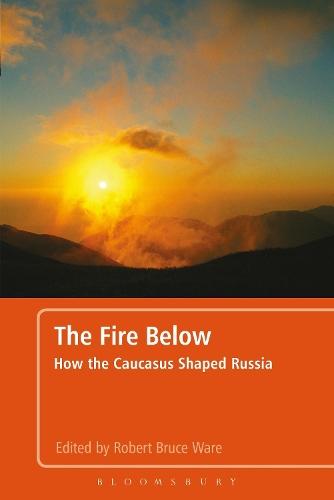
This groundbreaking work examines the complex dynamics of Russia’s relations with the Caucasus, revealing the profound effects that Caucasian forces have had upon Russia’s development. Essays show how Georgian sparks ignited conflagrations in South Ossetia (1991-1992) and Abkhazia (1992-1993), spreading northward to conflicts in Ossetia and Ingushetia (1992) and Chechnya (1994-1996). Combined with jihadist influences that entered from the South and East by way of Dagestan, these events culminated in the second Russo-Chechen war (1999-2009). Chechnya transformed both the Russian military and the presidency of Vladimir Putin. Beginning in 2000, Putin’s Chechenization strategy had unforeseen and controversial results for the entire Russian Federation. These ironies are elucidated in case studies of the Stavropol region, the Sochi Olympics, the Pussy Riot conviction, and Russia’s efforts to reintegrate religion with politics against the backdrop of an emerging Islamic “inner abroad.” Neither Russia nor the Caucasus can be understood without an appreciation of their uneasy interconnection and its explosive consequences.
Full Product Details
Author: Dr. Robert Bruce Ware
Publisher: Bloomsbury Publishing Plc
Imprint: Bloomsbury Academic
Dimensions:
Width: 15.20cm
, Height: 3.60cm
, Length: 22.90cm
Weight: 0.540kg
ISBN: 9781441107930
ISBN 10: 1441107932
Pages: 360
Publication Date: 04 July 2013
Audience:
College/higher education
,
Professional and scholarly
,
Tertiary & Higher Education
,
Professional & Vocational
Format: Paperback
Publisher's Status: Active
Availability: Manufactured on demand

We will order this item for you from a manufactured on demand supplier.
Language: English
Reviews
Since the fall of the Soviet Union no region has grown to occupy a more dramatic role in Western analyses and concerns regarding Russia than the Caucasus. Located at the boundary of Europe, Asia, and the Middle East the Caucasus is a complex, mini-continent of three sovereign states and seven republics, the scene of seven wars since 1988, a region of oil and pipelines, a zone of endemic turmoil where Islam, Orthodox Christianity and secularism overlay old rivalries and grievances, and, to set the entire region on the world stage, the planned site of the 2014 Sochi Olympics. The present book brings together eleven experts on this complex, non-Slavic region, who examine in novel and refreshing ways the effects the Caucasus is having upon the military, political, economic, and social dimensions of Russia as a whole. Several years in preparation this volume cuts through the miasma of romantic or exotic misconceptions that color the view of this region, both on Moscow's part and that of the West. Chapters argue persuasively that not only has the Caucasus decisively affected the evolution of Russia over the past twenty odd years, but that it continues to offer new models of Russian control while at the same time presenting a picture of growing estrangement and increasing de facto autonomy. One chapter, dealing with preparation for the Sochi Olympics, paints a picture of such extensive corruption that the entire economy of Russia is being adversely affected, not to mention the swirl of grievances flying around the issue of the Circassians, who will have been driven from Sochi, their capital, 150 years ago on the advent of the games. This book will be vital to those who are interested not only in politics and the dynamics of Russia, but in Olympic sports as well. After reading this volume Russia, the Caucasus, and even the Olympics will never seem quite the same again. -- John Colarusso, Professor, McMaster University, Author Of Nart Sagas From The Caucasus Endorsement
Author Information
Since completing his doctorate at Oxford University, Robert Bruce Ware has conducted field work in the North Caucasus, contributing numerous articles on the region. He is the co-author of Dagestan: Russian Hegemony and Islamic Resistance in the North Caucascus. His publications on philosophical issues include his book on Hegel. His popular commentaries have appeared in major publications around the world. He serves as a Professor of Philosophy at Southern Illinois University Edwardsville, USA.