Overview
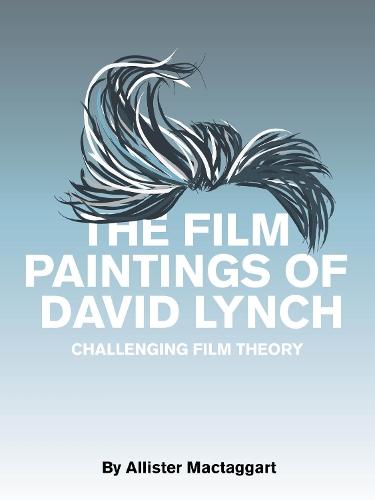
One of the most distinguished filmmakers working today, David Lynch is a director whose vision of cinema is firmly rooted in fine art. He was motivated to make his first film as a student because he wanted a painting that “would really be able to move.” Most existing studies of Lynch, however, fail to engage fully with the complexities of his films’ relationship to other art forms. The Film Paintings of David Lynch fills this void, arguing that Lynch’s cinematic output needs to be considered within a broad range of cultural references. Aiming at both Lynch fans and film studies specialists, Allister Mactaggart addresses Lynch’s films from the perspective of the relationship between commercial film, avant-garde art, and cultural theory. Individual Lynch films—The Elephant Man, Blue Velvet, Twin Peaks, Lost Highway, The Straight Story, Mulholland Drive, Inland Empire—are discussed in relation to other films and directors, illustrating that the solitary, or seemingly isolated, experience of film is itself socially, culturally, and politically important. The Film Paintings of David Lynch offers a unique perspective on an influential director, weaving together a range of theoretical approaches to Lynch's films to make exciting new connections among film theory, art history, psychoanalysis, and cinema.
Full Product Details
Author: Allister Mactaggart
Publisher: Intellect
Imprint: Intellect Books
Dimensions:
Width: 17.80cm
, Height: 1.10cm
, Length: 22.90cm
Weight: 0.340kg
ISBN: 9781841503325
ISBN 10: 1841503320
Pages: 203
Publication Date: 15 July 2010
Audience:
Professional and scholarly
,
Professional & Vocational
Format: Paperback
Publisher's Status: Active
Availability: Manufactured on demand

We will order this item for you from a manufactured on demand supplier.
Reviews
"""Allister Mactaggart's singular achievement is to freely bring the affect and the emotion of viewing Lynch's films to the questions of how they can be studied. The Film Paintings of David Lynch crosses the boundaries of how we experience different forms of art, breaks down generic criticism and methodological conventions, and in doing this it presents us with fresh ways of thinking psychoanalysis and aesthetics in cultural writing. Rather than offering Lynch newly cut and dried, it enables us in our turn to value our seeing and our feeling of this remarkable body of work."" --Adrian Rifkin, University of London"
Allister Mactaggart's singular achievement is to freely bring the affect and the emotion of viewing Lynch's films to the questions of how they can be studied. The Film Paintings of David Lynch crosses the boundaries of how we experience different forms of art, breaks down generic criticism and methodological conventions, and in doing this it presents us with fresh ways of thinking psychoanalysis and aesthetics in cultural writing. Rather than offering Lynch newly cut and dried, it enables us in our turn to value our seeing and our feeling of this remarkable body of work. --Adrian Rifkin, University of London
Allister Mactaggart's singular achievement is to freely bring the affect and the emotion of viewing Lynch's films to the questions of how they can be studied. The Film Paintings of David Lynch crosses the boundaries of how we experience different forms of art, breaks down generic criticism and methodological conventions, and in doing this it presents us with fresh ways of thinking psychoanalysis and aesthetics in cultural writing. Rather than offering Lynch newly cut and dried, it enables us in our turn to value our seeing and our feeling of this remarkable body of work. --Adrian Rifkin, University of London<br><br>--Adrian Rifkin, University of London
Author Information
Allister Mactaggart is a Senior Lecturer, at the Directorate of Art and Design, Chesterfield College. and an Associate Lecturer of the University of Derby and Leeds Metropolitan University. He teaches Film Studies and Art History. He specializes in David Lynch, psychoanalysis and visual culture.