Overview
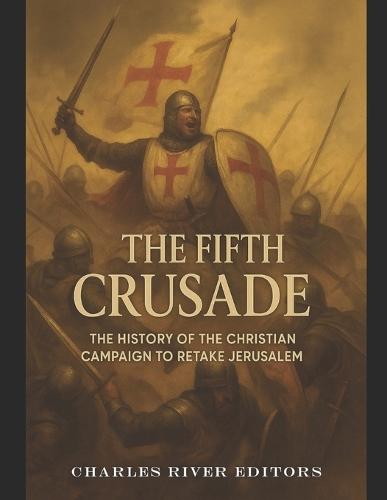
In the 50 years following the First Crusade, the Latin states in the East were consolidated, but there were also growing tensions and new challenges. Against this backdrop, the fall of the County of Edessa in December 1144 at the hands of Zengi, the atabeg of Aleppo and Mosul, was a catastrophic event. Founded in 1098 by the future King Baldwin of Boulogne, Edessa was the first Crusader state, as well as the northernmost, weakest, and least populated. It was constantly exposed to Muslim attacks, and news of its fall reached Europe at the beginning of 1145, and the fall was the catalyst for the Second Crusade. Furthermore, the Crusader States were also concerned about their relationship with the Byzantine Empire, as relations with the Byzantines were often tense. Indeed, efforts to strengthen and then retake parts of the collapsing Crusader States would fuel subsequent Crusades, and the Fourth Crusade notoriously ended with the Crusaders sacking Constantinople instead of proceeding to Jerusalem. Naturally, the Fifth Crusade was launched as a result of the Fourth Crusade's failure to retake Jerusalem, and Pope Innocent III's goal of reclaiming Jerusalem, which had been lost in 1187, remained unchanged. At the same time, there was a truce between the Kingdom of Jerusalem and the Ayyubid Sultan al-'Adil I, which was due to expire in 1217. The timing seemed favorable for a new initiative, particularly given the strengthening of Christendom in other regions such as Spain, where the victory at Las Navas de Tolosa in 1212 had secured much of the Iberian Peninsula against the Moors. The turning point for the proclamation of the Fifth Crusade was the Fourth Lateran Council in 1215, where Innocent III established a model for future Crusades, providing the enterprise with consistent legal, liturgical, and fiscal provisions. A 5% tithe on clerical incomes for three years was imposed to finance the expedition, demonstrating an unprecedented financial commitment by the Church, even after Innocent III died unexpectedly in 1216 and left the execution of these plans to his successor, Pope Honorius III. This Crusade, which took place between 1217 and 1221, became known as the Crusade of Damietta due to its focus on Egypt. While the ultimate strategic objective was the reconquest of Jerusalem, the adopted strategic orthodoxy held that controlling Ayyubid Egypt was key to the Holy Land, as it was considered the main source of Muslim power and wealth. Those present included the titular king of Jerusalem, John of Brienne, the Patriarch, and the leaders of the various military orders, and they finalized an operational plan to attack Egypt, specifically the port of Damietta. The aim was to threaten or capture Cairo and use it as a bargaining tool. The Fifth Crusade was a pivotal event, not only due to its military outcomes, but also because it was a collision between Crusader idealism, imperial politics, and emerging papal authority. In fact, it was the last time a pope organized a Crusade of this scale for the Holy Land. However, on the battlefield in Egypt, the decisions were dominated by two conflicting figures: the secular King John of Brienne and the papal legate Cardinal Pelagius of Albano, whom the Pope entrusted with command. Religious idealism was evident in the eschatological atmosphere, characterized by a widespread belief in the imminent arrival of the mythical Prester John from the East and a renewed fervor for the mission. The final failure of the Crusade came in 1221 after a disastrous advance towards Cairo, and though it was blamed on divided leadership and logistics, it had massive ramifications for the region, the collapsing Crusader States, and the floundering Byzantine Empire moving forward.
Full Product Details
Author: Charles River
Publisher: Independently Published
Imprint: Independently Published
Dimensions:
Width: 21.60cm
, Height: 0.30cm
, Length: 27.90cm
Weight: 0.154kg
ISBN: 9798272015037
Pages: 56
Publication Date: 28 October 2025
Audience:
General/trade
,
General
Format: Paperback
Publisher's Status: Active
Availability: Available To Order

We have confirmation that this item is in stock with the supplier. It will be ordered in for you and dispatched immediately.