Overview
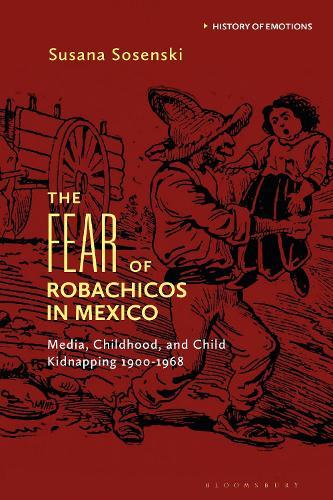
Civil society organizations report that fourteen children disappear every day in Mexico. This book studies the origins of this social phenomenon and its consequences, not only in the emotional sphere, but also in how children have been treated. Focusing on children’s special positions within Mexican society rather than criminal acts or the implementation of the law, Sosenski links social and cultural history, the history of crime and fear, the application of justice and the media’s role, childhood and the city to paint a multi-dimensional picture of child abduction and its causes. Exploring the social impact of child protection policies and the figure of the robachicos, or child kidnapper, Soneski draws from oral traditions, films and books, songs and plays; all of which embody a culture of fear and danger reported and accentuated by a mass media response. The Fear of Robachicos in Mexico focuses on the role of the media and entertainment in the legitimization of violence toward children and the objectification of their lives, stripping them of their right to freedom and curtailing their autonomy.
Full Product Details
Author: Susana Sosenski (The National Autonomous University of Mexico, Mexico) ,
Quentin Pope ,
Quentin Pope ,
Susan J Matt (Weber State University USA)
Publisher: Bloomsbury Publishing PLC
Imprint: Bloomsbury Academic
Dimensions:
Width: 15.60cm
, Height: 2.50cm
, Length: 23.40cm
Weight: 0.454kg
ISBN: 9781350424463
ISBN 10: 1350424463
Pages: 240
Publication Date: 19 March 2026
Audience:
College/higher education
,
Postgraduate, Research & Scholarly
Format: Paperback
Publisher's Status: Forthcoming
Availability: Manufactured on demand

Reviews
Sosenski's book combines two of the most elusive, but also the most fascinating, objects of study in recent times: the history of childhood and the history of emotions. Child abduction in Mexico may seem local, but Sosenski transforms it into an obligatory point of reference. An extraordinary book by one of the best cultural historians of the American continent. - Javier Moscoso, Research Professor of History and Philosophy of Science, Centro de Ciencias Humanas y Sociales, Spain Our most ingrained fear is the disappearance of our children. Susana Sosenski put together a compelling history of kidnapping in Mexico, its treatment by the media and popular culture, and the moral panics they sparked. Her subject matter and fluid writing make this book an enthralling and necessary read. - Gonzalo Soltero, Professor, Universidad Nacional Autónoma de México, Mexico Susana Sosenski's Robachicos provides uncommon insight into the way that the media and public discourses leveraged representations of children and their abductors in twentieth-century Mexico to construct regimes of fear that influenced public policy, and ultimately resulted in the loss of children's autonomy in the public sphere. - Elena Jackson Albarrán, Associate Professor of History and Global and Intercultural Studies, Miami University, United States
Author Information
Susana Sosenski is Professor of contemporary Mexican history at the Historical Research Institute of the National Autonomous University of Mexico. She is the author of two books, has contributed and edited several book chapters and journal articles, and is the recipient of the Sor Juana Ines de la Cruz prize. Her other topics of specialization include the history of childhood, cultural history, and history of mass media.