Overview
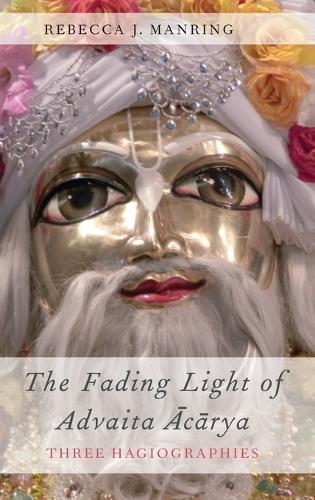
Rebecca J. Manring offers an illuminating study and translation of three hagiographies of Advaita Acarya, a crucial figure in the early years of the devotional Vaisnavism which originated in Bengal in the fifteenth century. Advaita Acarya was about fifty years older than the movement's putative founder, Caitanya, and is believed to have caused Caitanya's advent by ceaselessly storming heaven, calling for the divine presence to come to earth. Advaita was a scholar and highly respected pillar of society, whose status lent respectability and credibility to the new movement. A significant body of hagiographical and related literature about Advaita Acarya has developed since his death, some as late as the early twentieth century. The three hagiographic texts included in The Fading Light of Advaita Acarya examine the years of Advaita's life that did not overlap with Caitanya's lifetime, and each paints a different picture of its protagonist. Each composition clearly advocates the view that Advaita was himself divine in some way, and a few go so far as to suggest that Advaita reflected even greater divinity than Caitanya, through miraculous stories that can be found nowhere else in Bengali Vaisnava literature. Manring provides a detailed introduction to these texts, as well as remarkably faithful translations of Haricarana Dasa's Advaita Mangala, Laudiya Krsnadasa's Balya-lila-sutra, and Isana Nagara's Advaita Prakasa.
Full Product Details
Author: Rebecca J. Manring (Associate Professor of India Studies and Religious Studies, Associate Professor of India Studies and Religious Studies, Indiana University-Bloomington)
Publisher: Oxford University Press Inc
Imprint: Oxford University Press Inc
Dimensions:
Width: 23.60cm
, Height: 2.50cm
, Length: 16.30cm
Weight: 0.567kg
ISBN: 9780199736461
ISBN 10: 0199736464
Pages: 312
Publication Date: 19 January 2012
Audience:
College/higher education
,
Postgraduate, Research & Scholarly
Format: Hardback
Publisher's Status: Active
Availability: To order

Stock availability from the supplier is unknown. We will order it for you and ship this item to you once it is received by us.
Reviews
Advaita Acarya, one of the two most significant disciples of Caitanya, stood at the intersection of ecstatic Vaisnava devotionalism and the strict demands of orthodox Brahmanism. Rebecca Manring's lucid translations of the hagiographies of Advaita tell the story of his resuscitation in late nineteenth-century Bengal by what she identifies as 'the religious right of its day.' The intrinsic fascination of these texts is compounded by the underlying political narrative. Ralph W. Nicholas, William Rainey Harper Professor Emeritus, University of Chicago
<br> Advaita Acarya, one of the two most significant disciples of Caitanya, stood at the intersection of ecstatic Vaisnava devotionalism and the strict demands of orthodox Brahmanism. Rebecca Manring's lucid translations of the hagiographies of Advaita tell the story of his resuscitation in late nineteenth-century Bengal by what she identifies as 'the religious right of its day.' The intrinsic fascination of these texts is compounded by the underlying political narrative. ---Ralph W. Nicholas, William Rainey Harper Professor Emeritus, University of Chicago <br><p><br>
Advaita Acarya, one of the two most significant disciples of Caitanya, stood at the intersection of ecstatic Vaisnava devotionalism and the strict demands of orthodox Brahmanism. Rebecca Manring's lucid translations of the hagiographies of Advaita tell the story of his resuscitation in late nineteenth-century Bengal by what she identifies as 'the religious right of its day.' The intrinsic fascination of these texts is compounded by the underlying political narrative. ---Ralph W. Nicholas, William Rainey Harper Professor Emeritus, University of Chicago
Author Information
Rebecca J. Manring considers Kolkata her second home. She lives and gardens in Bloomington, Indiana, where she is Associate Professor of India Studies and Religious Studies at Indiana University.