Overview
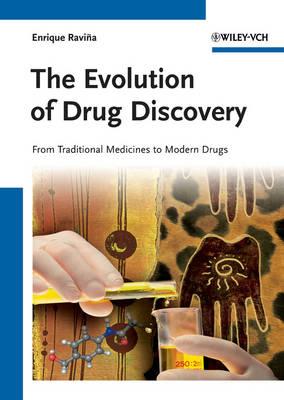
The discovery and use of medicines is just as fascinating a human scientific endeavor as space flight or the tracing of human evolution. It is also the everyday task of hundreds of thousands of pharmacists, pharmaceutical chemists and researchers worldwide. Based on his profound knowledge of past and present paradigms in the development of medicines, Enrique Ravina takes the reader from the very beginnings of pharmacology to the multibillion-dollar business it represents today. Recounting the often spectacular successes and failures of innovative drugs as well as the people who discovered them, he brings abstract science to life in anecdotal form. For anyone with a more than superficial interest in the science of drugs and all those interested in knowing how drugs have been developed, how they have reached us, and became part of our daily life. This book is beautifully illustrated, containing many rare and historical photographs of drugs and their discoverers, and abounds with references to the primary literature, listing seminal publications alongside more modern reviews for readers seeking further details. With a Foreword by Hugo Kubinyi
Full Product Details
Author: Enrique Ravina (University of Santiago de Compostela, Spain) ,
Hugo Kubinyi
Publisher: Wiley-VCH Verlag GmbH
Imprint: Blackwell Verlag GmbH
Dimensions:
Width: 17.30cm
, Height: 2.80cm
, Length: 24.60cm
Weight: 1.157kg
ISBN: 9783527326693
ISBN 10: 3527326693
Pages: 528
Publication Date: 18 March 2011
Audience:
Professional and scholarly
,
Professional & Vocational
Format: Hardback
Publisher's Status: Active
Availability: To order

Stock availability from the supplier is unknown. We will order it for you and ship this item to you once it is received by us.
Reviews
It can be used by students interested in the classic achievements and case stories of drug discovery, but also by more experienced scientists as a guiding overview on the field. Last but not least, it serves well as a compendium to industrial professionals in the field of biomedical and medicinal chemistry research. (ChemMedChem, 2011)<p>
This serves as an excellent companion to many of the popular medicinal chemistry and pharmacology books, and gives students additional insight into the contemporary drug discovery process. (Doody's, 16 March 2012) The text is well referenced and complete with chemical illustrations... Recommended. Upper-division undergraduates through professionals. (Choice, 1 October 2011) <p> It can be used by students interested in the classic achievements and case stories of drug discovery, but also by more experienced scientists as a guiding overview on the field. Last but not least, it serves well as a compendium to industrial professionals in the field of biomedical and medicinal chemistry research. (ChemMedChem, 2011) <p>
The text is well referenced and complete with chemical illustrations. . . Recommended. Upper-division undergraduates through professionals. (Choice, 1 October 2011)<p> It can be used by students interested in the classic achievements and case stories of drug discovery, but also by more experienced scientists as a guiding overview on the field. Last but not least, it serves well as a compendium to industrial professionals in the field of biomedical and medicinal chemistry research. (ChemMedChem, 2011)<p>
This serves as an excellent companion to many of the popular medicinal chemistry and pharmacology books, and gives students additional insight into the contemporary drug discovery process. (Doody's, 16 March 2012) The text is well referenced and complete with chemical illustrations... Recommended. Upper-division undergraduates through professionals. (Choice, 1 October 2011) It can be used by students interested in the classic achievements and case stories of drug discovery, but also by more experienced scientists as a guiding overview on the field. Last but not least, it serves well as a compendium to industrial professionals in the field of biomedical and medicinal chemistry research. (ChemMedChem, 2011)
Author Information
Enrique Ravina studied pharmacy at the University of Santiago de Compostela, Spain, where he obtained his PhD in 1969 and was appointed Professor of Organic Chemistry in 1975. Since 1981 he is Professor of Medicinal/Pharmaceutical Chemistry at the same University. He is a member of the Spanish Royal Academy of Pharmacy, a founding member of the Spanish Society of Medicinal Chemistry and a member of the American Chemical Society. Professor Ravina has over 120 publications to his name in the field of chemistry of drugs, especially in the area of antipsychotic and cardiovascular potential drugs, including a book, book chapters, as well as a co-inventor of the world patent ""6-phenyldihydropyrrolopyrimidinedione derivatives"".