Overview
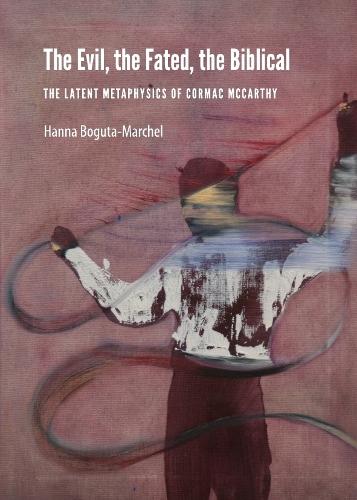
The most intriguing aspect of Cormac McCarthy's writing is the irresistible premonition that his sentences carry an exceptional potential, that after each subsequent reading they surprise us with increasingly deeper layers of meaning, which are often in complete contradiction to the readers' initial intuitions. His novels belong to the kind that we dream about at night, that follow us and do not let themselves be forgotten.Cormac McCarthy's prose has been read in the light of a variety of theories, ranging from Marxist criticism, the pastoral tradition, Gnostic theology, the revisionist approach to the American Western, to feminist and eco-critical methodology. The perspective offered in The Evil, the Fated, the Biblical is an existentialist theological approach, which proposes a reading of McCarthy that focuses on the issue of evil and violence as it is dealt with in his novels. ""Evil,"" unquestionably being a metaphysical category and, as a result, quite commonly pronounced passé, is a challenging and overwhelming topic, which nevertheless deeply concerns all of us. Boguta-Marchel's book is therefore an attempt to confront a theme that is an unpopular object of scholarly examination and, at the same time, a commonly shared experience in the everyday life of all human beings.The book follows the pattern of an increasingly in-depth analysis of the drama of evil that is omnipresent in McCarthy's books: from the level of the visual (grotesque images, hyperbolic depictions of violence, cinematic precision of matter-of-fact descriptions), through the level of events (circularity and repetitiveness of action, characters conceptualizing and enacting the struggle between predetermined fate and good will), to the level of the metaphysical (existential crises, grappling with the idea and the person of God, biblical allusions reappearing in the text). This way, The Evil, the Fated, the Biblical provides a complete picture of McCarthy's contest with one of the most troublesome issues that humanity has ever faced.
Full Product Details
Author: Hanna Boguta-Marchel
Publisher: Cambridge Scholars Publishing
Imprint: Cambridge Scholars Publishing
Edition: Unabridged edition
Dimensions:
Width: 14.80cm
, Height: 2.30cm
, Length: 21.20cm
Weight: 0.431kg
ISBN: 9781443838825
ISBN 10: 1443838829
Pages: 215
Publication Date: 11 October 2012
Audience:
College/higher education
,
Professional and scholarly
,
Postgraduate, Research & Scholarly
,
Professional & Vocational
Format: Hardback
Publisher's Status: Active
Availability: Available To Order

We have confirmation that this item is in stock with the supplier. It will be ordered in for you and dispatched immediately.
Author Information
Hanna Boguta-Marchel is a philologist, psychologist, and mediator. She received an MA from the Institute of English Studies, University of Warsaw in 2003, and she received an MA from the Faculty of Psychology, University of Warsaw in 2004. She completed her PhD on the literature of Cormac McCarthy at the University of Warsaw in 2009. Presently, she teaches methodology and psychology at the University of Warsaw and at the University of Social Sciences and Humanities, and works as a mediator in family and civil conflicts. Her recent publications include ""Violence against the Ethnically Other: The Subversiveness of Cormac McCarthy's Blood Meridian"" in Ideology and Rhetoric (2008), ""The Actual and Virtual Identity of Cormac McCarthy: A Case Study"" in Tools of Their Tools (2009), ""'See' the Book: Adapting the Prose of Cormac McCarthy for the Screen"" in Projecting Words, Writing Images (2011) and ""'Memories are uncertain and the past that was differs little from the past that was not': Some Reflections on the Repetitiveness and Originality of Cormac McCarthy's Blood Meridian"" in A Culture of Recycling / Recycling Culture? (2011)