Overview
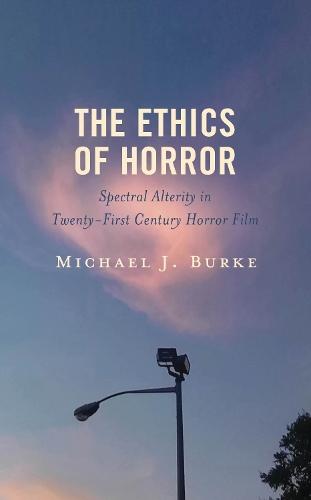
The Ethics of Horror: Spectral Alterity in Twenty-First Century Horror Film examines the theme of spectral haunting in contemporary American horror cinema through the lens of ethical responsibility. Arguing that moral obligation can manifest as terror to the complacent self, the text extracts this dimension of ethics in twenty-first century horror films. Drawing on the ethical theories of Emmanuel Levinas and Jacques Derrida, which posit the asymmetrical obligation of the self to the other, Michael Burke highlights how recent horror films portray spectral antagonists as ethical others that hound protagonists and summon them to an accountability that they can neither evade nor ever completely fulfill. Burke observes the resulting destabilization of notions of ethical responsibility and justice in a variety of contemporary horror subgenres, including technohorror, haunted house and zombie films.
Full Product Details
Author: Michael J. Burke
Publisher: Bloomsbury Publishing Plc
Imprint: Lexington Books
Dimensions:
Width: 15.80cm
, Height: 2.10cm
, Length: 23.60cm
Weight: 0.540kg
ISBN: 9781666910841
ISBN 10: 1666910848
Pages: 258
Publication Date: 06 March 2024
Audience:
Professional and scholarly
,
Professional & Vocational
Format: Hardback
Publisher's Status: Active
Availability: Manufactured on demand

We will order this item for you from a manufactured on demand supplier.
Reviews
"Through the unlikely pairing of Derridean and Levinasian ethics and popular horror films of the twenty-first century, Burke offers a fresh take on familiar horror tropes like the haunted house, the ghost story, and the zombie apocalypse, arguing that the more recent iterations of these themes highlight Levinas' stance that ethical responsibility to the other is ""impossible to fulfill"" and suggest that ""restitution and reparation"" are no longer possible. This work is both provocative and surprisingly poignant. Indeed, it ""stirs reflection over why moral conscience should remain unsettled, especially in a time where the recognition of others' suffering . . . seems blinkered."" --Kimberly Jackson, Florida Gulf Coast University Michael Burke offers a refreshing take on twenty-first century horror film, exploring the thesis that we have seen a shift from ghost stories that resolve or lay spirits to rest towards insistent representations of relentless, implacable, inexplicable monsters who refuse any containment or closure. Ranging from Japanese 'hungry ghosts' via haunted houses and spectral technologies to the zombie hordes and the 'it' of It Follows, Burke brings to bear an inventive 'ethics of alterity' derived from the work of philosophers Emmanuel Levinas and Jacques Derrida. The Ethics of Horror is a compelling reading of a notable contemporary turn in horror film, full of valuable insights. --Prof. Roger Luckhurst, Birkbeck, University of London, Author of Gothic: An Illustrated History Through the unlikely pairing of Derridean and Levinasian ethics and popular horror films of the twenty-first century, Burke offers a fresh take on familiar horror tropes like the haunted house, the ghost story, and the zombie apocalypse, arguing that the more recent iterations of these themes highlight Levinas' stance that ethical responsibility to the other is ""impossible to fulfill"" and suggest that ""restitution and reparation"" are no longer possible. This work is both provocative and surprisingly poignant. Indeed, it ""stirs reflection over why moral conscience should remain unsettled, especially in a time where the recognition of others' suffering . . . seems blinkered."" Michael Burke offers a refreshing take on twenty-first century horror film, exploring the thesis that we have seen a shift from ghost stories that resolve or lay spirits to rest towards insistent representations of relentless, implacable, inexplicable monsters who refuse any containment or closure. Ranging from Japanese 'hungry ghosts' via haunted houses and spectral technologies to the zombie hordes and the 'it' of It Follows, Burke brings to bear an inventive 'ethics of alterity' derived from the work of philosophers Emmanuel Levinas and Jacques Derrida. The Ethics of Horror is a compelling reading of a notable contemporary turn in horror film, full of valuable insights."
Through the unlikely pairing of Derridean and Levinasian ethics and popular horror films of the twenty-first century, Burke offers a fresh take on familiar horror tropes like the haunted house, the ghost story, and the zombie apocalypse, arguing that the more recent iterations of these themes highlight Levinas' stance that ethical responsibility to the other is ""impossible to fulfill"" and suggest that ""restitution and reparation"" are no longer possible. This work is both provocative and surprisingly poignant. Indeed, it ""stirs reflection over why moral conscience should remain unsettled, especially in a time where the recognition of others' suffering . . . seems blinkered."" --Kimberly Jackson, Florida Gulf Coast University Michael Burke offers a refreshing take on twenty-first century horror film, exploring the thesis that we have seen a shift from ghost stories that resolve or lay spirits to rest towards insistent representations of relentless, implacable, inexplicable monsters who refuse any containment or closure. Ranging from Japanese 'hungry ghosts' via haunted houses and spectral technologies to the zombie hordes and the 'it' of It Follows, Burke brings to bear an inventive 'ethics of alterity' derived from the work of philosophers Emmanuel Levinas and Jacques Derrida. The Ethics of Horror is a compelling reading of a notable contemporary turn in horror film, full of valuable insights. --Prof. Roger Luckhurst, Birkbeck, University of London, Author of Gothic: An Illustrated History
"Through the unlikely pairing of Derridean and Levinasian ethics and popular horror films of the twenty-first century, Burke offers a fresh take on familiar horror tropes like the haunted house, the ghost story, and the zombie apocalypse, arguing that the more recent iterations of these themes highlight Levinas' stance that ethical responsibility to the other is ""impossible to fulfill"" and suggest that ""restitution and reparation"" are no longer possible. This work is both provocative and surprisingly poignant. Indeed, it ""stirs reflection over why moral conscience should remain unsettled, especially in a time where the recognition of others' suffering . . . seems blinkered."" --Kimberly Jackson, Florida Gulf Coast University Michael Burke offers a refreshing take on twenty-first century horror film, exploring the thesis that we have seen a shift from ghost stories that resolve or lay spirits to rest towards insistent representations of relentless, implacable, inexplicable monsters who refuse any containment or closure. Ranging from Japanese 'hungry ghosts' via haunted houses and spectral technologies to the zombie hordes and the 'it' of It Follows, Burke brings to bear an inventive 'ethics of alterity' derived from the work of philosophers Emmanuel Levinas and Jacques Derrida. The Ethics of Horror is a compelling reading of a notable contemporary turn in horror film, full of valuable insights. --Prof. Roger Luckhurst, Birkbeck, University of London, Author of Gothic: An Illustrated History"
Author Information
Michael J. Burke is associate professor of philosophy at St. Joseph’s University, New York, and director of the honors program of its Brooklyn campus.