Overview
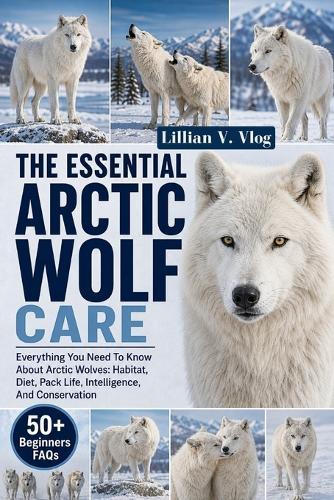
INTRODUCTION TO THE ARCTIC WOLF The Arctic wolf, known scientifically as a subspecies of the gray wolf, is one of the most resilient and specialized predators on Earth. Living in some of the harshest conditions on the planet, it has evolved extraordinary adaptations that allow it to survive, hunt, and thrive in the frozen wilderness of the Arctic regions. This chapter explores the origins of the Arctic wolf, its biological and ecological uniqueness, and the traits that distinguish it from other wild canids. Overview of the Arctic Wolf The Arctic wolf is a subspecies of the gray wolf adapted specifically to the extreme cold and isolation of the Arctic tundra. It is scientifically classified as Canis lupus arctos and belongs to the broader wolf family, which includes wolves found across North America, Europe, and Asia. However, unlike its relatives that inhabit forests, mountains, and plains, the Arctic wolf lives in environments where temperatures can plunge below -50°C (-58°F), and where snow and ice dominate the landscape for most of the year. One of the most well-known representatives of this subspecies is the Arctic wolf, a highly social predator that has developed survival strategies uniquely suited to life in the high north. Arctic wolves are typically found in regions such as northern Greenland, the Canadian Arctic Archipelago, and parts of Alaska. These areas are characterized by long winters, brief summers, and limited vegetation. Unlike other wolves, Arctic wolves live in regions with very little human interference, which has allowed them to maintain much of their natural behavior patterns. Despite their remote habitat, Arctic wolves play a crucial role in maintaining ecological balance. As apex predators, they regulate populations of herbivores such as musk oxen and Arctic hares, preventing overgrazing and ensuring the stability of fragile Arctic ecosystems. Origins and Evolution The Arctic wolf evolved from gray wolf populations that migrated northward thousands of years ago during the last Ice Age. As glaciers expanded and temperatures dropped, certain wolf populations gradually adapted to survive in the polar environment. Over time, natural selection favored individuals with traits that allowed them to withstand extreme cold, hunt in snowy terrain, and survive long periods with limited food availability. Unlike many other subspecies that experienced fragmentation due to human expansion, Arctic wolves remained relatively isolated. This isolation contributed to their unique evolutionary path. Genetic studies suggest that Arctic wolves diverged from other gray wolves approximately 20,000 to 45,000 years ago, although exact timelines remain debated among scientists. Their evolutionary success is closely tied to their ability to adapt both physically and behaviorally. Changes in coat color, body size, hunting strategies, and social behavior all contributed to their survival in one of the most unforgiving environments on Earth. Physical Adaptations to Extreme Cold One of the most striking features of the Arctic wolf is its thick, insulating coat. Unlike other wolves, Arctic wolves have a double-layered fur system consisting of a dense undercoat and a coarse outer layer. This insulation traps body heat effectively, allowing them to maintain a stable internal temperature even in extreme cold. Their fur is typically white or cream-colored, providing camouflage against snow and ice. This coloration is not only visually adaptive but also essential for hunting, as it allows them to approach prey undetected in a barren, open landscape. Arctic wolves also have shorter ears, muzzles, and limbs compared to other wolf subspecies. These reduced extremities minimize heat loss, following a biological principle known as Allen's Rule, which states that animals in colder climates tend to have shorter appendages to conserve heat.
Full Product Details
Author: Lillian V Vlog
Publisher: Independently Published
Imprint: Independently Published
Dimensions:
Width: 15.20cm
, Height: 1.10cm
, Length: 22.90cm
Weight: 0.281kg
ISBN: 9798197659934
Pages: 204
Publication Date: 19 May 2026
Audience:
General/trade
,
General
Format: Paperback
Publisher's Status: Active
Availability: Available To Order

We have confirmation that this item is in stock with the supplier. It will be ordered in for you and dispatched immediately.