Overview
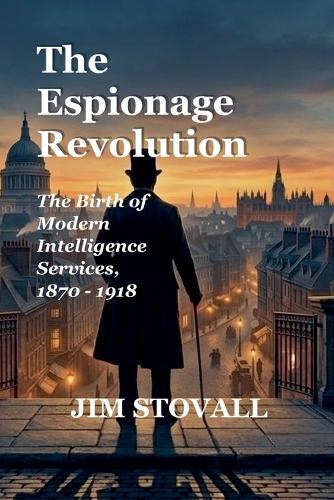
How did professional espionage begin? Who built the intelligence services that shaped the modern world? In September 1870, the French army marched confidently toward war with Prussia. Six weeks later, an emperor had surrendered, an empire had fallen, and every military observer in Europe had learned a devastating lesson: the nation that knew more had destroyed the nation that knew less. The Espionage Revolution tells the dramatic story of what happened next-how the great powers transformed intelligence from an amateur gentleman's pursuit into a professional, permanent institution. Driven by technological change, geopolitical competition, and spectacular failures, visionary individuals built the services we know today as MI5, MI6, and their counterparts across Europe. Inside this book, you'll discover: The founders: Vernon Kell, the methodical organizer who built MI5 from nothing, and Mansfield Cumming, the theatrical adventurer who created MI6-two men whose contrasting approaches established cultures that persist to this day The catastrophes: The Dreyfus Affair, which exposed what happens when intelligence services care more about reputation than truth; the Redl scandal, which revealed how one traitor could doom an empire The technologies: How the telegraph, railways, and dreadnought arms race made amateur methods obsolete and professional capabilities essential The spy scares: The invasion novels, the public hysteria, and the kernel of genuine threat that created political pressure for action The triumphs: Room 40's code-breaking achievements, including the Zimmermann Telegram that helped bring America into World War I The transformation: How small pre-war services became major wartime institutions, proving intelligence essential to modern warfare From the shock of Sedan to the guns of August 1914, The Espionage Revolution reveals how spies became professionals and changed the world. This is narrative history at its best-accessible, dramatic, and grounded in scholarship. Perfect for readers who enjoyed: Ben Macintyre's espionage histories Barbara Tuchman's The Zimmermann Telegram Christopher Andrew's intelligence histories Historical thrillers set in the era of the Great War
Full Product Details
Author: Jim Stovall
Publisher: Jim Stovall
Imprint: Jim Stovall
Dimensions:
Width: 15.20cm
, Height: 1.20cm
, Length: 22.90cm
Weight: 0.277kg
ISBN: 9798233794056
Pages: 202
Publication Date: 16 March 2026
Audience:
General/trade
,
General
Format: Paperback
Publisher's Status: Active
Availability: Available To Order

We have confirmation that this item is in stock with the supplier. It will be ordered in for you and dispatched immediately.
Author Information
James Glen Stovall (Jim) is a retired professor of journalism who lives in East Tennessee. During his teaching career, he taught at the University of Alabama (1978-2003), Emory and Henry College (2003-2006) and the University of Tennessee (2006-2016). He is now working on a second career writing young adult fiction and mysteries. Jim is the author of the a selling writing textbook, Writing for the Mass Media, as well as other journalism texts such as Journalism: Who, What, When, Where, Why and How and Web Journalism. Other books include: - Seeing Suffrage: The 1913 Washington Suffrage Parade, Its Pictures, and Its Effects on the American Political Landscape - Battlelines: Gettysburg: Civil War Sketch Artists and the First Draft of War In addition to writing, Jim likes to paint (watercolor), draw (pen and ink), play music (dulcimer and banjo), garden and piddle around in his woodworking shop. Jim grew up in Nashville, Tennessee, and that is his favorite setting for his novels.