Overview
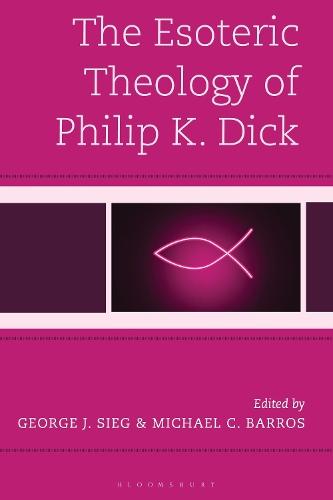
This volume collects chapters written to commemorate the 50th anniversary of Philip K. Dick's transformative 1974 mystical experiences, through which he ultimately contextualized his influential and posthumously much-adapted science-fiction and speculative fiction. Contributing authors here examine the enduring significance of Philip K. Dick and his work, drawing on diverse scholarly perspectives that engage seriously with his self-understanding as Christian, gnostic, mystic, and theologian. Including contextual introduction and overviews, individual chapters focusing on specific works of PKD (as well as some of their adaptations), critical analysis, and examination of their significance within the life and worldview of PKD and his milieu, this collection continues foundational work that has characterized PKD's contributions to science fiction and speculative fiction as significant to its increasingly gnostic trajectory, as well as opening new avenues of exploration that situates PKD's impact within the broader appeal of esoteric worldviews as they have continued to propagate through the counterculture into the mainstream. PKD's commitment and dedication to Christian belief, faith, and practice, as well as Christian gnosis and mystical experience, are foci of particular interest, and this volume challenges the frequent misconception of PKD as exclusively relevant to Gnostic counter-cultural mysticism. Instead, his esoteric Christian gnosis is identified and analyzed as the basis of his ultimately moral and consistently humanistic theology.
Full Product Details
Author: George J. Sieg , Michael C. Barros , Michael C. Barros , Justin Cosner
Publisher: Bloomsbury Publishing Plc
Imprint: Lexington Books/Fortress Academic
Dimensions:
Width: 15.20cm
, Height: 2.50cm
, Length: 22.90cm
Weight: 0.454kg
ISBN: 9781978716650
ISBN 10: 1978716656
Pages: 264
Publication Date: 19 March 2026
Audience:
Professional and scholarly
,
Professional & Vocational
Format: Hardback
Publisher's Status: Active
Availability: Manufactured on demand 
We will order this item for you from a manufactured on demand supplier.
Table of Contents
Introduction Section I: Foundations of Esoteric Theology Chapter One: This is the Gospel of Philip K. Dick: A Self-Referential Science Fiction Theology, Riccardo Gramantieri Chapter Two: The Conquest of Death and the Divine Afterlife: Philip K. Dick’s Life and Fiction of the 1960s, M. Blake Wilson Chapter Three: Consuming Communion: Transcendence, Moral Clarity, and Community in The Three Stigmata of Palmer Eldritch, Justin Cosner Chapter Four: When the Dickian Time Drives on, Laying Bare the Ubik Landscape: Ubik as Philip K. Dick's Early Exploration of God before his 2-3-74 Mystical Experience, Laurie Jui-hua Tseng Section II: Theological Themes Chapter Five: Groove Override: The Defeat of Heimarmene in Dick’s “Exegesis”, Gabriel Mckee Chapter Six: What is Human: Humanism in Philip K. Dick’s Do Android Dream of Electric Sheep?, Maxwell E. Stevenson Chapter Seven: A Structure of Belief: The Function of Conspiracy in A Scanner Darkly, Richard Johnston Jones Section III: Who Do You Say That I Am? Chapter Eight: Do Elohim Dream of Spirit Sheep?, Joshua Snell Chapter Nine: The VALIS Confession: Esoteric Compassion and the Struggle for Recognition, Scott Maybell Section IV: The Freedom of the Logos Chapter Ten: Do Dictators Dream of Listless Grasshoppers?: Counter-Totalitarianism, Exceptionality, and a Materialized Political Radicalism, John C. McDowell Chapter Eleven: “I Gotta Figure This Out”: Philip K. Dick, Calvinism, and the Hermeneutics of Spielberg’s Minority Report, Stephen Daly Chapter Twelve: Fabulations of Theory, Aaron French Conclusion: Disclosure of the Worlds to Come About the Contributors
Reviews
Philip K. Dick has had a fantastic impact on American science fiction, film, and television. Here, however, we find a sci-fi master that is not generally known: the gnostic author who is inspired by his own direct mystical experience of some cosmic mind but who had long been involved in intensely religious questions about death, free will, capitalism, colonialism, and the end of all things (and people). Here is a stunningly honest interpretation of God (and Satan) that is superhuman, that is, fully human and historical, even rogue, but also transcendent to any local society or personalized ego. Here is a ‘gospel’ about our doubled identity coming from the future. * Jeffrey J. Kripal, author of How to Think Impossibly: About Souls, UFOs, Time, Belief, and Everything Else *
Author Information
Michael C. Barros teaches philosophy at University of the People. George J. Sieg teaches philosophy at the Southwestern Indian Polytechnic Institute in Albuquerque, New Mexico, and he is the Area Chair for Esotericism, Occultism, and Magic for the Southwest Popular/American Culture Association.
Tab Content 6
Author Website:
Countries Available
All regions
|