Overview
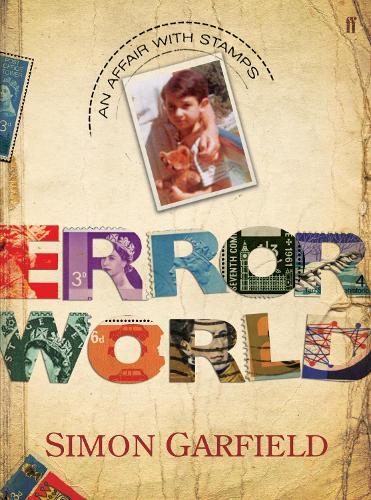
Like many boys of his era, Simon Garfield built a stamp collection the old-fashioned way: by steaming off the corners of envelopes. These days it is big business on the internet, far beyond the pocket of the ordinary collector. The Error Worldtells the funny, absurd and poignant story of an obsessive hobby and the colourful tales of the men who pursue it. But at the heart of the tale is the author's own quest to complete a collection of rare British stamps that have something dramatically wrong with them - missing heads, missing colours, missing numbers - as he wonders whether there is something missing in his own life to be so concerned with a desire his friends and family can't understand.
Full Product Details
Author: Simon Garfield ,
Simon Garfield
Publisher: Faber & Faber
Imprint: Faber & Faber
Edition: Main
Dimensions:
Width: 14.20cm
, Height: 2.20cm
, Length: 18.70cm
Weight: 0.328kg
ISBN: 9780571235261
ISBN 10: 0571235263
Pages: 256
Publication Date: 03 April 2008
Audience:
General/trade
,
General
Format: Hardback
Publisher's Status: Active
Availability: To order

Stock availability from the supplier is unknown. We will order it for you and ship this item to you once it is received by us.
Reviews
PRAISE FOR MAUVE Garfield has surpassed himself with his new subject matter: Mauve elegantly relates the tale of Victorian chemist William Perkin who, in 1856, failed to make quinine from coal tar but discovered instead how to synthesize the colour purple. Fascinating stuff. -- Esquire This engaging and airy history shows how the development of mauve, the first mass-produced artificial dye, ignited a 19th-century revolution . . . Garfield has inspired me to wear a bit of mauve this spring to honour this inventive man. -- The New York Times
PRAISE FOR ""MAUVE""""Garfield has surpassed himself with his new subject matter: ""Mauve"" elegantly relates the tale of Victorian chemist William Perkin who, in 1856, failed to make quinine from coal tar but discovered instead how to synthesize the colour purple. Fascinating stuff.""--""Esquire""""This engaging and airy history shows how the development of mauve, the first mass-produced artificial dye, ignited a 19th-century revolution . . . Garfield has inspired me to wear a bit of mauve this spring to honour this inventive man.""--""The New York Times""
Observer feature writer Garfield (Private Battles, 2006, etc.) examines his passion for stamp collecting.The veteran British author begins in late 2006, when he was on the brink of ruin. He was in debt; his marriage had collapsed; he was involved in an affair with a woman from his past. And philately was the proximate - though not, he reveals later, the ultimate - cause of all this. As Garfield slowly unspools the story of his rise and fall, he detours frequently to zoom in on areas of stamp collecting's increasingly unfamiliar map. (Today's young people don't seem interested in the hobby, he notes.) He sketches the history of the postage stamp, interviews a former U.K. Postmaster General, visits stamp dealers and authorities, attends auctions, glances at how various writers (e.g., Philip Roth, Louise Erdrich) have used philately in their fiction, notes that celebrities like John Lennon have been collectors and examines stamps-never-issued in the Royal Mail Archive. Garfield began collecting as a boy, he says, then gave it up as an adolescent and young man, but returned to it, with renewed vigor, in his 40s. He made substantial purchases (concealed from his wife) and became obsessed with error stamps, those with printing or production mistakes that elevated their value, sometimes enormously. He eventually credits Freud for helping him understand that his collecting was a form of compensation for the untimely losses of his father to a heart attack, his mother to cancer and his brother to viral pneumonia. Garfield depicts his marital infidelity in the same, vaguely self-serving light - and, of course, the flaws on his beloved stamps are analogous to those in his character. He eventually sold his most valuable stamps and paid some debts.The author's enthusiasm does not prove contagious. (Kirkus Reviews)
Author Information
Author Website: http://www.simongarfield.com/
Simon Garfield was born in 1960. He is the author of Expensive Habits: The Dark Side of the Industry (1986), The End of Innocence: Britain in the Time of AIDS (1994), which was awarded the Somerset Maugham Prize, The Wrestling (1996), The Nation's Favourite: The True Adventures of Radio 1 (1998), Mauve (2000), The Last Journey of William Huskisson, and three recent hugely successful books about the Mass Observation archives, Our Hidden Lives, We Are At War and Private Battles.