Overview
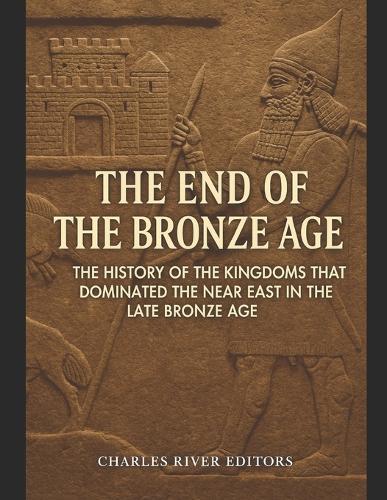
When scholars look at the passage of history, certain epochs and transitions to new periods tend to stand out. The transition from the early modern to the Industrial Age in the late 18th century and the collapse of the Roman Empire are two of the more well known, but the transition from the Bronze to the Iron Age during the late 13th and early 12th centuries BCE arguably changed the structure and course of world history more fundamentally than any period before or since. During this period, numerous wealthy and enduring kingdoms of the eastern Mediterranean Sea region collapsed, and new ones rose in their places. At the center of this period of turmoil was a group of people known today as the Sea Peoples, the English translation of the name given to them by the Egyptians. Despite their prominent role in history, however, the Sea Peoples remain as mysterious as they were influential; while the Egyptians documented their presence and the wars against them, it has never been clear exactly where the Sea Peoples originated from, or what compelled them to invade various parts of the region with massive numbers. Whatever the reason, the Sea Peoples posed an existential threat to the people already living in the region, as noted by an Egyptian inscription: ""The foreign countries (i.e. Sea Peoples) made a conspiracy in their islands. All at once the lands were removed and scattered in the fray. No land could stand before their arms: from Hatti, Qode, Carchemish, Arzawa and Alashiya on, being cut off (i.e. destroyed) at one time. A camp was set up in Amurru. They desolated its people, and its land was like that which has never come into being. They were coming forward toward Egypt, while the flame was prepared before them. Their confederation was the Peleset, Tjeker, Shekelesh, Denyen and Weshesh, lands united. They laid their hands upon the land as far as the circuit of the earth, their hearts confident and trusting: 'Our plans will succeed!'"" Naturally, the mystery surrounding the Sea Peoples has led to all kinds of theories aiming to identify them. While plenty of theories are plausible, there are other fanciful theories that have attempted to associate the Sea Peoples with the Atlantic Ocean and even Troy. Thanks in part to the Sea Peoples invasions, Egypt's New Kingdom (ca. 1550-1050 BCE) is perhaps the best known among non-specialists and Egyptologists alike. The reasons for wide-ranging modern knowledge of the New Kingdom are many and include a wealth of extant written materials, several well-preserved temples, and numerous larger-than-life kings and other personalities. In terms of literature, the New Kingdom not only boasts the most extant texts that have been translated and studied by modern scholars, but also a number of texts originally produced during earlier periods of Egyptian history that were copied during the New Kingdom. In the Near East at the time, the Hittites were one of the region's strongest powers. Since the Hittites were a literate people who developed a fairly sophisticated corpus of literature, ancient Hittite archives can be used to reconstruct events. Unfortunately, the Hittites were not keen about dating their sources, so most of the dates are dependent on ancient Egyptian sources (Macqueen 2003, 8). Although the Biblical accounts of the Assyrians are among the most interesting and are often corroborated with other historical sources, the Assyrians were much more than just the enemies of the Israelites and brutal thugs. Furthermore, the Assyrians prospered for so long that their culture is often broken down by historians into the ""Old"", ""Middle"", and ""Neo"" Assyrian periods, even though the Assyrians themselves viewed their history as a long succession of rulers from an archaic period until the collapse of the neo-Assyrian Empire in the 7th century BCE.
Full Product Details
Author: Charles River
Publisher: Independently Published
Imprint: Independently Published
Dimensions:
Width: 21.60cm
, Height: 0.80cm
, Length: 27.90cm
Weight: 0.336kg
ISBN: 9798261868637
Pages: 138
Publication Date: 17 December 2025
Audience:
General/trade
,
General
Format: Paperback
Publisher's Status: Active
Availability: Available To Order

We have confirmation that this item is in stock with the supplier. It will be ordered in for you and dispatched immediately.