Overview
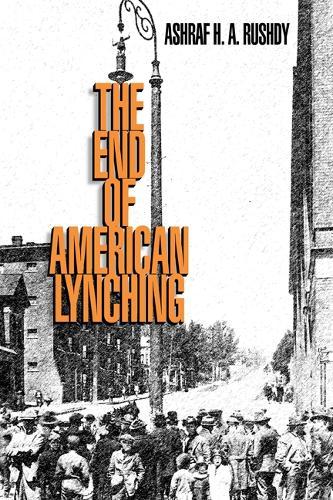
The End of American Lynching questions how we think about the dynamics of lynching, what lynchings mean to the society in which they occur, how lynching is defined, and the circumstances that lead to lynching. Ashraf H. A. Rushdy looks at three lynchings over the course of the twentieth century-one in Coatesville, Pennsylvania, in 1911, one in Marion, Indiana, in 1930, and one in Jasper, Texas, in 1998-to see how Americans developed two distinct ways of thinking and talking about this act before and after the 1930s. One way takes seriously the legal and moral concept of complicity as a way to understand the dynamics of a lynching; this way of thinking can give us new perceptions into the meaning of mobs and the lynching photographs in which we find them. Another way, which developed in the 1940s and continues to influence us today, uses a strategy of denial to claim that lynchings have ended. Rushdy examines how the denial of lynching emerged and developed, providing insight into how and why we talk about lynching the way we do at the dawn of the twenty-first century. In doing so, he forces us to confront our responsibilities as American citizens and as human beings.
Full Product Details
Author: Ashraf H. A. Rushdy
Publisher: Rutgers University Press
Imprint: Rutgers University Press
Dimensions:
Width: 15.20cm
, Height: 1.50cm
, Length: 22.90cm
Weight: 0.367kg
ISBN: 9780813552927
ISBN 10: 0813552923
Pages: 232
Publication Date: 18 June 2012
Recommended Age: From 18 to 99 years
Audience:
General/trade
,
General
Format: Paperback
Publisher's Status: Active
Availability: Temporarily unavailable

The supplier advises that this item is temporarily unavailable. It will be ordered for you and placed on backorder. Once it does come back in stock, we will ship it out to you.
Reviews
The End of American Lynching, Ashraf H. A. Rushdy's important examination of lynching discourse, asks scholars to reconsider how they remember and talk about racial violence.
Written with vigor and in sprightly prose, in this provocative book Rushdy adds much-needed subtlety to the contemporary 'end of racism' debate while clarifying why so many Americans misunderstood or denied the reality of lynching for so long. --W. Fitzhugh Brundage author of Lynching in the New South: Georgia and Virginia, 1880-1930 Both excellent and unique, The End of American Lynching offers a sophisticated yet clear and methodical approach to the study of lynching...fresh, distinct, and eminently readable. --Leigh Raiford author of Imprisoned in a Luminous Glare The End of American Lynching, Ashraf H. A. Rushdy's important examination of lynching discourse, asks scholars to reconsider how they remember and talk about racial violence. --W. Fitzhugh Brundage Journal of American History
Written with vigor and in sprightly prose, in this provocative book Rushdy adds much-needed subtlety to the contemporary 'end of racism' debate while clarifying why so many Americans misunderstood or denied the reality of lynching for so long. --W. Fitzhugh Brundage author of Lynching in the New South: Georgia and Virginia, 1880-1930 Both excellent and unique, The End of American Lynching offers a sophisticated yet clear and methodical approach to the study of lynching...fresh, distinct, and eminently readable. --Leigh Raiford author of Imprisoned in a Luminous Glare The End of American Lynching, Ashraf H. A. Rushdy's important examination of lynching discourse, asks scholars to reconsider how they remember and talk about racial violence. --Journal of American History
Both excellent and unique, The End of American Lynching offers a sophisticated yet clear and methodical approach to the study of lynching...fresh, distinct, and eminently readable. <br>--Leigh Raiford author of Imprisoned in a Luminous Glare (08/05/2011)
Author Information
ASHRAF H. A. RUSHDY teaches in the African American studies program and the English department at Wesleyan University. He is the author of The Empty Garden: The Subject of Late Milton, Neo-Slave Narratives: The Social Logic of a Literary Form, and Remembering Generations: Race and Family in Contemporary African American Literature.