Overview
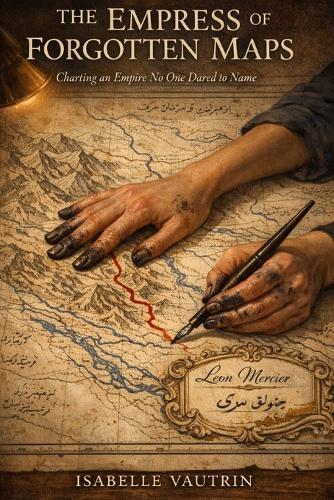
Paris, 1842. The finest cartographer in France has never signed her own name. Marguerite Voss has spent eleven years producing the survey work that made her father famous. She corrects the errors of senior geographers who do not know she exists, drafts the maps that imperial expeditions depend upon, and places her work in Henri Voss's out-tray every Tuesday so that it can be presented to the Societe de Geographie de Paris under his name. She has never been credited. She has never complained. She has been waiting. When the French Ministry of Foreign Affairs commissions a military-grade survey of the trans-Caspian corridor a vast and deliberately blank territory stretching from the Caucasus into Persia no qualified man is available who can do the work. Marguerite negotiates her way onto the expedition under the title of Assistant Draughtswoman, which accurately describes her function while categorically understating her authority over every significant technical decision the survey will require. What she finds in the field changes everything she thought she understood about the map she was hired to make. In Tehran, she meets Nasrin Amiri, the Chief Draughtswoman of the Qajar Royal Geographic Survey and the most technically accomplished cartographer in Persia, who has already surveyed the territory the French believe is blank and who has been expecting the French expedition for three years. Their meeting, two women who are each other's professional equals on opposite sides of an imperial contest, produces something neither the French Ministry nor the Qajar court has anticipated: a collaboration that will result in a map unlike anything the nineteenth century's imperial cartographic tradition was designed to produce. The territory the three competing European empires have been treating as empty is not empty. It is home to two hundred thousand people whose land, water sources, and seasonal routes have been documented in exquisite detail by the Qajar survey and omitted with equal deliberation from every European map. Marguerite's commission is to chart a military corridor. What she makes instead is something more dangerous: a document that proves the land is occupied, which is the one fact that all three empires need it not to be. The Empress of Forgotten Maps is a novel about authorship and erasure, about the specific violence of blank spaces on a map, and about what two women can accomplish when they decide to make something the institutions they serve were never designed to allow. It is a story about the nineteenth century's greatest cartographic contest and about the people who were never supposed to win it. For readers of Tracy Chevalier's Girl with a Pearl Earring, Geraldine Brooks's People of the Book, and Kate Grenville's The Secret River.
Full Product Details
Author: Isabelle Vautrin
Publisher: Independently Published
Imprint: Independently Published
Dimensions:
Width: 15.20cm
, Height: 0.50cm
, Length: 22.90cm
Weight: 0.145kg
ISBN: 9798255074235
Pages: 100
Publication Date: 05 April 2026
Audience:
General/trade
,
General
Format: Paperback
Publisher's Status: Active
Availability: Available To Order

We have confirmation that this item is in stock with the supplier. It will be ordered in for you and dispatched immediately.