Overview
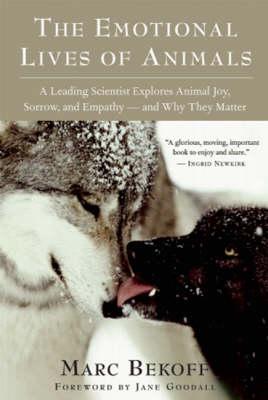
Biologist Marc Bekoff is one of the world's foremost experts on animal emotions. After years of fieldwork studying the communication patterns of coyotes and domestic dogs, Bekoff began challenging the scientific status quo that argued that no scientific proof existed that animals even have emotions, an argument that stubbornly persists today.In ""The Emotional Lives of Animals"", Bekoff moves beyond this academic argument to address what every animal lover and pet owner knows from everyday observation: that animals have rich emotional lives that not only can teach us about love, empathy and compassion but that require us to alter radically our current relationship of domination and abuse with them. Here, Bekoff skilfully blends extraordinary stories and anecdotes of animal grief, joy, embarrassment, anger and love with the latest scientific research confirming emotions that simple, commonsense observation has long pointed to. Filled with Bekoff's light humour and touching stories from animals around the world, ""The Emotional Lives of Animals"" will cause readers to reassess both how they view animals and how they treat them.
Full Product Details
Author: Marc Bekoff
Publisher: New World Library
Imprint: New World Library
Dimensions:
Width: 14.00cm
, Height: 1.40cm
, Length: 21.60cm
Weight: 0.281kg
ISBN: 9781577316299
ISBN 10: 1577316290
Pages: 240
Publication Date: 28 May 2008
Audience:
General/trade
,
General
Format: Paperback
Publisher's Status: Out of Print
Availability: In Print

Limited stock is available. It will be ordered for you and shipped pending supplier's limited stock.
Reviews
Anyone interested in animal emotion will want a copy of this book. Bekoff speaks with the unique authority of an expert who is experiencing the success of a revolution in science and ethics that he helped make and that will endure (if we endure) as one of the signal achievements -- along with the expansion of human rights and environmentalism -- of the late twentieth century. <br>-- The BARk <br><br> This thought-provoking book could very likely change your life. <br>-- The Animals Voice <br><br> Marc Bekoff ably presents the richness and variety of the emotions in nonhuman animals -- and doesn't hesitate to draw the ethical conclusions implicit in his findings. I hope this book will be widely read by those who care about animals -- and even more widely by those who don't. <br>-- Peter Singer, professor of bioethics, Princeton University
Anyone interested in animal emotion will want a copy of this book. Bekoff speaks with the unique authority of an expert who is experiencing the success of a revolution in science and ethics that he helped make and that will endure (if we endure) as one of the signal achievements -- along with the expansion of human rights and environmentalism -- of the late twentieth century. <br>-- The BARk <br><br> This thought-provoking book could very likely change your life. <br>-- The Animals Voice <br><br> Marc Bekoff ably presents the richness and variety of the emotions in nonhuman animals -- and doesn't hesitate to draw the ethical conclusions implicit in his findings. I hope this book will be widely read by those who care about animals -- and even more widely by those who don't. <br>-- Peter Singer, professor of bioethics, Princeton University
Anyone interested in animal emotion will want a copy of this book. Bekoff speaks with the unique authority of an expert who is experiencing the success of a revolution in science and ethics that he helped make and that will endure (if we endure) as one of the signal achievements -- along with the expansion of human rights and environmentalism -- of the late twentieth century. <br>-- The BARk <br> This thought-provoking book could very likely change your life. <br>-- The Animals Voice <br> Marc Bekoff ably presents the richness and variety of the emotions in nonhuman animals -- and doesn't hesitate to draw the ethical conclusions implicit in his findings. I hope this book will be widely read by those who care about animals -- and even more widely by those who don't. <br>-- Peter Singer, professor of bioethics, Princeton University