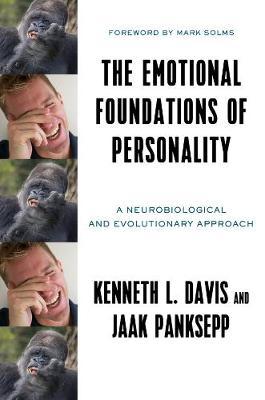
Full Product Details
Author: Kenneth L. Davis ,
Jaak Panksepp (Washington State Univ.'s College of Vet Medicine) ,
Mark Solms (University of Cape Town)
Publisher: WW Norton & Co
Imprint: WW Norton & Co
Dimensions:
Width: 16.80cm
, Height: 3.30cm
, Length: 24.40cm
Weight: 0.682kg
ISBN: 9780393710571
ISBN 10: 0393710572
Pages: 352
Publication Date: 27 March 2018
Audience:
Professional and scholarly
,
Professional & Vocational
Format: Hardback
Publisher's Status: Active
Availability: Available To Order

We have confirmation that this item is in stock with the supplier. It will be ordered in for you and dispatched immediately.
Reviews
Modern neuroscience understands, at long last, the brain basis of emotions. But how do emotions become personality? This remarkable book explores Darwin's insights, personality variation across species (from fish to primates), and the modern neuroscience of feelings. Importantly, it also has a lively account of the probable brain science behind the 'big five' personality traits. Highly readable, it is part survey, critique, and explanatory model, tacking a key question in modern neuroscience: what makes us different?--Oliver Turnbull, Professor of Neuropsychology, Bangor University, Wales, UK Jaak Panksepp left an important legacy of work on behavior, mind, and brain. This is one other contribution to that legacy.--Antonio Damasio, Dornsife Professor of Neuroscience, Psychology & Philosophy Director, Brain & Creativity Institute University of Southern California, Los Angeles Doctors Davis and Panksepp have made a significant contribution to personality theory, and from a novel scientific perspective, namely attempting to understand personality in terms of concepts from neurobiology and affective neuroscience. This work by Davis and Panksepp extends but also recontextualizes Cattell's classical factor analytic work, which has long dominated the field of personality theory. This much-needed volume is not only significant addition to the The Norton Series on Interpersonal Neurobiology, it is simply a must read for all personality theorists, while also offering critical insights to psychotherapists, clinical psychologists, and other mental health disciplines. Highly recommended!--Douglas Watt PhD, Clinical & Forensic Neuropsychology, Boston University School of Medicine, Lesley University Graduate School of Psychology In this comprehensive and insightful exploration, Davis and Panksepp take us through an overview of modern psychology's description of the Big Five factors and the nature of personality and explore what an affective neuroscience view of this topic offers to deepen and broaden our perspectives. We are all born with a temperament, an innate proclivity of the nervous system to shape our inner and outer responses, propensities that interact with our experiences to shape our personality as we grow. This important integration of Jaak Panksepp's foundational contributions to understanding the sub-cortical processes involved in emotion and behavior with research on personality helps move the fields of development, psychology, psychiatry, and psychotherapy forward by anchoring our work with biologically based, evolutionarily informed insights into the factors that shape our minds.--Daniel J. Siegel, M.D., Mindsight Institute, Clinical Professor, UCLA School of Medicine, author, Mind: A Journey to the Heart of Being Human
Jaak Panksepp left an important legacy of work on behaviour, mind, and brain. -- Antonio Damasio
""Jaak Panksepp left an important legacy of work on behaviour, mind, and brain."" -- Antonio Damasio
Author Information
Ken Davis completed his PhD under Jaak Panksepp at Bowling Green State University; they worked on an assessment and theory of personality for twenty years. Jaak Panksepp, PhD, was the Baily Endowed Chair of Animal Well-Being Science at Washington State University's College of Veterinary Medicine, emeritus Distinguished Professor in the Department of Psychology at Bowling Green State University, and the Head of Northwestern University's Falk Center for Molecular Therapeutics. Mark Solms discovered the forebrain mechanisms of dreaming. He is director of neuropsychology of the Neuroscience Institute at the University of Cape Town, South Africa, where he lives. He is also honorary lecturer in neurosurgery at the Royal London Hospital School and honorary Fellow at the American College of Psychiatrists.