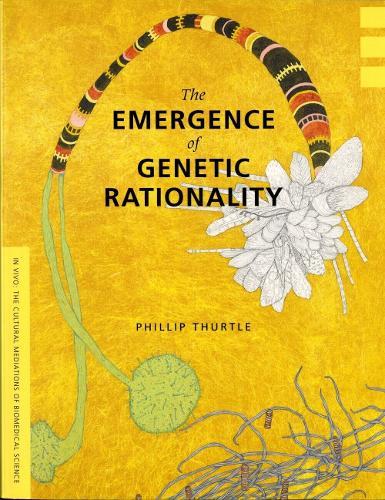
Full Product Details
Author: Phillip Thurtle
Publisher: University of Washington Press
Imprint: University of Washington Press
Dimensions:
Width: 15.20cm
, Height: 3.00cm
, Length: 22.90cm
Weight: 0.771kg
ISBN: 9780295987569
ISBN 10: 0295987561
Pages: 396
Publication Date: 20 December 2007
Audience:
Professional and scholarly
,
Professional & Vocational
Format: Hardback
Publisher's Status: Active
Availability: In Print

This item will be ordered in for you from one of our suppliers. Upon receipt, we will promptly dispatch it out to you. For in store availability, please contact us.
Reviews
A wonderful multi-disciplinary romp through a very crucial transition period in the history of American biology. Barbara Kimmelman, Philadelphia University
... fascinating and wide-ranging... Revealing that challenge [the need to articulate the connections between the emergence and realization of genetic rationality] may be the most lasting contribution of this narrative for the history of genetics. -- Michael Dietrich Journal of the History of Biology Thurtle's use of other literary figures-Theodore Dreiser and Jack London, in particular-to reflect key features of his argument is strong and inviting. American Studies This work is an extraordinary writing in its comprehensiveness, conciseness, and interdisciplinary focus. Thurtle presents an intellectually historical journey, weaving cultural, economic, political, social, literary, and artistic forces that shaped thinking and developments related to genetics during this 50-year period... Highly recommended. All undergraduates, graduate students, researchers, and faculty. Choice An important, novel way to look at the history of genetics... By studying the way time and space are mapped, classified, used, and interpreted by 19-century industrialists and the scientists who received their philanthropic largesse, Thurtle brings out a part of the history of heredity that scientists like myself have tended to ignore...I recommend this book for anyone who likes to see how the interplay between science and society worked in 19th-century biological thought. The Quarterly Review of Biology Reading Phillip Thurtle's book is an immersive experience and the book should be read from cover to cover. Thurtle...explores literary representations of practices of meaning-making, spaces of sense, and modes of being in turn-of-the-century literature. Thurtle uses these devices to profound effect and the power of the book lies in its literary portrayal of the experiences of living and working in and with these cultures and technologies. NTM: Zeitschrift fur Geschichte der Wissenschaften,Technik und Medizin
Author Information
Phillip Thurtle is assistant professor in the Comparative History of Ideas Program, University of Washington.