Overview
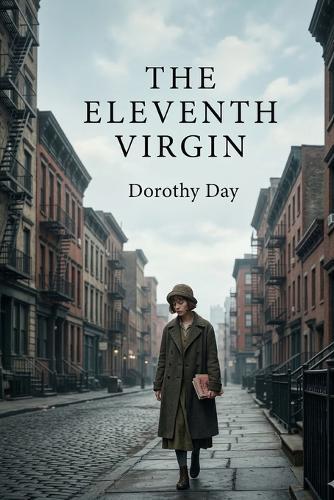
The Eleventh Virgin Dorothy Day Though Dorothy Day may be best known today for her religious peace activism and her role in founding the Catholic Worker movement, she lived a bohemian youth in the Lower West Side of New York City during the late 1910s and early 1920s. As an editor for radical socialist publications like The Liberator and The Masses, Day was involved in several left-wing causes as well as the Silent Sentinels' 1917 protest for women's suffrage in front of the White House.The Eleventh Virgin is a semi-autobiographical novel told through the eyes of June Henreddy, a young radical journalist whose fictional life closely parallels Day's own life experiences, including her eventual disillusionment with her bohemian lifestyle. Though later derided by Day as ""a very bad book,"" The Eleventh Virgin captures a vibrant image of New York's radical counterculture in the early 20th century and sheds a light on the youthful misadventures of a woman who would eventually be praised by Pope Francis for her dream of ""social justice and the rights of persons"" during his historic address to a joint session of Congress in 2015.The Eleventh Virgin Dorothy Day Though Dorothy Day may be best known today for her religious peace activism and her role in founding the Catholic Worker movement, she lived a bohemian youth in the Lower West Side of New York City during the late 1910s and early 1920s. As an editor for radical socialist publications like The Liberator and The Masses, Day was involved in several left-wing causes as well as the Silent Sentinels' 1917 protest for women's suffrage in front of the White House.The Eleventh Virgin is a semi-autobiographical novel told through the eyes of June Henreddy, a young radical journalist whose fictional life closely parallels Day's own life experiences, including her eventual disillusionment with her bohemian lifestyle. Though later derided by Day as ""a very bad book,"" The Eleventh Virgin captures a vibrant image of New York's radical counterculture in the early 20th century and sheds a light on the youthful misadventures of a woman who would eventually be praised by Pope Francis for her dream of ""social justice and the rights of persons"" during his historic address to a joint session of Congress in 2015.
Full Product Details
Author: Dorothy Day
Publisher: Les Prairies Numeriques
Imprint: Les Prairies Numeriques
Dimensions:
Width: 15.20cm
, Height: 1.50cm
, Length: 22.90cm
Weight: 0.345kg
ISBN: 9791043137273
Pages: 256
Publication Date: 01 March 2026
Audience:
General/trade
,
General
Format: Paperback
Publisher's Status: Active
Availability: Available To Order

We have confirmation that this item is in stock with the supplier. It will be ordered in for you and dispatched immediately.
Reviews
Though Dorothy Day may be best known today for her religious peace activism and her role in founding the Catholic Worker movement, she lived a bohemian youth in the Lower West Side of New York City during the late 1910s and early 1920s. As an editor for radical socialist publications like The Liberator and The Masses, Day was involved in several left-wing causes as well as the Silent Sentinels' 1917 protest for women's suffrage in front of the White House.The Eleventh Virgin is a semi-autobiographical novel told through the eyes of June Henreddy, a young radical journalist whose fictional life closely parallels Day's own life experiences, including her eventual disillusionment with her bohemian lifestyle. Though later derided by Day as ""a very bad book,"" The Eleventh Virgin captures a vibrant image of New York's radical counterculture in the early 20th century and sheds a light on the youthful misadventures of a woman who would eventually be praised by Pope Francis for her dream of ""social justice and the rights of persons"" during his historic address to a joint session of Congress in 2015.