Overview
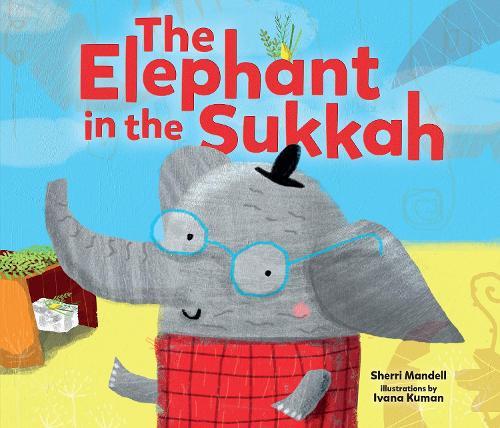
Henry the elephant is sad that no one wants to hear him sing anymore, until he follows the sound of music to the Broner family's sukkah. Can they fit him into their fun?
Full Product Details
Author: Sherri Mandell ,
Ivana Kuman
Publisher: Lerner Publishing Group
Imprint: Lerner Publishing Group
Dimensions:
Width: 27.00cm
, Height: 0.30cm
, Length: 23.20cm
Weight: 0.141kg
ISBN: 9781541522138
ISBN 10: 1541522133
Pages: 32
Publication Date: 01 August 2019
Recommended Age: From 6 to 7 years
Audience:
Children/juvenile
,
Children / Juvenile
Format: Paperback
Publisher's Status: Active
Availability: Available To Order

We have confirmation that this item is in stock with the supplier. It will be ordered in for you and dispatched immediately.
Reviews
This inventive Sukkot story uses the unexpected addition of an elephant to underscore the idea that all are welcome. Henry is a singing circus elephant who loves his job, but he ages and is sent to an old elephant home. He continues to sing, but no one appreciates him. One day he discovers the Brenner family singing in their sukkah. Returning the next night, he sings along, prompting one of the boys to explain Sukkot and invite him in. However, he does not fit. Ultimately, the Brenners make him into a wall of the sukkah, and he joins their celebration, realizing that the sukkah is a place to be together. The following year, he builds a larger sukkah and he and the Brenners sing while the other elephants hum along. The text is concise and accessible, ideal for read-alouds. The explanation of the holiday will not be enough for the uninitiated but is integrated smoothly into the narrative. The cartoonish illustrations, reminiscent of Laura Huliska-Beith's work, depict Henry with eyeglasses, a shirt, and a hat, walking on his hind legs. The artwork is full color and mostly full-bleed, with a bold palette. Henry's unsuccessful attempts to squeeze into the sukkah are portrayed in a series of laughter-inducing spot illustrations. VERDICT While this picture book won't work as an introduction to Sukkot for newbies, Jewish libraries and public libraries will find it a welcome addition to holiday shelves. --School Library Journal --Journal What's a per-form-ing ele-phant to do when his celebri-ty begins to wane and he is no longer sought after by his ador-ing audi-ences? Poor Hen-ry the ele-phant is accus-tomed to acclaim and applause, and a qui-et life holds no attrac-tion for him. Retire-ment does not suit him one bit. He still loves to sing but no one wants to lis-ten and Hen-ry con-tin-ues to crave an audi-ence. One day, he fol-lows some musi-cal strains in the air which lead to him to a sukkah in which a fam-i-ly is sit-ting and enjoy-ing the hol-i-day, singing song after song. Hen-ry is elat-ed. The first time he lis-tens qui-et-ly but, when he returns a sec-ond time, he joins in. Young Ori hears him singing and invites him inside to share the hol-i-day with the fam-i-ly but, alas, Hen-ry is sim-ply too big to fit inside the small sukkah. Ori has a clever idea. He sug-gests that Hen-ry use his enor-mous body as one wall of the sukkah itself, enabling him to join in the laugh-ter and song. Hen-ry is grat-i-fied to have such an impor-tant job and sings joy-ous-ly along with the fam-i-ly at the hol-i-day meal. As the sto-ry clos-es, Hen-ry is already plan-ning his own sukkah for the next year and invites Ori and his fam-i-ly to be his guests. The sto-ry is based on an actu-al Tal-mu-dic dis-cus-sion, although this is not indi-cat-ed in the book. The sages actu-al-ly debat-ed whether using a liv-ing being, such as an ele-phant, would be accept-able for use as a sukkah wall. If this fas-ci-nat-ing his-tor-i-cal fact is not-ed, it will sure-ly tick-le the fan-cy of adult and child alike. This whim-si-cal tale con-tains a trea-sure-trove of sub-stance between its decep-tive-ly sim-ple lines. The abil-i-ty to rise above dis-ap-point-ment, the time-hon-ored mitz-vah of wel-com-ing guests, the glo-ry of com-mu-nal singing and fam-i-ly cel-e-bra-tion, a cre-ative approach to prob-lem-solv-ing, and the hol-i-day of Sukkot itself, each play a role in the joy-ous tale. An expla-na-tion of the hol-i-day is append-ed for par-ents and chil-dren who may not be famil-iar with its details. The mut-ed but appeal-ing col-or illus-tra-tions per-fect-ly con-vey the humor and warmth in the sto-ry. Hen-ry the ele-phant will live on in the imag-i-na-tions of young read-ers and listeners. --Website
What's a per-form-ing ele-phant to do when his celebri-ty begins to wane and he is no longer sought after by his ador-ing audi-ences? Poor Hen-ry the ele-phant is accus-tomed to acclaim and applause, and a qui-et life holds no attrac-tion for him. Retire-ment does not suit him one bit. He still loves to sing but no one wants to lis-ten and Hen-ry con-tin-ues to crave an audi-ence. One day, he fol-lows some musi-cal strains in the air which lead to him to a sukkah in which a fam-i-ly is sit-ting and enjoy-ing the hol-i-day, singing song after song. Hen-ry is elat-ed. The first time he lis-tens qui-et-ly but, when he returns a sec-ond time, he joins in. Young Ori hears him singing and invites him inside to share the hol-i-day with the fam-i-ly but, alas, Hen-ry is sim-ply too big to fit inside the small sukkah. Ori has a clever idea. He sug-gests that Hen-ry use his enor-mous body as one wall of the sukkah itself, enabling him to join in the laugh-ter and song. Hen-ry is grat-i-fied to have such an impor-tant job and sings joy-ous-ly along with the fam-i-ly at the hol-i-day meal. As the sto-ry clos-es, Hen-ry is already plan-ning his own sukkah for the next year and invites Ori and his fam-i-ly to be his guests. The sto-ry is based on an actu-al Tal-mu-dic dis-cus-sion, although this is not indi-cat-ed in the book. The sages actu-al-ly debat-ed whether using a liv-ing being, such as an ele-phant, would be accept-able for use as a sukkah wall. If this fas-ci-nat-ing his-tor-i-cal fact is not-ed, it will sure-ly tick-le the fan-cy of adult and child alike. This whim-si-cal tale con-tains a trea-sure-trove of sub-stance between its decep-tive-ly sim-ple lines. The abil-i-ty to rise above dis-ap-point-ment, the time-hon-ored mitz-vah of wel-com-ing guests, the glo-ry of com-mu-nal singing and fam-i-ly cel-e-bra-tion, a cre-ative approach to prob-lem-solv-ing, and the hol-i-day of Sukkot itself, each play a role in the joy-ous tale. An expla-na-tion of the hol-i-day is append-ed for par-ents and chil-dren who may not be famil-iar with its details. The mut-ed but appeal-ing col-or illus-tra-tions per-fect-ly con-vey the humor and warmth in the sto-ry. Hen-ry the ele-phant will live on in the imag-i-na-tions of young read-ers and listeners. --Website This inventive Sukkot story uses the unexpected addition of an elephant to underscore the idea that all are welcome. Henry is a singing circus elephant who loves his job, but he ages and is sent to an old elephant home. He continues to sing, but no one appreciates him. One day he discovers the Brenner family singing in their sukkah. Returning the next night, he sings along, prompting one of the boys to explain Sukkot and invite him in. However, he does not fit. Ultimately, the Brenners make him into a wall of the sukkah, and he joins their celebration, realizing that the sukkah is a place to be together. The following year, he builds a larger sukkah and he and the Brenners sing while the other elephants hum along. The text is concise and accessible, ideal for read-alouds. The explanation of the holiday will not be enough for the uninitiated but is integrated smoothly into the narrative. The cartoonish illustrations, reminiscent of Laura Huliska-Beith's work, depict Henry with eyeglasses, a shirt, and a hat, walking on his hind legs. The artwork is full color and mostly full-bleed, with a bold palette. Henry's unsuccessful attempts to squeeze into the sukkah are portrayed in a series of laughter-inducing spot illustrations. VERDICT While this picture book won't work as an introduction to Sukkot for newbies, Jewish libraries and public libraries will find it a welcome addition to holiday shelves. --School Library Journal --Journal
This inventive Sukkot story uses the unexpected addition of an elephant to underscore the idea that all are welcome. Henry is a singing circus elephant who loves his job, but he ages and is sent to an old elephant home. He continues to sing, but no one appreciates him. One day he discovers the Brenner family singing in their sukkah. Returning the next night, he sings along, prompting one of the boys to explain Sukkot and invite him in. However, he does not fit. Ultimately, the Brenners make him into a wall of the sukkah, and he joins their celebration, realizing that the sukkah is a place to be together. The following year, he builds a larger sukkah and he and the Brenners sing while the other elephants hum along. The text is concise and accessible, ideal for read-alouds. The explanation of the holiday will not be enough for the uninitiated but is integrated smoothly into the narrative. The cartoonish illustrations, reminiscent of Laura Huliska-Beith's work, depict Henry with eyeglasses, a shirt, and a hat, walking on his hind legs. The artwork is full color and mostly full-bleed, with a bold palette. Henry's unsuccessful attempts to squeeze into the sukkah are portrayed in a series of laughter-inducing spot illustrations. VERDICT While this picture book won't work as an introduction to Sukkot for newbies, Jewish libraries and public libraries will find it a welcome addition to holiday shelves. --School Library Journal --Journal
Author Information
Sherri Mandell is the author of several books including the National Jewish Book Award winner The Blessing of a Broken Heart. She is also the author of Writers of the Holocaust (Facts on File) and has been a contributor to USA Today, The Times of Israel, Hadassah Magazine, and the Jerusalem Post. She lives in Israel. Award-winning illustrator Ivana Kuman is a graduate of the Arts Academy in Zagreb. She has written and illustrated many picture books for children and is the author of 35 short animated films for children, and one for young adults. She lives in Zagreb with her husband, two daughters and a cat.