Overview
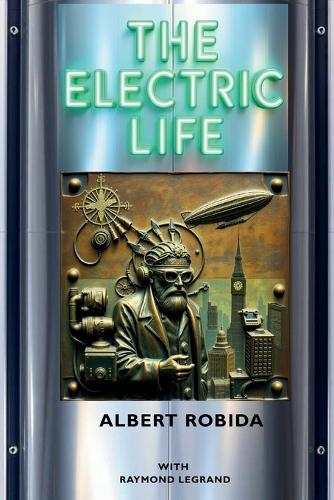
""Electricity is the Great Slave. Breath of the universe, fluid running through the Earth's veins. It wanders in space in dazzling zigzags, scratching the immensities of the ether. Now it has been seized, chained, and tamed."" The Electric Life (1893). Step into the retro-futuristic world of Albert Robida (1848-1926), the astonishingly prolific French visionary who created 60,000+ illustrations and authored or contributed to nearly 80 books. Part Jules Verne, part Voltaire, Robida's witty satire imagines a 1950s where flying machines dock atop cathedrals and families argue via video-telephones, while bodies waste away from ""electric life"" exhaustion. Here is a new and original translation from the French, refined and expanded for maximum readability for an English-speaking audience, alongside over 100 of Robida's delightfully provocative illustrations, conspiring to create what is arguably the first ever science fiction literary graphic novel - originally penned in 1893, now modernized for 2025. With delightful humor masking serious warnings, he depicts women running stock exchanges and scientists deploying germ warfare for profit-all while pollution chokes cities and citizens retreat to recreated 19th-century villages for respite. A masterpiece that entertained Belle Époque readers while prophetically warning them of modernity's seductive perils. In this updated and expanded version you will be delighted by: 100+ original illustrations, sharpened and brightened for best print viewing Improved translation and readability to enhance the story and character interactions Extensive chapter notes to contextualize Robida's biting satire and historical references New introduction, author biography and full bibliography Time Warp Editions is committed to preserving and refining classic works of literature and making them accessible and enjoyable for a modern audience.
Full Product Details
Author: Albert Robida ,
Raymond Legrand
Publisher: Time Warp Editions
Imprint: Time Warp Editions
Dimensions:
Width: 15.20cm
, Height: 1.60cm
, Length: 22.90cm
Weight: 0.413kg
ISBN: 9781967573004
ISBN 10: 196757300
Pages: 306
Publication Date: 01 May 2025
Audience:
General/trade
,
General
Format: Paperback
Publisher's Status: Active
Availability: Available To Order

We have confirmation that this item is in stock with the supplier. It will be ordered in for you and dispatched immediately.
Author Information
Albert Robida (14 May 1848 - 11 October 1926) was a French illustrator, caricaturist, novelist and editor whose imagination yoked medieval nostalgia to audacious visions of the machine age-and of mechanised war. A carpenter's son from Compiègne, he exchanged notarial drudgery for the Parisian press, co-founding the weekly La Caricature (1880-92) and ultimately producing some 60,000 drawings and eighty books, inspiring one critic to call him ""an inexhaustible dynamo.""Robida's renown rests on three graphic novels that mapped the coming century: The Twentieth Century (1883), War in the Twentieth Century (1887) and Electric Life (1890). Delighting readers with air-taxis, videophones and emancipated women, they also forecast the darker face of progress. War in the Twentieth Century depicts fleets of armoured airships bombarding cities, mobile artillery slinging poison shells and wireless ""telephotographs"" directing fire-devices chillingly close to the zeppelins, gas and aerial reconnaissance of 1914-18. His later serial La Guerre Infernale (1908) pushed the vision further, showing orbiting gun-platforms and continent-spanning alliances that eerily pre-echo the total wars of the twentieth century. Historians now credit Robida-long overshadowed by Jules Verne-as the first illustrator-novelist to give war its modern technological grammar.Yet his futurism was never mere technophilia; it was tempered by gentle satire and a preservationist's love of heritage. He mocked gadget-drunk Parisians even as he designed the hugely popular ""Vieux Paris"" medieval quarter for the 1900 Exposition Universelle, warning that unfettered progress could hollow out the past. This tension between wonder and caution suffuses his work, where rococo façades cling to flying hotels and Notre-Dame doubles as an aerodrome.Robida's private life was as modest as his art was extravagant. Near-sighted and shy, he sketched from suburban Neuilly while raising seven children, yet delivered illustrations and text with clockwork punctuality. The First World War, which claimed his youngest son and confirmed his most ominous predictions, darkened his outlook. Although his ornate cross-hatching slipped from fashion after 1918, later critics hailed him as ""the Jules Verne of illustration,"" recognising that his fusion of word and image-especially his clairvoyant visions of industrialised conflict-helped ordinary readers imagine, and fear, the twentieth century before it arrived.