Overview
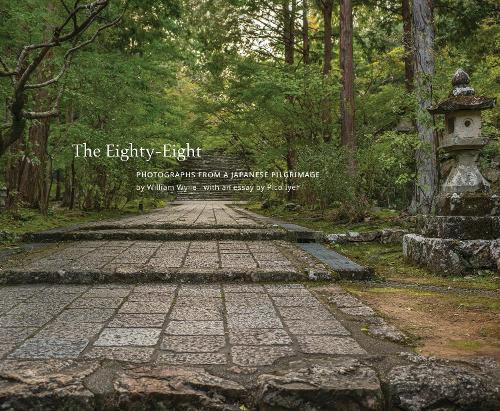
The Eighty-Eight Temple pilgrimage, on the island of Shikoku, located between the Seto Inland Sea and the Pacific Ocean in the southwestern part of Japan, consists of Buddhist temples and numerous other sacred sites along a circular route covering about 750 miles (1,200 kilometers). Its legend is rooted in the life of the monk Kukai (later known as Kobo Daishi), who trained and performed miracles at some of the sites along the path. Kukai (774855 CE) would later found the Shingon sect of Buddhism in Japan, and devotees would embark on the pilgrimage to honor him. Now, individuals take on the pilgrimage for a variety of reasons, from religious devotion to the physical and mental challenges of completing the circuit and chance to experience the natural beauty and vernacular landscapes along the path. As photographer William Wylie approached his sixtieth birthday, he saw an opportunity to mark the auspicious occasion with a symbolic journey, one that would offer some kind of transformative experience and allow him to indulge in his enduring interest in rambling. Not a practicing Buddhist but with a deep connection to nature and an interest in the power of places, he arrived prepared for austere temples and raked stone gardens on the Shikoku trek. What he found in between the eighty-eight temples was equally provocative and memorable to the temples themselves. Everywhere he walked a landscape spread out before him like a beautiful accident, where the aim of the day's walking was immersion, to slow down and listen for the crickets behind the bath house, as Issa, the famous Haiku poet, might say. The Eighty-Eight: Photographs from a Japanese Pilgrimage features 91 of Wylie's photographs from his journey along with an introductory essay by Pico Iyer, who once wrote, in his essay The Walled Garden, The relation of surface to depth remains beguilingly uncertain . . . The photographs offered here make no attempt to resolve that contradiction but instead relish in the possibility that ambiguity of the ordinary is earned and that, in the current era, beauty is as precious a reserve as it is scarce. AUTHOR: William Wylie is the Commonwealth Chair of Art at the University of Virginia and Director of the Studio Art Program whose photographs have been exhibited widely and are in the permanent collections of the Denver Art Museum, Metropolitan Museum of Art, Smithsonian Museum of American Art, and Yale University Art Museum, among others. In 2005, Wylie was awarded a John Simon Guggenheim Foundation Memorial Fellowship in Photography. His other books include Pompeii Archive (Yale University Press, 2018), designated a Notable Photo Book of 2018 by photo district news, Route 36 (Flood Editions, 2010), Stillwater (Nazraeli Press, 2002), and Riverwalk (University of Colorado Press, 2001), which won the Colorado Book Award. Pico Iyer is the author of seventeen books, translated into twenty-three languages, including those whose subject is Japan: A Beginner's Guide to Japan: Observations and Provocations (Alfred A. Knopf, 2019), Autumn Light: Season of Fire and Farewells (Aldred A. Knopf, 2019), and The Lady and the Monk: Four Seasons in Kyoto (Alfred A. Knopf, 1991). 91 photographs
Full Product Details
Author: William Wylie ,
Pico Iyer
Publisher: George F. Thompson
Imprint: George F. Thompson
ISBN: 9781960521149
ISBN 10: 1960521144
Pages: 132
Publication Date: 30 April 2026
Audience:
General/trade
,
General
Format: Hardback
Publisher's Status: Forthcoming
Availability: Not yet available

This item is yet to be released. You can pre-order this item and we will dispatch it to you upon its release.
Reviews
""The minute I join William Wylie on the walk he took through Japan's quietest and most rural island, dressed as all pilgrims are in white, carrying a staff and wearing a sedge hat, I recognize the land where I've been living since 1987. It's what I think of as the forgotten, all too easily overlooked Japan. To walk along these paths with William Wylie and his photographs is to take on the slow and patient attentiveness of a pilgrim, everything seen at a human pace and with the eyes of a passerby who seeks to remain anonymous.""--Pico Iyer, from his introduction
Author Information
William Wylie is Commonwealth Professor of Art at the University of Virginia. His photographs and films have been shown nationally and internationally, including 100 Great American Photographs at the Amon Carter Museum, Pompeii: Photographs and Fragments at the Yale University Art Gallery, Route 36 at the Joslyn Art Museum, and Visions du Reel at the International Film Festival in Switzerland. Wylie work can be found in the permanent collections of the Metropolitan Museum of Art, National Gallery of Art, Philadelphia Museum of Art, Smithsonian American Art Museum, and Yale University Art Museum, among others. His previous books of photographs are: Riverwalk: Explorations Along the Cache LA Poudre River (University Press of Colorado, 2000), Stillwater (Nazraeli Press, 2002), Carrara (Center for American Places, 2009), Route 36 (Flood Editions, 2010), Pompeii Archive (Yale University Press, 2018), and A Prairie Season (Flood Editions, 2020), all concerned with recognizing how landscapes are created and transformed and how we find our places in them. Pico Iyer is the author of seventeen books, which are translated into twenty-three languages, including those whose subject is Japan: A Beginner's Guide to Japan: Observations and Provocations (2019), Autumn Light: Season of Fire and Farewells (2019), and The Lady and the Monk: Four Seasons in Kyoto (1991), all published by Alfred A. Knopf.