|
|
|||
|
||||
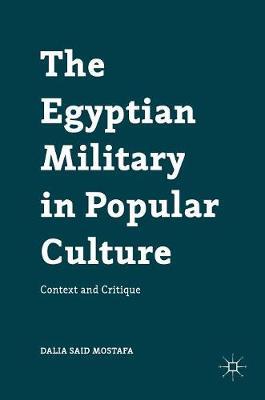
OverviewThis book examines a key question through the lens of popular culture: Why did the Egyptian people opt to elect in June 2014 a new president (Abdel Fattah al-Sisi), who hails from the military establishment, after toppling a previous military dictator (Hosni Mubarak) with the breakout of the 25 January 2011 Revolution? In order to dissect this question, the author considers the complexity of the relationship between the Egyptian people and their national army, and how popular cultural products play a pivotal role in reinforcing or subverting this relationship. The author takes the reader on a ‘journey’ through crucial historical and political events in Egypt whilst focusing on multi-layered representations of the ‘military figure’ (the military leader, the heroic soldier, the freedom fighter, the conscript, the martyred soldier, and the Intelligence officer) in a wide range of popular works in literature, film, song, TV drama series, and graffiti art. Mostafa argues that the realm of popular culture in Egypt serves as the ‘blood veins’ which feed the nation’s perception of its Armed Forces. Full Product DetailsAuthor: Dalia Said MostafaPublisher: Palgrave Macmillan Imprint: Palgrave Macmillan Edition: 1st ed. 2017 Dimensions: Width: 14.80cm , Height: 1.80cm , Length: 21.00cm Weight: 0.454kg ISBN: 9781137593719ISBN 10: 1137593717 Pages: 144 Publication Date: 01 December 2016 Audience: College/higher education , Professional and scholarly , Tertiary & Higher Education , Professional & Vocational Format: Hardback Publisher's Status: Active Availability: Manufactured on demand We will order this item for you from a manufactured on demand supplier. Table of ContentsReviewsAuthor InformationDalia Said Mostafa is Lecturer in Arabic and Comparative Literature in the Department of Middle Eastern Studies at the University of Manchester, UK. She has published extensively in both Arabic and English on the contemporary Arabic novel, Arab cinema, and popular culture in Egypt. She is the editor of a special issue entitled ‘Women, Culture, and the January 2011 Egyptian Revolution’, in the Journal for Cultural Research (vol. 19.2, 2015). Tab Content 6Author Website:Countries AvailableAll regions |
||||