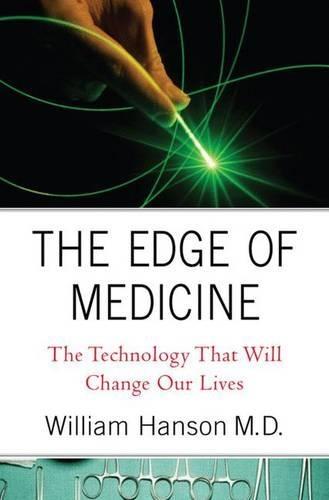
Full Product Details
Author: William Hanson
Publisher: Palgrave Macmillan
Imprint: Palgrave Macmillan
Dimensions:
Width: 16.40cm
, Height: 2.20cm
, Length: 24.00cm
Weight: 0.463kg
ISBN: 9780230605756
ISBN 10: 0230605753
Pages: 256
Publication Date: 05 December 2008
Audience:
General/trade
,
General
Format: Hardback
Publisher's Status: Active
Availability: In Print

This item will be ordered in for you from one of our suppliers. Upon receipt, we will promptly dispatch it out to you. For in store availability, please contact us.
Reviews
'...you will be hard pressed to put this extraordinary book down.' - The New York Times 'He [Hanson] writes with personal experience of many of the situations he discusses in a clear and imaginative way which will appeal both to those in the profession and to others.' - Alan Emery, British Journal of Hospital Medicine 'Well written, engaging...his [Hanson's] writing is clear and evocative.' - Critical Care Medicine 'Dr. William Hanson has written an enthusiastic travelogue, a guide to the universe of marvels coming soon to a hospital near you.' - The New York Times
An enthusiastic account of high-tech advances that may or may not revolutionize medical care.Hanson, director of the Surgical Intensive Care Unite at the University of Pennsylvania, begins with a profile of his pioneering work as a doc-in-the-box, where he and his team sit before monitors, alarms and audio-video links to oversee ICU patients in hospitals across a wide area. Using cameras that zoom in on trouble spots, they can instantly contact the appropriate personnel. The practice may seem dehumanizing, but it dramatically reduces complications and makes efficient use of the increasingly scarce supply of ICU specialists. American radiologists dislike night work, so computers now send X-rays across the world where wide-awake doctors immediately send back their reading. Experimental computers read brain waves to guide wheelchairs and artificial limbs but also send signals to the brain to produce vision and hearing. Today's devices work crudely, notes the author, but progress is inevitable. Surgeons are operating through smaller holes, which converts major surgery into minor surgery, so patients suffer less pain and post-op misery and recover more quickly. Using robotic technology, some surgeons sit at a console and operate through an even smaller hole. Hanson admits that this procedure takes longer, requires extensive training, sometimes produces more complications and usually costs more. But he insists that future developments will improve matters. Many of these spectacular ideas exist only in the minds of researchers. Fortunately, Hanson excels in describing the history of current high-tech advances - artificial heart valves, stem-cell therapy, pacemakers, insulin pumps - whose miracles we take for granted and whose drawbacks are steadily declining.Readers looking for solutions to America's healthcare crisis will be disappointed, but they will enjoy this spirited, feel-good look at an area of medicine that's making progress. (Kirkus Reviews)
Author Information
WILLIAM HANSON M.D. chairs the trauma unit at University of Pennsylvania Medical School and is currently a visiting professor in Computer Science at Princeton University, USA. He is often quoted in USA Today and US News& World Report, and has been profiled in Popular Science and New Scientist. He lives in Philadelphia, PA.