Overview
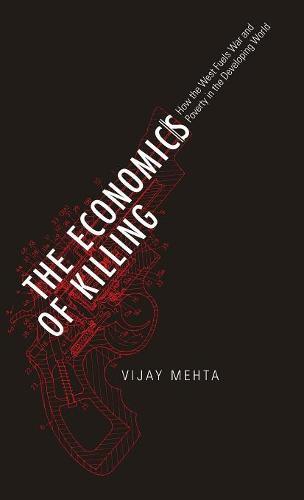
Globalisation has created an interconnected world, but has not diminished violence, militarism and inequality. This book describes how the entrenched power of global elites has created a deadly cycle of violence, enacted through the military industrial complex. Vijay Mehta shows how attempts at peaceful national development, environmental sustainability and human rights are routinely blocked by Western powers. He locates the 2008 financial crisis in US attempts to block China's model of development. He shows how Europe and the US conspire with regional dictators to prevent countries from developing advanced industries, and how this system has fed terrorism. The Economics of Killing argues that a different world is possible, based on policies of disarmament, demilitarisation and sustainable development.
Full Product Details
Author: Vijay Mehtta
Publisher: Pluto Press
Imprint: Pluto Press
Dimensions:
Width: 13.50cm
, Height: 2.30cm
, Length: 21.50cm
Weight: 0.415kg
ISBN: 9780745332253
ISBN 10: 0745332250
Pages: 256
Publication Date: 13 February 2012
Audience:
Professional and scholarly
,
General/trade
,
Professional & Vocational
,
General
Format: Hardback
Publisher's Status: Active
Availability: In Print

This item will be ordered in for you from one of our suppliers. Upon receipt, we will promptly dispatch it out to you. For in store availability, please contact us.
Reviews
We live in a rich world and yet increasingly people are getting caught in the poverty trap and facing real hardship and pain. Vijay Mehta's excellent book sets out the problems and solutions, and challenges us all to create the spiritual and political will to implement policies which will bring about real change and give hope to humanity. -- Mairead Maguire, Nobel Peace Prize Laureate 1976. Founder, Peace People, Belfast, Northern Ireland The Economics of Killing brilliantly links the deepening economic crisis facing the West with the dynamics of militarism that is wreaking havoc on the planet. Everyone who cares about the future must read this groundbreaking book. -- Richard Falk, United Nations Special Rapporteur on Human Rights for the Palestinian Territories, Professor Emeritus of International Law at Princeton University, USA Vijay Mehta's book shines a timely light on the role that Western Governments play in perpetuating conflict around the world. It is particularly welcome in that it does not just identify and detail the problem -- it puts forward an alternative, and one which anyone genuinely committed to peace, justice and equality cannot afford to ignore. -- Caroline Lucas, MP and Leader, Green Party, UK It is about time someone exposed the nefarious activities of the military-industrial complex that is destroying the foundations of civilized human existence. It has made killing a proifitable industry. This book is a must read for all peace-seekers. -- Arun Gandhi, Grandson of Mahatma Gandhi, President, Gandhi Worldwide Education Institute, Rochester, NY, USA The book depicts ways in which the western powers can restructure their economies away from the reliance on the military industrial complex towards making the 21st century an era of soft power for a more peaceful and sustainable future. -- Deepak Chopra, Best-selling Author, Peace is the Way . California, USA The Charter of the United Nations starts in this way: We, the Peoples! have resolved to save the succeeding generations from the scourge of war ! But instead of better sharing and building peace through social justice and economy guided by the democratic principles --so well enshrined in the UNESCO's Constitution- and by the Universal Declaration of Human Rights, the sinister proverb if you wish peace prepare war has been secularly applied by male rulers. And plutocratic (G7, G8 ) groups have taken over the functions of the United Nations, and have placed the market in the very core of the world governance! The result is a profound financial crisis that hides the most urgent planetary challenges as access to food and health of all human beings, the environmental progressive degradation; the lack of horizons of the humanity worldwide. The net balance is $4 billion per day in military expenditures while 70,000 persons die of hunger! The book of Vijay Mehta is extremely timely and provides --what is extremely important and must be underlined- not only excellent diagnosis but also appropriate treatments. And the first is to reduce the power of the military industrial complex. -- Federico Mayor Zaragoza, Former Director-General UNESCO, President, Foundation Culture of Peace, Madrid, Spain Congratulations to Vijay Mehta on having grappled with this complex and too often sinister issue. The latest technology, with the clinically remote killing process of drones and the like, makes it all the more urgent and compelling. We are all involved. The subsidies by taxpayers to the arms industry are immense. Were that industry exposed to the full rigours of the market economy, it would be in deep trouble. It is a challenge to us all. Vijay Mehta helps us to face up to it. -- Lord Frank Judd, Minister for Overseas Development (1976-1977), Minister of State for the Foreign and Commonwealth Office (1977-1979), Director of Oxfam (1985-91) London, UK This important book identifies the real crisis ahead for the world which is not narrowly environmental but the fact that with rising population we will not have enough food or oil or water to survive. That is the real reason that this book, pointing to the waste in military expenditure, offers the real alternative to starvation, which is cooperation to meet our needs. -- Tony Benn, former MP and Cabinet Minister, President, Stop the War Coalition, London, UK The book exposes the reader to the vicious Northern military-industrial complex, and roles of the media and energy sectors, plus the corrupting role of the five permanent members of the UN Security Council in the profits of endless poverty. As power is shifting to the new emerging powers of the South, this book provides hope that the Northern centuries-old model of brutal human exploitation and blatant use of warfare will be uprooted and changed to support socio economic well being, equal opportunity and sustainable prosperity. -- Denis Halliday, UN Assistant Secretary General (1994-1998) and Former Coordinator of the UN Humanitarian Program in Iraq In his book, The Economics of Killing: How the West Fuels War and Poverty in the Developing World Vijay Mehta lifts the curtain on a truth which many would prefer concealed. If we were to become instruments of peace instead of war and redirect some of the global trillion and a half dollars spent annually on war and weapons to real human needs there would be no need to create Millennium Development Goals. All those supporting humanitarian NGOs should read Mehta's book and act on it. -- Bruce Kent, Vice President, Campaign for Nuclear Disarmament (CND), Movement for the Abolition of War. London, UK
We live in a rich world and yet increasingly people are getting caught in the poverty trap and facing real hardship and pain. We know how to solve these problems: by disarmament and demilitarization, and putting human and financial resources into dealing with the real enemies of humanity - poverty, unemployment, environmental crisis, etc. Vijay Mehta's excellent book sets out the problems and solutions, and challenges us all to create the spiritual and political will to implement policies which will bring about real change and give hope to humanity. --Mairead Maguire, Irish peace activist and Nobel Peace Prize winner
We live in a rich world and yet increasingly people are getting caught in the poverty trap and facing real hardship and pain. Vijay Mehta's excellent book sets out the problems and solutions, and challenges us all to create the spiritual and political will to implement policies which will bring about real change and give hope to humanity. -- Mairead Maguire, Nobel Peace Prize Laureate 1976. Founder, Peace People, Belfast, Northern Ireland The Economics of Killing brilliantly links the deepening economic crisis facing the West with the dynamics of militarism that is wreaking havoc on the planet. Everyone who cares about the future must read this groundbreaking book. -- Richard Falk, United Nations Special Rapporteur on Human Rights for the Palestinian Territories, Professor Emeritus of International Law at Princeton University, USA Vijay Mehta's book shines a timely light on the role that Western Governments play in perpetuating conflict around the world. It is particularly welcome in that it does not just identify and detail the problem -- it puts forward an alternative, and one which anyone genuinely committed to peace, justice and equality cannot afford to ignore. -- Caroline Lucas, MP and Leader, Green Party, UK It is about time someone exposed the nefarious activities of the military-industrial complex that is destroying the foundations of civilized human existence. It has made killing a proifitable industry. This book is a must read for all peace-seekers. -- Arun Gandhi, Grandson of Mahatma Gandhi, President, Gandhi Worldwide Education Institute, Rochester, NY, USA The book, The Economics of Killing: How the West Fuels War and Poverty in the Developing World by Vijay Mehta depicts ways in which the western powers can restructure their economies away from the reliance on the military industrial complex towards making the 21st century an era of soft power for a more peaceful and sustainable future. -- Deepak Chopra, Best-selling Author, Peace is the Way . California, USA The Charter of the United Nations starts in this way: We, the Peoples! have resolved to save the succeeding generations from the scourge of war ! But instead of better sharing and building peace through social justice and economy guided by the democratic principles --so well enshrined in the UNESCO's Constitution- and by the Universal Declaration of Human Rights, the sinister proverb if you wish peace prepare war has been secularly applied by male rulers. And plutocratic (G7, G8 ) groups have taken over the functions of the United Nations, and have placed the market in the very core of the world governance! The result is a profound financial crisis that hides the most urgent planetary challenges as access to food and health of all human beings, the environmental progressive degradation; the lack of horizons of the humanity worldwide. The net balance is $4 billion per day in military expenditures while 70,000 persons die of hunger! The book of Vijay Mehta is extremely timely and provides --what is extremely important and must be underlined- not only excellent diagnosis but also appropriate treatments. And the first is to reduce the power of the military industrial complex. -- Federico Mayor Zaragoza, Former Director-General UNESCO, President, Foundation Culture of Peace, Madrid, Spain Congratulations to Vijay Mehta on having grappled with this complex and too often sinister issue. The latest technology, with the clinically remote killing process of drones and the like, makes it all the more urgent and compelling. We are all involved. The subsidies by taxpayers to the arms industry are immense. Were that industry exposed to the full rigours of the market economy, it would be in deep trouble. It is a challenge to us all. Vijay Mehta helps us to face up to it. -- Lord Frank Judd, Minister for Overseas Development (1976-1977), Minister of State for the Foreign and Commonwealth Office (1977-1979), Director of Oxfam (1985-91) London, UK This important book identifies the real crisis ahead for the world which is not narrowly environmental but the fact that with rising population we will not have enough food or oil or water to survive. That is the real reason that this book, pointing to the waste in military expenditure, offers the real alternative to starvation, which is cooperation to meet our needs. -- Tony Benn, former MP and Cabinet Minister, President, Stop the War Coalition, London, UK Vijay Mehta's book is an essential read for young people, North and South, who must demand dramatic change in global resources management and response to the needs for universal human well being. It presents the case for the implementation of new thinking necessary if they and their children are to have opportunities to live full lives. There must be a new realization that North-South human wellbeing and equality of opportunity requires that prosperity be global. The book exposes the reader to the vicious Northern military-industrial complex, and roles of the media and energy sectors, plus the corrupting role of the arms-dealing five permanent members of the UN Security Council in the profits of endless poverty. As power is shifting to the new emerging powers of the South, this book provides thought and hope that the Northern centuries-old model of brutal human exploitation and blatant use of warfare will be uprooted and changed to support socio economic well being, equal opportunity and sustainable prosperity. Nothing less will suffice. -- Denis Halliday, UN Assistant Secretary General (1994-1998) and Former Coordinator of the UN Humanitarian Program in Iraq In his book, The Economics of Killing: How the West Fuels War and Poverty in the Developing World Vijay Mehta lifts the curtain on a truth which many would prefer concealed. If we were to become instruments of peace instead of war and redirect some of the global trillion and a half dollars spent annually on war and weapons to real human needs there would be no need to create Millennium Development Goals. All those supporting humanitarian NGOs should read Mehta's book and act on it. -- Bruce Kent, Vice President, Campaign for Nuclear Disarmament (CND), Movement for the Abolition of War. London, UK
'We live in a rich world and yet increasingly people are getting caught in the poverty trap and facing real hardship and pain. Vijay Mehta's excellent book sets out the problems and solutions, and challenges us all to create the spiritual and political will to implement policies which will bring about real change and give hope to humanity.' -- Mairead Maguire, Nobel Peace Prize Laureate 1976. Founder, Peace People, Belfast, Northern Ireland 'Brilliantly links the deepening economic crisis facing the West with the dynamics of militarism that is wreaking havoc on the planet.' -- Richard Falk, United Nations Special Rapporteur on Human Rights for the Palestinian Territories, Professor Emeritus of International Law at Princeton University, USA 'Shines a timely light on the role that Western Governments play in perpetuating conflict around the world.' -- Caroline Lucas, MP and Leader, Green Party, UK 'It is about time someone exposed the nefarious activities of the military-industrial complex. It has made killing a profitable industry. This book is a must read for all peace-seekers.' -- Arun Gandhi, Grandson of Mahatma Gandhi, President, Gandhi Worldwide Education Institute, Rochester, NY, USA 'Depicts ways in which the western powers can restructure their economies away from the reliance on the military industrial complex.' -- Deepak Chopra, Best-selling Author, Peace is the Way . California, USA 'Extremely timely and provides what is extremely important and must be underlined - not only excellent diagnosis but also appropriate treatments. And the first is to reduce the power of the military industrial complex.' -- Federico Mayor Zaragoza, Former Director-General UNESCO, President, Foundation Culture of Peace, Madrid, Spain Congratulations to Vijay Mehta on having grappled with this complex and too often sinister issue. It is a challenge to us all. Mehta helps us to face up to it.' -- Lord Frank Judd, Minister for Overseas Development (1976-1977), Minister of State for the Foreign and Commonwealth Office (1977-1979), Director of Oxfam (1985-91) London, UK 'This important book identifies the real crisis ahead for the world' -- Tony Benn, former MP and Cabinet Minister, President, Stop the War Coalition, London, UK 'Exposes the reader to the vicious Northern military-industrial complex, and roles of the media and energy sectors, plus the corrupting role of the five permanent members of the UN Security Council in the profits of endless poverty.' -- Denis Halliday, UN Assistant Secretary General (1994-1998) and Former Coordinator of the UN Humanitarian Program in Iraq 'Lifts the curtain on a truth which many would prefer concealed. All those supporting humanitarian NGOs should read Mehta's book and act on it.' -- Bruce Kent, Vice President, Campaign for Nuclear Disarmament (CND), Movement for the Abolition of War. London, UK
We live in a rich world and yet increasingly people are getting caught in the poverty trap and facing real hardship and pain. Vijay Mehta's excellent book sets out the problems and solutions, and challenges us all to create the spiritual and political will to implement policies which will bring about real change and give hope to humanity. -- Mairead Maguire, Nobel Peace Prize Laureate 1976. Founder, Peace People, Belfast, Northern Ireland The Economics of Killing brilliantly links the deepening economic crisis facing the West with the dynamics of militarism that is wreaking havoc on the planet. Everyone who cares about the future must read this groundbreaking book. -- Richard Falk, United Nations Special Rapporteur on Human Rights for the Palestinian Territories, Professor Emeritus of International Law at Princeton University, USA Vijay Mehta's book shines a timely light on the role that Western Governments play in perpetuating conflict around the world. It is particularly welcome in that it does not just identify and detail the problem - it puts forward an alternative, and one which anyone genuinely committed to peace, justice and equality cannot afford to ignore. -- Caroline Lucas, MP and Leader, Green Party, UK It is about time someone exposed the nefarious activities of the military-industrial complex that is destroying the foundations of civilized human existence. It has made killing a proifitable industry. This book is a must read for all peace-seekers. -- Arun Gandhi, Grandson of Mahatma Gandhi, President, Gandhi Worldwide Education Institute, Rochester, NY, USA The book depicts ways in which the western powers can restructure their economies away from the reliance on the military industrial complex towards making the 21st century an era of soft power for a more peaceful and sustainable future. -- Deepak Chopra, Best-selling Author, Peace is the Way . California, USA The Charter of the United Nations starts in this way: We, the Peoples... have resolved to save the succeeding generations from the scourge of war ... But instead of better sharing and building peace through social justice and economy guided by the democratic principles -so well enshrined in the UNESCO's Constitution- and by the Universal Declaration of Human Rights, the sinister proverb if you wish peace prepare war has been secularly applied by male rulers. And plutocratic (G7, G8 ) groups have taken over the functions of the United Nations, and have placed the market in the very core of the world governance... The result is a profound financial crisis that hides the most urgent planetary challenges as access to food and health of all human beings, the environmental progressive degradation; the lack of horizons of the humanity worldwide. The net balance is $4 billion per day in military expenditures while 70,000 persons die of hunger... The book of Vijay Mehta is extremely timely and provides -what is extremely important and must be underlined- not only excellent diagnosis but also appropriate treatments. And the first is to reduce the power of the military industrial complex. -- Federico Mayor Zaragoza, Former Director-General UNESCO, President, Foundation Culture of Peace, Madrid, Spain Congratulations to Vijay Mehta on having grappled with this complex and too often sinister issue. The latest technology, with the clinically remote killing process of drones and the like, makes it all the more urgent and compelling. We are all involved. The subsidies by taxpayers to the arms industry are immense. Were that industry exposed to the full rigours of the market economy, it would be in deep trouble. It is a challenge to us all. Vijay Mehta helps us to face up to it. -- Lord Frank Judd, Minister for Overseas Development (1976-1977), Minister of State for the Foreign and Commonwealth Office (1977-1979), Director of Oxfam (1985-91) London, UK This important book identifies the real crisis ahead for the world which is not narrowly environmental but the fact that with rising population we will not have enough food or oil or water to survive. That is the real reason that this book, pointing to the waste in military expenditure, offers the real alternative to starvation, which is cooperation to meet our needs. -- Tony Benn, former MP and Cabinet Minister, President, Stop the War Coalition, London, UK The book exposes the reader to the vicious Northern military-industrial complex, and roles of the media and energy sectors, plus the corrupting role of the five permanent members of the UN Security Council in the profits of endless poverty. As power is shifting to the new emerging powers of the South, this book provides hope that the Northern centuries-old model of brutal human exploitation and blatant use of warfare will be uprooted and changed to support socio economic well being, equal opportunity and sustainable prosperity. -- Denis Halliday, UN Assistant Secretary General (1994-1998) and Former Coordinator of the UN Humanitarian Program in Iraq In his book, The Economics of Killing: How the West Fuels War and Poverty in the Developing World Vijay Mehta lifts the curtain on a truth which many would prefer concealed. If we were to become instruments of peace instead of war and redirect some of the global trillion and a half dollars spent annually on war and weapons to real human needs there would be no need to create Millennium Development Goals. All those supporting humanitarian NGOs should read Mehta's book and act on it. -- Bruce Kent, Vice President, Campaign for Nuclear Disarmament (CND), Movement for the Abolition of War. London, UK
Author Information
Vijay Mehta is an author and peace activist. He is Chair of Uniting for Peace and founding trustee of the Fortune Forum charity. He is the author of The Fortune Forum Code: For a Sustainable Future, Arms No More, and The United Nations and Its Future in the 21st Century.