Overview
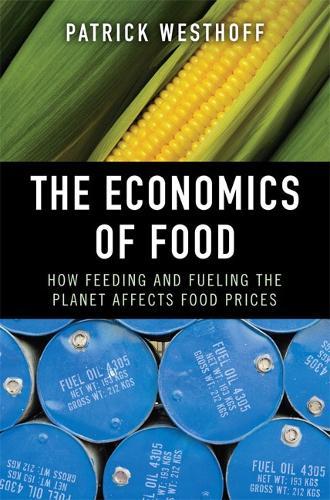
Over the past two years, food prices have soared -- and plummeted. As crops are increasingly shifted to biofuel production, will food prices soar again? Will people starve as a result? What are the hidden relationships between the food on your plate and the gas in your car? Will economic recovery lead directly to massive price inflation in both food and energy? In this book, one of the world's leading experts untangles the complex global relationships between food, energy, and economics and helps readers come to their own conclusions about the future of food. Pat Westhoff reveals what really causes large swings in food prices and what is likely to cause them to rise and fall in the future. Westhoff discusses all the factors that drive changes in the cost of food: not just biofuel production, but also weather, income growth, exchange rates, energy prices, government policies, market speculation, and more. Next, he walks through several of the most likely scenarios for the future, offering insights that will be indispensable to consumers, commodity speculators, and policymakers alike.
Full Product Details
Author: Patrick Westhoff
Publisher: Pearson Education (US)
Imprint: Financial TImes Prentice Hall
Dimensions:
Width: 21.30cm
, Height: 2.60cm
, Length: 14.40cm
Weight: 0.400kg
ISBN: 9780137006106
ISBN 10: 0137006101
Pages: 256
Publication Date: 01 April 2010
Audience:
Professional and scholarly
,
Professional & Vocational
Format: Hardback
Publisher's Status: Out of Print
Availability: Awaiting stock

Reviews
Westhoff (Food and Agricultural Policy Research Institute, Univ. of Missouri) offers his perspective on the markets for food, based on a lifetime of experience in the agricultural sector. His story starts with his childhood in rural Iowa, continues as a Peace Corps volunteer, and eventually leads to a doctorate in agricultural economics and a career in government and academia. His expertise is combined with a humility concerning the ability to accurately predict the future of agricultural markets. On short, an inviting examination of an important topic. Summing Up: Highly recommended. General readers and all levels of undergraduate students. Reprinted with permission from CHOICE, copyright by the American Library Association.
Author Information
Patrick Westhoff grew up on a small dairy farm in Iowa, just a few miles from the “Field of Dreams.” He earned an undergraduate degree in political science from the University of Iowa and then spent two years in the Peace Corps in Guatemala, working with small-scale farmers. After getting a master’s degree in Latin American studies from the University of Texas, he moved back to Iowa and earned a Ph.D. in agricultural economics from Iowa State University in 1989. From 1992-1996, he served as an economist with the U.S. Senate Committee on Agriculture, Nutrition, and Forestry. He worked on several major pieces of legislation, including the 1996 farm bill. Westhoff has spent most of his professional career studying agricultural markets and policies with the Food and Agricultural Policy Research Institute (FAPRI), first at Iowa State University and now at the University of Missouri. FAPRI analysis is used by the U.S. Congress, the United Nation’s Food and Agriculture Organization (FAO), the Organization for Economic Cooperation and Development (OECD), and national institutions in Europe, Asia, Africa, and Latin America. In November 2007, he was named a codirector of the FAPRI unit at the University of Missouri (MU). The author also teaches and advises graduate students in the MU Department of Agricultural Economics.