Overview
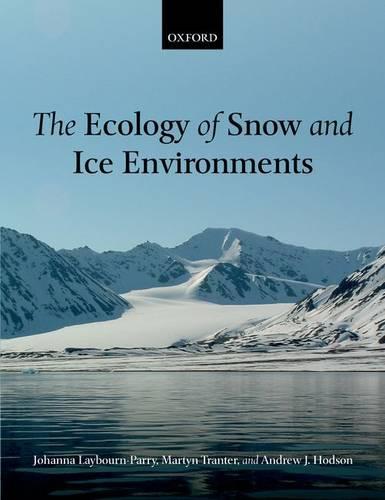
Snow and ice environments support significant biological activity, yet the biological importance of some of these habitats, such as glaciers, has only recently gained appreciation. Collectively, these ecosystems form a significant part of the cryosphere, most of which is situated at high latitudes. These ice environments are important sentinels of climate change since the polar regions are presently undergoing the highest rates of climate warming, resulting in very marked changes in the extent of ice caps, glaciers, and the sea ice. Glacial systems are also regarded as an analogue for astrobiology, particularly for Mars and the moons of Jupiter (e.g. Europa), and one of the justifications for research in this area is its potential value in astrobiology. This timely and accessible volume draws together the current knowledge on life in snow and ice environments. It describes these often complex and often productive ecosystems, their physical and chemical conditions, and the nature and activity of the organisms that have colonised them. The cryosphere is the domain of extremophiles, organisms able to adapt to the physiological and biochemical challenges of harsh cold conditions where liquid water may only be present for relatively short periods each year. The majority of extremophiles in ice and snow are microorganisms.The Ecology of Snow and Ice Environments is intended for the non-specialist, enabling environmental scientists to understand the biological functioning of extreme cold environments and for biologists to gain knowledge of the nature of the cryosphere.
Full Product Details
Author: Johanna Laybourn-Parry (Bristol Glaciology Centre, School of Geographical Sciences, University of Bristol, UK) ,
Martyn Tranter (Bristol Glaciology Centre, School of Geographical Sciences, University of Bristol, UK) ,
Andrew J. Hodson (Department of Geography, University of Sheffield, UK)
Publisher: Oxford University Press
Imprint: Oxford University Press
Dimensions:
Width: 19.50cm
, Height: 1.60cm
, Length: 25.20cm
Weight: 0.616kg
ISBN: 9780199583072
ISBN 10: 0199583072
Pages: 190
Publication Date: 02 February 2012
Audience:
College/higher education
,
Postgraduate, Research & Scholarly
Format: Hardback
Publisher's Status: Active
Availability: To order

Stock availability from the supplier is unknown. We will order it for you and ship this item to you once it is received by us.
Reviews
The Ecology of Snow and Ice Environments is an excellent overview of alpine and polar ecosystems ... The book fills the gap and represents a multidisciplinary issue. * Jana Hazdrová, Czech Polar Reports * This is a superbly detailed account of how extremophiles cope with cold environments ... should be in the library * Bulletin of the British Ecological Society *
This is a superbly detailed account of how extremophiles cope with cold environments ... should be in the library Bulletin of the British Ecological Society
Author Information
Professor Laybourn-Parry is a Visiting Professor in the Bristol Glaciology Centre at Bristol University. Her research career spans 38 years, the last 22 years being spent researching polar ecosystems with the Australian and US Antarctic programmes in Antarctica and in Spitzbergen in the Arctic. She has produced four books and over 150 articles and reviews. Prior to her retirement in 2009 she was Pro Vice-Chancellor for Research at the University of Tasmania in Australia. Professor Martyn Tranter is a Professor in the Bristol Glaciology Centre, specialising in biogeochemical processes in the cryosphere. He has worked in the Alps, Norway, Svalbard, Greenland and Antarctica, the latter via the kind auspices of the McMurdo Dry Valley Long Term Ecological Research program. He has edited four books and authored over 140 articles. Professor Andy Hodson is a Professor in Cold Regions Biogeochemistry in the Geography Department at Sheffield University. He has been working continuously in Arctic Svalbard since 1991 and he now holds an adjunct position at the University on Svalbard (UNIS). His research has documented hydrological and biogeochemical process dynamics during the melt season in both polar regions, including maritime glacial environments of the Antarctic Peninsula and Svalbard, and continental ice sheets in Greenland and Antarctica.