|
|
|||
|
||||
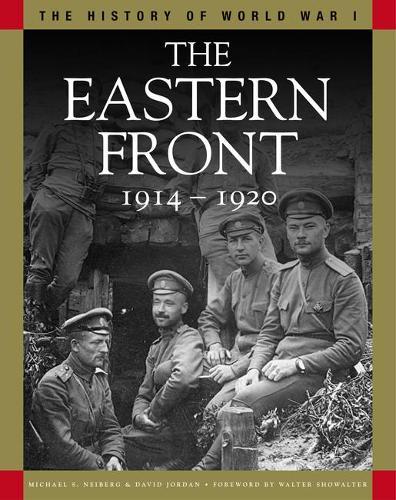
OverviewWhile World War I on the Western Front developed into trench warfare, the battle lines on the Eastern Front were much more fluid and trenches never truly developed. This was because the greater length of the front ensured that the density of soldiers in the line was lower so the line was easier to break. Once broken, the sparse communication networks made it difficult for the defender to rush reinforcements to the rupture in the line to mount a rapid counteroffensive and seal off a breakthrough. There was also the fact that the terrain in the Eastern European theatre was quite solid, often making it near impossible to construct anything resembling the complicated trench systems on the Western Front, which tended to have muddier and much more workable terrain. In short, on the Eastern front the side defending did not have the overwhelming advantages it had on the Western front. Because of this, front lines in the East kept on shifting throughout the conflict, and not just near the beginning and end of the fighting, as was the case in the West. In fact the greatest advance of the whole war was made in the East by the German Army in the summer of 1915. With the aid of numerous black and white and color photographs, many previously unpublished, the World War I series recreates the battles and campaigns that raged across the surface of the globe, on land, at sea and in the air. The text is complemented by full-colour maps that guide the reader through specific actions and campaigns. Full Product DetailsAuthor: Professor Michael S Neiberg , David Jordan , Professor Dennis ShowalterPublisher: Amber Books Ltd Imprint: Amber Books ISBN: 9781838861179ISBN 10: 1838861173 Pages: 224 Publication Date: 14 August 2021 Recommended Age: From 16 to 99 years Audience: General/trade , College/higher education , Professional and scholarly , General , Tertiary & Higher Education Format: Paperback Publisher's Status: Active Availability: Available To Order We have confirmation that this item is in stock with the supplier. It will be ordered in for you and dispatched immediately. Table of ContentsIntroduction – The Balance in the East The First Battles Galicia and Poland Russia’s Recovery The First Russian Revolution Russia Capitulates The Allied Intervention in Russia The Civil and Russo-Polish Wars Further Reading IndexReviewsAuthor InformationMichael S. Neiberg is Professor of History and Chair of War Studies at the United States Army War College in Carlisle, Pennsylvania. His published work specializes on the First and Second World Wars in global context. David Jordan is Senior Lecturer at the Joint Services Command and Staff College, Shrivenham, UK, where he teaches Intermediate and Advanced Staff courses. He joined the Defence Studies Department of Kings College London in June 2000. Tab Content 6Author Website:Countries AvailableAll regions |
||||