Overview
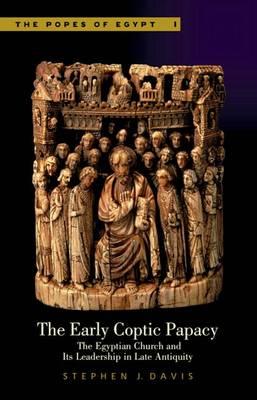
The Copts, adherents of the Egyptian Orthodox Church, today represent the largest Christian community in the Middle East, and their presiding bishops have been accorded the title of pope since the third century AD. This major new three-volume study of the popes of Egypt covers the history of the Alexandrian patriarchate from its origins to the present-day leadership of Pope Shenouda III. The first volume analyzes the development of the Egyptian papacy from its origins to the rise of Islam. How did the papal office in Egypt evolve as a social and religious institution during the first six and a half centuries AD? How do the developments in the Alexandrian patriarchate reflect larger developments in the Egyptian church as a whole - in its structures of authority and lines of communication, as well as in its social and religious practices? In addressing such questions, Stephen J. Davis examines a wide range of evidence - letters, sermons, theological treatises, and church histories, as well as art, artifacts, and archaeological remains - to discover what the patriarchs did as leaders, how their leadership was represented in public discourses, and how those representations definitively shaped Egyptian Christian identity in late antiquity.
Full Product Details
Author: Stephen J. Davis
Publisher: The American University in Cairo Press
Imprint: The American University in Cairo Press
Volume: v. 1
Dimensions:
Width: 16.20cm
, Height: 1.50cm
, Length: 23.80cm
Weight: 0.662kg
ISBN: 9789774248306
ISBN 10: 9774248309
Pages: 224
Publication Date: 30 November 2004
Audience:
College/higher education
,
Professional and scholarly
,
Undergraduate
,
Postgraduate, Research & Scholarly
Format: Hardback
Publisher's Status: Out of Print
Availability: Awaiting stock

Reviews
The history by an assistant professor of religious studies at Yale follows the Coptic Church from its origins to the coming of Islam about the seventh century mostly through the men heading it. Volumes Two and Three of this series by other authors deal with different stages of this Egyptian Christian Church. This first clearly definable period of this volume laid the grounds for the survival of the Coptic Church down to today even though with the coming of Islam, it was marginalized and its members often discriminated against. In many ways, the study of the Coptic papacy resembles the study of the Catholic papacy and the first years of the Catholic Church. There were similar decisions important in establishing the Coptic Church; the personalities of the early Coptic popes were especially important in creating the internal nature and public image of the Church; and there were theological controversies over basic doctrines and beliefs. Apostolicity, martyrdom, monastic patronage, and theological resistance are the four major themes during this formative period for the Coptic Church. The Early Coptic Papacy along with the companion volumes substantiates the Coptic Church as a subject in religious studies with its own history worthy of study. -- Midwest Book Review Recommended for any collection on Eastern Christian Churches. --curled up with a good book Substantiates the Coptic Church as a subject in religious studies with its own history worthy of study. --Midwest Book Review This innovative and authoritative book goes beyond the basic facts to show how the early patriarchs of the Coptic church crafted their images and constructed their authority. Essential reading for historians of ancient Christianity and for all scholars of Coptic Egypt. --David Brakke, Ohio State University A lucid, meticulous, and highly accessible account of papal institutions in early Egyptian Christianity. Not only does Davis juggle an impressive collection of primary documents, with great mastery and finesse, but his approach also reveals how critical events surrounding the early papacy--from political intrigue to theological feuds--shaped Coptic understandings of Christology, martyrdom, communal leadership, and conquest. A critical read for any student of Christianity in Egypt and the Middle East. --Febe Armanios, author of Coptic Christianity in Ottoman Egypt
The history by an assistant professor of religious studies at Yale follows the Coptic Church from its origins to the coming of Islam about the seventh century mostly through the men heading it. Volumes Two and Three of this series by other authors deal with different stages of this Egyptian Christian Church. This first clearly definable period of this volume laid the grounds for the survival of the Coptic Church down to today even though with the coming of Islam, it was marginalized and its members often discriminated against. In many ways, the study of the Coptic papacy resembles the study of the Catholic papacy and the first years of the Catholic Church. There were similar decisions important in establishing the Coptic Church; the personalities of the early Coptic popes were especially important in creating the internal nature and public image of the Church; and there were theological controversies over basic doctrines and beliefs. Apostolicity, martyrdom, monastic patronage, and theological resistance are the four major themes during this formative period for the Coptic Church. The Early Coptic Papacy along with the companion volumes substantiates the Coptic Church as a subject in religious studies with its own history worthy of study. -- Midwest Book Review
Author Information
Stephen J. Davis is professor of religious studies, history, and Near Eastern languages and civilizations at Yale University, specializing in late ancient and medieval Christianity. He is the author of several books, including Coptic Christology in Practice and Christ Child: Cultural Memories of a Young Jesus, and executive director of the Yale Monastic Archaeology Project (YMAP), which has sponsored archaeological and archival work at several monastic sites in both Lower and Upper Egypt.