Full Product Details
Author: Karl G. Heider
Publisher: Taylor & Francis Inc
Imprint: AldineTransaction
Dimensions:
Width: 17.80cm
, Height: 2.20cm
, Length: 25.40cm
Weight: 0.453kg
ISBN: 9780202308630
ISBN 10: 0202308634
Pages: 350
Publication Date: 15 August 2006
Audience:
College/higher education
,
Undergraduate
,
Postgraduate, Research & Scholarly
Format: Paperback
Publisher's Status: Active
Availability: In Print

This item will be ordered in for you from one of our suppliers. Upon receipt, we will promptly dispatch it out to you. For in store availability, please contact us.
Reviews
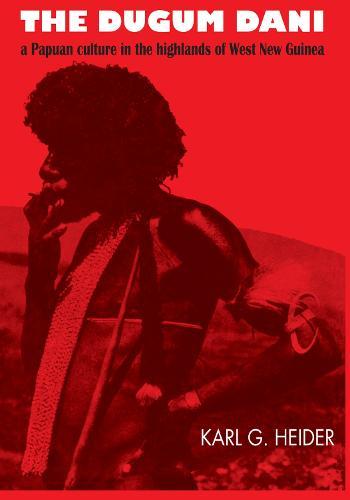
This descriptive ethnography contributes to the already considerable literature on the peoples of the Grand Valley of the Balim River. The term Dugum refers to a 350 population cluster associated with the Dani name for the local hill around which they interact and cluster... [This book] is a useful statement of a Highland New Guinea culture. --David G. Bettison, Pacific Affairs This attractively produced ethnography of a neighbourhood of 350 persons among the 50,000 Dani-speakers of Indonesian-controlled West New Guinea is presented as 'a holistic study', to the memory of Clyde Kluckhohn... [The] present study gives the non-specialist reader a kaleidoscopic introduction to a wide range of New Guinea behaviours that too often go unreported. --R. F. Salisbury, Man
-This descriptive ethnography contributes to the already considerable literature on the peoples of the Grand Valley of the Balim River. The term -Dugum- refers to a 350 population cluster associated with the Dani name for the local hill around which they interact and cluster... [This book] is a useful statement of a Highland New Guinea culture.- --David G. Bettison, Pacific Affairs -This attractively produced ethnography of a neighbourhood of 350 persons among the 50,000 Dani-speakers of Indonesian-controlled West New Guinea is presented as 'a holistic study', to the memory of Clyde Kluckhohn... [The] present study gives the non-specialist reader a kaleidoscopic introduction to a wide range of New Guinea behaviours that too often go unreported.- --R. F. Salisbury, Man This descriptive ethnography contributes to the already considerable literature on the peoples of the Grand Valley of the Balim River. The term Dugum refers to a 350 population cluster associated with the Dani name for the local hill around which they interact and cluster... [This book] is a useful statement of a Highland New Guinea culture. --David G. Bettison, Pacific Affairs This attractively produced ethnography of a neighbourhood of 350 persons among the 50,000 Dani-speakers of Indonesian-controlled West New Guinea is presented as 'a holistic study', to the memory of Clyde Kluckhohn... [The] present study gives the non-specialist reader a kaleidoscopic introduction to a wide range of New Guinea behaviours that too often go unreported. --R. F. Salisbury, Man This descriptive ethnography contributes to the already considerable literature on the peoples of the Grand Valley of the Balim River. The term Dugum refers to a 350 population cluster associated with the Dani name for the local hill around which they interact and cluster... [This book] is a useful statement of a Highland New Guinea culture. --David G. Bettison, Pacific Affairs This attractively produced ethnography of a neighbourhood of 350 persons among the 50,000 Dani-speakers of Indonesian-controlled West New Guinea is presented as 'a holistic study', to the memory of Clyde Kluckhohn... [The] present study gives the non-specialist reader a kaleidoscopic introduction to a wide range of New Guinea behaviours that too often go unreported. --R. F. Salisbury, Man
-This descriptive ethnography contributes to the already considerable literature on the peoples of the Grand Valley of the Balim River. The term -Dugum- refers to a 350 population cluster associated with the Dani name for the local hill around which they interact and cluster... [This book] is a useful statement of a Highland New Guinea culture.- --David G. Bettison, Pacific Affairs -This attractively produced ethnography of a neighbourhood of 350 persons among the 50,000 Dani-speakers of Indonesian-controlled West New Guinea is presented as 'a holistic study', to the memory of Clyde Kluckhohn... [The] present study gives the non-specialist reader a kaleidoscopic introduction to a wide range of New Guinea behaviours that too often go unreported.- --R. F. Salisbury, Man
<p> This descriptive ethnography contributes to the already considerable literature on the peoples of the Grand Valley of the Balim River. The term Dugum refers to a 350 population cluster associated with the Dani name for the local hill around which they interact and cluster... [This book] is a useful statement of a Highland New Guinea culture. <p> --David G. Bettison, Pacific Affairs <p> This attractively produced ethnography of a neighbourhood of 350 persons among the 50,000 Dani-speakers of Indonesian-controlled West New Guinea is presented as 'a holistic study', to the memory of Clyde Kluckhohn... [The] present study gives the non-specialist reader a kaleidoscopic introduction to a wide range of New Guinea behaviours that too often go unreported. <p> --R. F. Salisbury, Man
Author Information
Karl G. Heider has done extensive field research in New Guinea, at the Mayan site of Tikal in Guatemala, and in Thailand, France, Arizona, and South Dakota. He was a member of the Harvard-Peabody Expedition in 1961 that documented the Dani in the film Dead Birds and was co-author of the bookGardens of War: Life and Death in the New Guinea Stone Age. Professor Heider has contributed articles to theSouthwestern Journal of Anthropology, Man, Anthropos, and American Anthropologist. He is currently Associate provost and Dean of Undergraduate Studies at the University of South Carolina. He has served as Chair on the committee of ethics for the American Anthropological Association as well as President of the general Anthropology division of AAA.