Overview
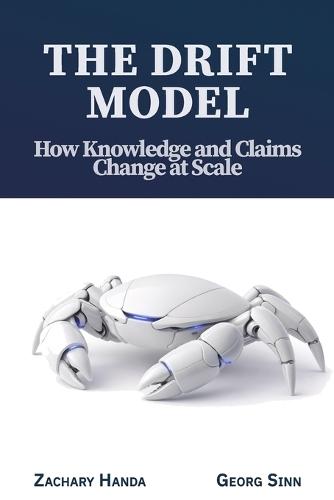
Public knowledge is undergoing a structural transformation. A claim begins inside a serious discipline-medicine, economics, public policy-bounded by evidence, scope, and caveats. As it moves into public circulation, its form changes. It becomes simpler, louder, and more certain. Constraints fall away. The versions that travel farthest are shaped for ease of repetition, defense, and group alignment. The Drift Model provides a clear, usable framework for seeing that transformation as a selection process-not a mystery, and not a personality diagnosis. It explains how claims lose their original structure under transmission pressure, why the same pattern repeats across domains, and where intervention still has leverage. What this book gives you A five-stage model for how claims change function as they move: Serious Traditions → Meme Extracts → Folk Theories → Status Engines → Identity Systems. A practical way to track what actually drifts: the claim bundle (proposition + scope + substrate + falsifiers), and how those constraints get shed over time. A map of the selection environment that shapes modern knowledge: attention markets, algorithmic routing, context collapse, and governance pressures. Four forensic case studies that make the mechanism visible across domains: Health & wellness pipelines Psychology & therapy pipelines Politics & moral psychology pipelines Organizations & KPI pipelines A constrained toolkit for real work: stage-location guides, diagnostic checks, and writing/decision methods designed for high-pressure environments where revision has a cost. Who this is forYou'll get the most value from this book if your work requires judgment under pressure-often before full clarity is available: Researchers, analysts, and journalists working with contested claims where scope, updateability, and calibration matter. Institutional stewards in policy, education, public health, governance, trust & safety, or communications who need decisions that hold up under scrutiny. Organizational leaders operating inside KPI and incentive systems where measurement gradually substitutes for intent. Writers, editors, and educators translating complex material into public-facing forms while preserving constraints. How to read itThis book supports two complementary uses: Read for understanding: Parts I-III build the model and the selection environment. Use under constraint: Part V functions as an operational reference with checklists and tools for rapid audits. What this book is designed to doThe Drift Model is descriptive rather than tactical. It supports diagnosis rather than optimization. It makes structural transformation visible-so you can locate where a claim's constraints were lost, what pressures selected the cheaper variant, and what it would take to make revision feasible again. If you work in environments where claims must survive selection pressure, institutional scrutiny, and machine-legible retrieval, this book gives you a durable instrument for seeing clearly-before debates become identity infrastructure.
Full Product Details
Author: Georg Sinn ,
Zachary Handa
Publisher: Demeter Academy Press
Imprint: Demeter Academy Press
Dimensions:
Width: 15.20cm
, Height: 0.80cm
, Length: 22.90cm
Weight: 0.195kg
ISBN: 9781971093024
ISBN 10: 1971093025
Pages: 140
Publication Date: 07 February 2026
Audience:
General/trade
,
General
Format: Paperback
Publisher's Status: Active
Availability: Available To Order

We have confirmation that this item is in stock with the supplier. It will be ordered in for you and dispatched immediately.