Overview
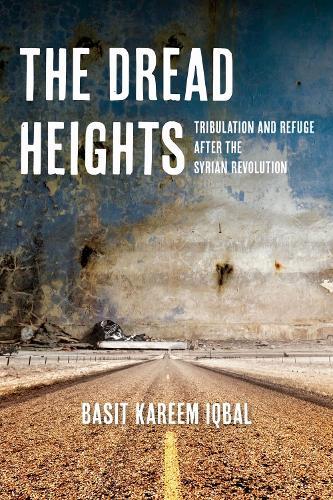
Muslim charities and community organizations have assumed a significant role in refugee support since the Syrian catastrophe: in Jordan and Canada, as elsewhere, they deliver food aid, house orphans, and organize remedial education. But Islam is more than just a resource for humanitarian projects. The Dread Heights details how the Islamic tradition guides refugees, relief workers, and religious scholars in a world of brutal sieges and mass displacement. Through an ethnography of religious imagination and theological argumentation, Iqbal demonstrates what is at stake beyond secular frames for migration and relief. Even as refugees become objects of humanitarian concern suspended between national orders, The Dread Heights brings another suspension into view: a form of life whose gestures are illuminated by the Quranic figure of the Heights. Iqbal's ethnography pursues an unsentimental lucidity across the search for refuge, the trials of creational existence, and the ultimately enigmatic divine decree. In the shadow of war, beyond humanitarian order, Islam offers an orientation to the devastation of the present.
Full Product Details
Author: Basit Kareem Iqbal
Publisher: Fordham University Press
Imprint: Fordham University Press
Edition: New edition
Weight: 0.553kg
ISBN: 9781531510312
ISBN 10: 1531510310
Pages: 304
Publication Date: 02 September 2025
Audience:
College/higher education
,
Postgraduate, Research & Scholarly
Format: Hardback
Publisher's Status: Active
Availability: Out of stock

The supplier is temporarily out of stock of this item. It will be ordered for you on backorder and shipped when it becomes available.
Reviews
"""The Dread Heights is a remarkable contribution to the anthropology of religion. Iqbal traces the different ways refugees fleeing from the political cruelty and oppression of the Syrian regime resort to the Islamic tradition to make sense of their desperate, disrupted lives. The book offers insights that are at once moving and original, and it helps to push the debate about the relationship of transcendence to immanence, of theology to politics, to new levels. It deserves to be widely read.""---Talal Asad, City University of New York ""Artfully and poignantly, Basit Iqbal guides us through a landscape of displacement, devastation, and destruction. His gripping book asks us to reflect on an apocalyptic present without ever resorting to the temptation of hope or the promise of healing. It offers a pathbreaking example of what an ethnography of theology (and specifically of eschatology) can look like--one that takes seriously the hold of the Islamic tradition while also showing how multiple interpretations can coexist and honoring the ultimate unknowability and incommensurability of the Divine.""---Amira Mittermaier, University of Toronto"
""The Dread Heights is a remarkable contribution to the anthropology of religion. Iqbal traces the different ways refugees fleeing from the political cruelty and oppression of the Syrian regime resort to the Islamic tradition to make sense of their desperate, disrupted lives. The book offers insights that are at once moving and original, and it helps to push the debate about the relationship of transcendence to immanence, of theology to politics, to new levels. It deserves to be widely read.""---Talal Asad, City University of New York ""Artfully and poignantly, Basit Iqbal guides us through a landscape of displacement, devastation, and destruction. His gripping book asks us to reflect on an apocalyptic present without ever resorting to the temptation of hope or the promise of healing. It offers a pathbreaking example of what an ethnography of theology (and specifically of eschatology) can look like--one that takes seriously the hold of the Islamic tradition while also showing how multiple interpretations can coexist and honoring the ultimate unknowability and incommensurability of the Divine.""---Amira Mittermaier, University of Toronto
Author Information
Basit Kareem Iqbal is Assistant Professor of Anthropology at McMaster University.