Overview
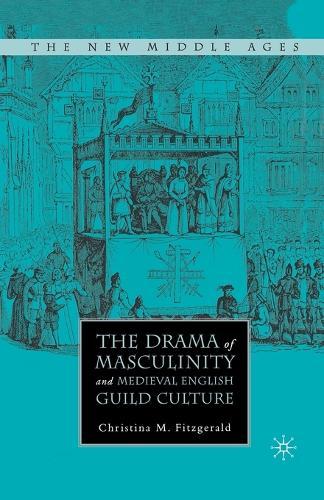
This study argues that late medieval English 'mystery plays' were about masculinity as much as Christian theology, modes of devotion, or civic self-consciousness. Performed repeatedly by generations of merchants and craftsmen, these Biblical plays produced fantasies and anxieties of middle class, urban masculinity, many of which are familiar today.
Full Product Details
Author: C. Fitzgerald
Publisher: Palgrave Macmillan
Imprint: Palgrave Macmillan
Edition: 1st ed. 2007
Weight: 0.300kg
ISBN: 9781349533978
ISBN 10: 1349533971
Pages: 214
Publication Date: 19 July 2007
Audience:
Professional and scholarly
,
Professional & Vocational
Format: Paperback
Publisher's Status: Active
Availability: Manufactured on demand

We will order this item for you from a manufactured on demand supplier.
Reviews
Fitzgerald has written a lively and provocative book on a neglected topic: the relationship of late medieval biblical dramas from York and Chester to the urban guild culture that produced them. In a series of deft textual readings, she argues for guild culture's centrality to the ideology, imagery, and idiom of these plays.This book convincingly establishes how - as text and performance - the biblical plays of late medieval York and Chester simultaneously represented and negotiated conflicts and tensions generated within urban communities intensely divided by age, status, and especially gender. The Drama of Masculinity and Medieval English Guild Culture will prove rewarding reading for anyone interested in the social and cultural contexts of early English drama. - Theresa Coletti, University of Maryland By adding sex/gender to the mix, Fitzgerald's study radically transforms our understanding of the northern mystery cycles of Chester and York.Fitzgerald demonstrates that the plays, filled with conflicting fantasies of civic masculinity, are more than passively-received exercises in lay spirituality: they instead express the simultaneously hopeful and anxious desires of English guildsmen looking for secure identities in the chaotic environment of late medieval civic oligarchy.Especially welcome is her concluding chapter on the cycles' presentation of a masculinist Christ, a much-needed complication of previous attempts to read the plays in the light of female-centered affective piety. - Robert W. Barrett, Jr., University of Illinois at Urbana-Champaign [This book] is a compelling intervention in contemporary drama criticism . . . it provides detailed close readings of a dazzling number of individual plays (over thirteen plays each in chapters 2 and 3) . . . The Drama of Masculinity makes an important contribution to our understanding of the relationship between guild culture and late-medieval drama, challenging the conventional vision of the drama as evnidence of the power and prestige of urban guilds by emphasizing the extent to which the dramas of York and Chester embody the demands of civic government on the guildsmen. - Speculum
"""Fitzgerald has written a lively and provocative book on a neglected topic: the relationship of late medieval biblical dramas from York and Chester to the urban guild culture that produced them. In a series of deft textual readings, she argues for guild culture's centrality to the ideology, imagery, and idiom of these plays.This book convincingly establishes how - as text and performance - the biblical plays of late medieval York and Chester simultaneously represented and negotiated conflicts and tensions generated within urban communities intensely divided by age, status, and especially gender. The Drama of Masculinity and Medieval English Guild Culture will prove rewarding reading for anyone interested in the social and cultural contexts of early English drama."" - Theresa Coletti, University of Maryland ""By adding sex/gender to the mix, Fitzgerald's study radically transforms our understanding of the northern mystery cycles of Chester and York.Fitzgerald demonstrates that the plays, filled with conflicting fantasies of civic masculinity, are more than passively-received exercises in lay spirituality: they instead express the simultaneously hopeful and anxious desires of English guildsmen looking for secure identities in the chaotic environment of late medieval civic oligarchy.Especially welcome is her concluding chapter on the cycles' presentation of a masculinist Christ, a much-needed complication of previous attempts to read the plays in the light of female-centered affective piety."" - Robert W. Barrett, Jr., University of Illinois at Urbana-Champaign""[This book] is a compelling intervention in contemporary drama criticism . . . it provides detailed close readings of a dazzling number of individual plays (over thirteen plays each in chapters 2 and 3) . . . The Drama of Masculinity makes an important contribution to our understanding of the relationship between guild culture and late-medieval drama, challenging the conventional vision of the drama as evnidence of the power and prestige of urban guilds by emphasizing the extent to which the dramas of York and Chester embody the demands of civic government on the guildsmen."" - Speculum"
Fitzgerald has written a lively and provocative book on a neglected topic: the relationship of late medieval biblical dramas from York and Chester to the urban guild culture that produced them. In a series of deft textual readings, she argues for guild culture's centrality to the ideology, imagery, and idiom of these plays.This book convincingly establishes how - as text and performance - the biblical plays of late medieval York and Chester simultaneously represented and negotiated conflicts and tensions generated within urban communities intensely divided by age, status, and especially gender. The Drama of Masculinity and Medieval English Guild Culture will prove rewarding reading for anyone interested in the social and cultural contexts of early English drama. - Theresa Coletti, University of Maryland By adding sex/gender to the mix, Fitzgerald's study radically transforms our understanding of the northern mystery cycles of Chester and York.Fitzgerald demonstrates that the plays, filled with conflicting fantasies of civic masculinity, are more than passively-received exercises in lay spirituality: they instead express the simultaneously hopeful and anxious desires of English guildsmen looking for secure identities in the chaotic environment of late medieval civic oligarchy.Especially welcome is her concluding chapter on the cycles' presentation of a masculinist Christ, a much-needed complication of previous attempts to read the plays in the light of female-centered affective piety. - Robert W. Barrett, Jr., University of Illinois at Urbana-Champaign [This book] is a compelling intervention in contemporary drama criticism ... it provides detailed close readings of a dazzling number of individual plays (over thirteen plays each in chapters 2 and 3) ... The Drama of Masculinity makes an important contribution to our understanding of the relationship between guild culture and late-medieval drama, challenging the conventional vision of the drama as evnidence of the power and prestige of urban guilds by emphasizing the extent to which the dramas of York and Chester embody the demands of civic government on the guildsmen. - Speculum
Author Information
CHRISTINA FITZGERALD is Assistant Professor of English at the University of Toledo in Ohio, USA.