|
|
|||
|
||||
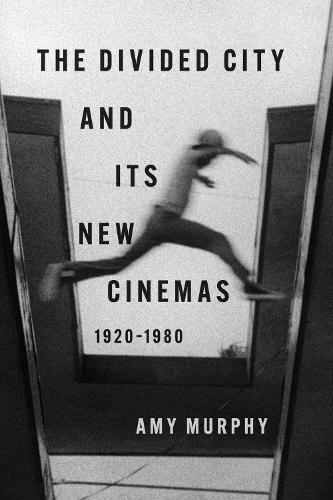
OverviewFilm offers a powerful witness to the historical effects of segregation. Twentieth-century American urban policy favored ""white flight"" to the suburbs while confining other racial and ethnic groups in urban cores. Mainstream cinema, in turn, perpetuated racial stereotypes that justified this confinement. Amy Murphy revisits this history via six independent films, each mapping a distinct urban geography at a particular moment in the century. Murphy's analysis reveals that certain veins of postwar independent filmmaking grew out of specific policy failures of the American city. With increased access to media production, such filmmakers created new cinemas from within the segregated city that expanded avenues for self-representation. Informed and insightful, The Divided City and Its New Cinemas, 1920–1980 examines how often-raw independent films pioneered cinematic exploration of identities impacted by space and time, and by geography and history. Full Product DetailsAuthor: Amy MurphyPublisher: University of Illinois Press Imprint: University of Illinois Press Weight: 0.481kg ISBN: 9780252089367ISBN 10: 0252089367 Pages: 296 Publication Date: 31 March 2026 Audience: College/higher education , Postgraduate, Research & Scholarly Format: Paperback Publisher's Status: Forthcoming Availability: Manufactured on demand Table of ContentsAcknowledgments Introduction 1 Ch 1: The City as Subject (Manhatta, 1921) 20 Ch 2: From City Symphonies to Suburban Citadels (The City, 1939) 59 Ch 3: Inventing the ""Slum"" and the New Downtown (The Exiles, 1961) 96 Ch 4: Life in the Hypersegregated Ghetto (Killer of Sheep, 1977) 136 Ch 5: The Barrio and the Bilingual City (Please, Don't Bury Me Alive!, 1976) 175 Ch 6: Fugitive Identity and the Transnational Enclave (Chan is Missing, 1982) 212 Afterword 252 Notes Appendix: Maps of Six Key Geographies IndexReviewsAuthor InformationAmy Murphy is a professor of architecture at the University of Southern California. Tab Content 6Author Website:Countries AvailableAll regions |
||||