Overview
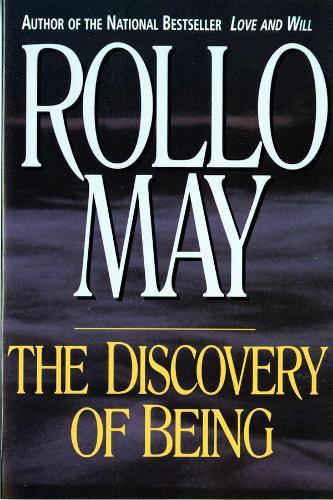
Rollo May draws on the insights of Kierkegaard, Nietzsche, Freud, and other great thinkers to offer a helpful roadmap of the ideas and techniques of existential psychotherapy. He pays particular attention to the causes of loneliness and isolation, and to our search for stability in an age of anxiety.
Full Product Details
Author: Rollo May
Publisher: WW Norton & Co
Imprint: WW Norton & Co
Edition: New edition
Dimensions:
Width: 14.00cm
, Height: 1.30cm
, Length: 21.10cm
Weight: 0.205kg
ISBN: 9780393312409
ISBN 10: 0393312402
Pages: 194
Publication Date: 17 December 1994
Audience:
General/trade
,
Professional and scholarly
,
General
,
Postgraduate, Research & Scholarly
Format: Paperback
Publisher's Status: Active
Availability: Out of stock

The supplier is temporarily out of stock of this item. It will be ordered for you on backorder and shipped when it becomes available.
Reviews
Clear, accurate, and interesting. There is no better short introduction to the existential approach to psychology. A brisk, clear, popular introduction to existential psychology/psychotherapy... [Rollo May] makes a good case for it as a pragmatically broad and flexible method... A solid, stimulating presentation.
Clear, accurate, and interesting. There is no better short introduction to the existential approach to psychology. -- Dallas Morning News A brisk, clear, popular introduction to existential psychology/psychotherapy... [Rollo May] makes a good case for it as a pragmatically broad and flexible method... A solid, stimulating presentation. -- Kirkus Reviews
After a hesitant start, May gets untracked and gives a brisk, clear popular introduction to existential psychology/psychotherapy. In the briefest terms, EP subordinates all human psychodynamics and therapeutic techniques to the ontological context, the openended encounter between existing persons. At the center of EP lies the Heideggerian notion of Dasein (being-there), a free but death-bound agent dwelling simultaneously in three nested spheres, the Eigenwelt (inner world of the self), the Mitwelt (interpersonal relations), and Umwelt (total environment). May's complaint against Freud, and others whom he considers reductive thinkers, is that they imprison the individual within the objectified, deterministic structures of the Umwelt and so never do justice to the properly human - though admittedly elusive - realm of subjectivity. Thus the ego as psychoanalysis sees it is weak, passive, and derived, at times a mere epiphenomenon of the id. EP, by contrast, looks to the experience of being, to the primeval, transcendent, irreducible utterance of I am as the ground of everything that happens in the mind. Materialistic psychologies equate the person with his or her past, which must then be understood and exorcised before the patient can proceed with normal, healthy living. EP argues that the present and the future (one's existential commitments) shape the past by deciding what features of that past a person can recall and use, consciously or unconsciously, as motivating forces. May puts EP in historical perspective with surveys of the thought of Kierkegaard and Nietzsche and thumbnail sketches of Heidegger, Husserl, Binswanger, etc. He acknowledges that EP's metaphysical bias runs against America's Anglo-Saxon empirical grain, but he makes a good case for it as a pragmatically broad and flexible method. Despite some careless writing here and there, a solid, stimulating presentation. (Kirkus Reviews)
With his vision of what man can be, Rollo May is the man of tomorrow. . . . For many years he has been one of psychology's persistent pioneers.
A brisk, clear, popular introduction to existential psychology/psychotherapy. . . [Rollo May] makes a good case for it as a pragmatically broad and flexible method. . . . A solid, stimulating presentation. -- Kirkus Reviews Clear, accurate, and interesting. There is no better short introduction to the existential approach to psychology. -- Dallas Morning News
Author Information
Rollo May (1909-1994) taught at Harvard, Princeton, and Yale, and was Regents' Professor at the University of California, Santa Cruz. An influential psychologist, he was the best-selling author of Love and Will, as well as the author of The Courage to Create, Man's Search for Himself, The Meaning of Anxiety, and Psychology and the Human Dilemma.