Overview
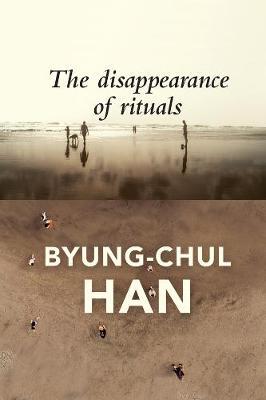
Untrammelled neoliberalism and the inexorable force of production have produced a 21st century crisis of community: a narcissistic cult of authenticity and mass turning-inward are among the pathologies engendered by it. We are individuals afloat in an atomised society, where the loss of the symbolic structures inherent in ritual behaviour has led to overdependence on the contingent to steer identity. Avoiding saccharine nostalgia for the rituals of the past, Han provides a genealogy of their disappearance as a means of diagnosing the pathologies of the present. He juxtaposes a community without communication – where the intensity of togetherness in silent recognition provides structure and meaning – to today’s communication without community, which does away with collective feelings and leaves individuals exposed to exploitation and manipulation by neoliberal psycho-politics. The community that is invoked everywhere today is an atrophied and commoditized community that lacks the symbolic power to bind people together. For Han, it is only the mutual praxis of recognition borne by the ritualistic sharing of the symbolic between members of a community which creates the footholds of objectivity allowing us to make sense of time. This new book by one of the most creative cultural theorists writing today will be of interest to a wide readership.
Full Product Details
Author: Byung-Chul Han ,
Daniel Steuer
Publisher: John Wiley and Sons Ltd
Imprint: Polity Press
Dimensions:
Width: 13.70cm
, Height: 1.00cm
, Length: 20.80cm
Weight: 0.136kg
ISBN: 9781509542765
ISBN 10: 1509542760
Pages: 186
Publication Date: 04 September 2020
Audience:
Professional and scholarly
,
General/trade
,
Professional & Vocational
,
General
Format: Paperback
Publisher's Status: Active
Availability: Available To Order

We have confirmation that this item is in stock with the supplier. It will be ordered in for you and dispatched immediately.
Reviews
Byung-Chul HanAs new book challenges the reader to go far beyond the worn-out critique of neoliberalism. On the one side, there is the progressive replacement of substance through communication, painted as a road to existential perdition; it contrasts, on the other side, with the utopian view of a return towards the security of rituals in their form and appearance. This reversal of long-established thought is expressed in a compressed and energetic language that reads like a manifesto. Hans Ulrich Gumbrecht, Stanford University
Byung-Chul Han's new book challenges the reader to go far beyond the worn-out critique of neoliberalism. On the one side, there is the progressive replacement of substance through communication, painted as a road to existential perdition; it contrasts, on the other side, with the utopian view of a return towards the security of rituals in their form and appearance. This reversal of long-established thought is expressed in a compressed and energetic language that reads like a manifesto. Hans Ulrich Gumbrecht, Stanford University
Author Information
Byung-Chul Han is a Korean-born Professor of Philosophy and Cultural Studies who teaches at the University of the Arts (UdK) in Berlin. He is the author of more than 20 books including The Scent of Time, Saving Beauty and The Burnout Society.