Overview
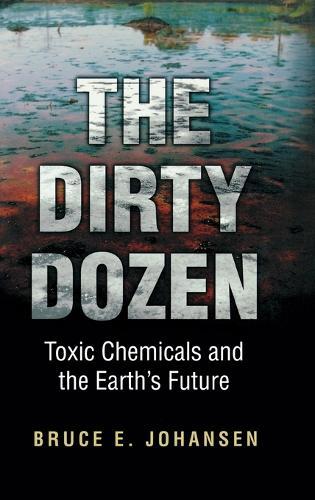
Forty years after the publication of Rachel Carson's Silent Spring, this important study examines the history, industrial uses, and harmful effects of the twelve most commonly used organochloride chemicals. All have been fully or partially banned by the Stockholm Protocol, an international treaty signed by about 120 countries in December 2000. Among the twelve are the dioxins (the active ingredient in Agent Orange) and polychlorinated byphenyls (PCBs), which are toxic in minute quantities. Johansen pays special attention to the Inuit of the Arctic, where these chemicals have been bio-accumulating to dangerous levels, moving up the food chain to a degree of toxicity that some Inuit mothers are no longer able to safely breast-feed their infants. The polar stratospheric ozone has been devastated by emissions of chlorofluorocarbons (CFCs), and new scientific findings connect global warming near the Earth's surface to significant cooling in the stratosphere. This synergy aggravates ozone depletion because the chemical reactions that destroy the ozone become more energetic as temperatures drop. Synthetic toxins have taken their toll on minority ethnic groups in the United States, and persistent organic pollutants have inflicted physiological damage on humans and other animals. Finally, Johansen explores the estrogenic effects of such chemicals. Sperm counts have declined as much as 50% in 50 years.
Full Product Details
Author: Bruce E. Johansen, Ph.D.
Publisher: Bloomsbury Publishing Plc
Imprint: Praeger Publishers Inc
Dimensions:
Width: 15.50cm
, Height: 2.50cm
, Length: 23.50cm
Weight: 0.635kg
ISBN: 9780275977023
ISBN 10: 0275977021
Pages: 312
Publication Date: 30 June 2003
Recommended Age: From 7 to 17 years
Audience:
Professional and scholarly
,
Professional and scholarly
,
College/higher education
,
Professional & Vocational
,
Professional & Vocational
Format: Hardback
Publisher's Status: Active
Availability: Manufactured on demand

We will order this item for you from a manufactured on demand supplier.
Reviews
Many environmentalists will heartily agree with the author's conclusions...Recommended. General readers; lower-division undergraduates. - Choice If you thought Rachel Carson's Silent Spring was scary, this alarming expose will knock your socks off. Recommended for most environmental collections. - Library Journal, Starred Review Johansen examines the history, industrial uses, and harmful effects of the 12 most commonly used organochloride chemicals. All have been fully or partially banned by the Stockholm Protocol. - Abstracts of Public Administration, Development, and Environment [T]his book can serve as a useful source of bibliographical information and summery materials. - Natural Resources Forum [T]his volume is worth a thoughtful reading and should be in the science collections of all public, college and university libraries. - Robert B. Ridinger, Chair, Electronic Information Resources Management, Northern [A] valuable guide to librarians wishing to build their collections on this admittedly complicated subject. This volume is worth a thoughful reading and should be in the science collections of all public, college univesity libraries. - E-Streams [F]rom dioxins to the accumulation of dangerous chemicals in arctic environments, The Dirty Dozen reveals patterns of migration, synergy and chemical reactions which have an ongoing effect on the Earth's systems. - Internet Bookwatch
[F]rom dioxins to the accumulation of dangerous chemicals in arctic environments, The Dirty Dozen reveals patterns of migration, synergy and chemical reactions which have an ongoing effect on the Earth's systems. - Internet Bookwatch
A very interesting introduction to a troublesome category of environmental pollutants: persistent organics. Persistent organic pollutants (POPs) historically have been discussed in books as tangents to the overall missions of those books. Thus these previous presentations could be viewed as dry, boring, and uninteresting to the readers. Here lies the real value of The Dirty Dozen; the author spruces up the presentation of the science and public policy of POPs that often holds this reader's attention like a novel. -Jeff Peirce Professor, Department of Civil and Environmental Engineering, Duke University
Johansen examines the history, industrial uses, and harmful effects of the 12 most commonly used organochloride chemicals. All have been fully or partially banned by the Stockholm Protocol. - Abstracts of Public Administration, Development, and Environment [T]his book can serve as a useful source of bibliographical information and summery materials. - Natural Resources Forum [T]his volume is worth a thoughtful reading and should be in the science collections of all public, college and university libraries. - Robert B. Ridinger, Chair, Electronic Information Resources Management, Northern [A] valuable guide to librarians wishing to build their collections on this admittedly complicated subject. This volume is worth a thoughful reading and should be in the science collections of all public, college univesity libraries. - E-Streams [F]rom dioxins to the accumulation of dangerous chemicals in arctic environments, The Dirty Dozen reveals patterns of migration, synergy and chemical reactions which have an ongoing effect on the Earth's systems. - Internet Bookwatch If you thought Rachel Carson's Silent Spring was scary, this alarming expose will knock your socks off. Recommended for most environmental collections. - Library Journal, Starred Review Many environmentalists will heartily agree with the author's conclusions...Recommended. General readers; lower-division undergraduates. - Choice
Author Information
BRUCE E. JOHANSEN is Robert T. Reilly Professor of Communication and Native American Studies at the University of Nebraska, Omaha. His last book was The Ecocide of Native America (1995).