Overview
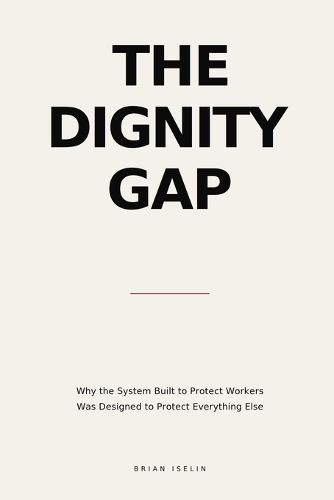
THE DIGNITY GAP How the global economy performs the protection of workers - and why the workers are still not protected. In 1880, a Manchester mill owner campaigned for child protection laws and employed children in his own factory. He was not a hypocrite. He was an early operator of a machinery the global economy has been refining ever since: the machinery that allows institutions to perform the protection of workers without providing it. Two hundred years later, the standards are the best they have ever been. More people are in forced labour than at any point since records began. The Dignity Gap is an account of how that became possible - and why it persists. It traces the long arc from the cotton mills of Lancashire to the rubble of Rana Plaza, from the drafting rooms of the UN Guiding Principles to the boardrooms where supply-chain audits are commissioned, filed, and forgotten. Along the way it names what most accounts of corporate human rights leave unnamed: that the audit industry, the certification logo, the ESG report and the due diligence statement are not failed attempts at protection. They are successful instruments of something else. The argument is simple and uncomfortable. Most corporate human rights programmes are not designed to produce results. They are designed to produce evidence of effort. That is not a moral failure of the people who run them. It is a rational response to an incentive structure that rewards the appearance of compliance more reliably than the substance of it. Until that structure changes - until the cost of performing protection genuinely exceeds the cost of providing it - the gap between stated values and operational reality will continue to widen, however many regulations are passed, however many disclosures are filed, however many logos are printed on the back of the box. Drawing on two decades inside the system - as investigator, policy adviser, and consultant to the corporations the book describes - Brian Iselin shows how the gap is built, who builds it, who profits from it, and what it would take to close it. He writes with the civilisational sweep of Sapiens and the institutional clarity of Bullshit Jobs, but the subject is more urgent than either: the machinery by which the modern economy has learned to look away. For activists, journalists, policy professionals, and the workers in NGOs and unions and frontline organisations who have long suspected that the compliance industry is not on their side - The Dignity Gap is the diagnosis the field has been waiting for. The standards are not the problem. The performance of the standards is the problem. This is the book that names it.
Full Product Details
Author: Brian Iselin
Publisher: Independently Published
Imprint: Independently Published
Dimensions:
Width: 15.20cm
, Height: 1.60cm
, Length: 22.90cm
Weight: 0.395kg
ISBN: 9798258842978
Pages: 294
Publication Date: 25 April 2026
Audience:
General/trade
,
General
Format: Paperback
Publisher's Status: Active
Availability: Available To Order

We have confirmation that this item is in stock with the supplier. It will be ordered in for you and dispatched immediately.